
Blog
ISO 9001 Clause 4.2 Interested Parties: A Practical Guide
If you’re implementing ISO 9001, you’ve almost certainly come across the term ISO 9001 Clause 4.2 Interested Parties. It sounds straightforward, yet in practice, many
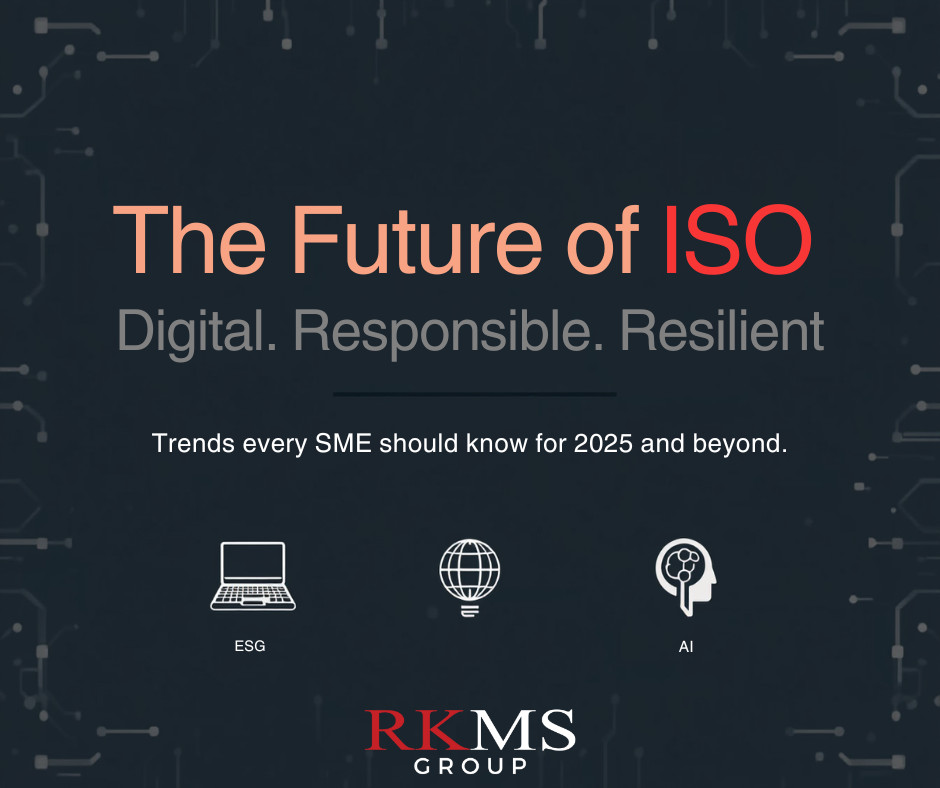
The future of ISO is no longer a distant concept reserved for regulators and large corporates. It is actively unfolding — reshaping how organisations approach compliance, governance, technology and sustainability. As we move towards 2026, ISO standards are evolving to reflect a world defined by digital transformation, ESG accountability and emerging technologies such as artificial intelligence.
For SMEs, understanding the future of ISO is critical. Those that prepare early will not only remain compliant but will also strengthen resilience, credibility and competitive advantage. Those that fail to adapt risk treating ISO as a static obligation in a rapidly changing environment.
This article explores the most important trends shaping the future of ISO — and what SMEs should be doing now to stay ahead.
The future of ISO is being driven by fundamental shifts in how organisations operate. Global disruption, cyber risk, sustainability pressures and technological innovation have exposed the limitations of traditional, document-heavy compliance models.
In response, ISO standards are increasingly:
The future of ISO reflects a move away from “certification for certification’s sake”. Instead, ISO is becoming a framework that supports leadership decision-making, long-term planning and organisational resilience — particularly important for growing SMEs.
Several clear themes are defining the future of ISO standards as we begin 2026.
One of the most significant ISO trends for 2026 is organisational resilience. ISO frameworks are placing greater emphasis on risk-based thinking, continuity planning and adaptability in uncertain environments.
Another defining feature of the future of ISO is alignment with regulation and stakeholder expectations. ISO standards increasingly complement legal, regulatory and supply chain requirements, helping SMEs demonstrate due diligence and good governance.
Digital transformation sits at the heart of the future of ISO.
Traditional ISO systems often rely on spreadsheets, shared folders and manual audit preparation. While workable, these methods struggle to provide visibility, traceability and real-time assurance. Digital ISO systems are redefining how compliance is managed.
Within the future of ISO, digital ISO systems enable SMEs to:
Auditors are increasingly focused on how systems are used in practice, not just whether procedures exist. Digital ISO systems make it far easier to evidence engagement, ownership and governance — all core expectations within the future of ISO standards.
ESG and ISO alignment is one of the most influential drivers shaping the future of ISO.
Environmental responsibility, social accountability and strong governance are no longer optional — even for SMEs. Customers, investors and supply chains are demanding transparency and ethical practice, and ISO standards are evolving to reflect this reality.
Within the future of ISO standards, ESG principles are increasingly embedded across frameworks rather than treated as standalone initiatives. This allows SMEs to:
Rather than creating additional reporting burdens, the future of ISO provides SMEs with a credible, internationally recognised way to embed ESG into everyday operations.
The introduction of ISO 42001 is a clear indicator of where the future of ISO is heading.
As artificial intelligence becomes more accessible, organisations face new risks around bias, transparency, ethics and accountability. ISO 42001 provides a structured Artificial Intelligence Management System to manage these risks responsibly.
For SMEs, ISO 42001 is particularly relevant. AI adoption is often informal and rapid, increasing exposure to governance and compliance risks. Within the future of ISO, ISO 42001 enables organisations to:
Importantly, ISO 42001 integrates with existing ISO standards, reinforcing the future of ISO as a unified, scalable management framework.
The future of ISO brings higher expectations — but also significant opportunity.
SMEs that align early with future ISO trends can:
Conversely, organisations that treat ISO as a static compliance exercise may find themselves repeatedly reacting to change rather than planning for it.
Preparing for the future of ISO does not mean adopting every new standard immediately. It means building flexible, future-ready systems.
Key steps for SMEs include:
This approach transforms ISO from a compliance obligation into a strategic capability.
At RKMS, our approach is built around the future of ISO. We help SMEs move beyond short-term certification goals and towards management systems that are resilient, digital and aligned with emerging standards.
By combining deep ISO expertise with insight into ESG, digital transformation and ISO 42001, RKMS supports organisations that want to lead — not follow — the future of ISO.
The future of ISO is clear: more digital, more integrated and more closely aligned with how modern organisations operate. For SMEs, understanding the future of ISO is no longer optional — it is a competitive advantage.
Interested? — contact us to discuss your ISO future.
Get free advice and guidance tailored to your business needs
If you’re implementing ISO 9001, you’ve almost certainly come across the term ISO 9001 Clause 4.2 Interested Parties. It sounds straightforward, yet in practice, many

ISO 9001 Clause 4.1 Explained: Understanding the Context of the Organisation Where ISO 9001 Clause 4.1 Actually Starts to Make Sense Before procedures.Before policies.Before internal
Get free advice and guidance tailored to your business needs