
Blog
ISO 9001 Clause 4.2 Interested Parties: A Practical Guide
If you’re implementing ISO 9001, you’ve almost certainly come across the term ISO 9001 Clause 4.2 Interested Parties. It sounds straightforward, yet in practice, many

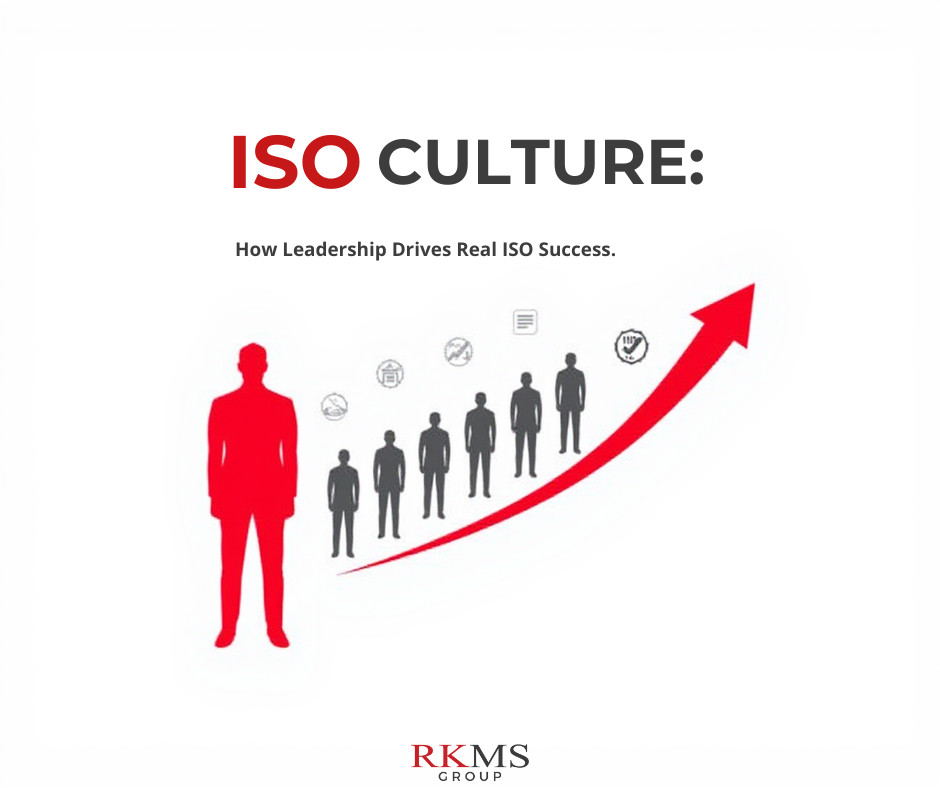
ISO success is often misunderstood. Many organisations assume that achieving certification is about procedures, documents, and audits. As a result, ISO becomes an administrative burden rather than a business asset.
In reality, ISO success is not built on paperwork — it is built on ISO culture.
ISO culture reflects how people think, behave, and make decisions every day. And like any organisational culture, it is shaped first and foremost by leadership. Where leadership is engaged, ISO becomes embedded. Where leadership is distant, ISO becomes a tick-box exercise that delivers little long-term value.
Certification proves that a system exists. ISO culture proves that the system works.
Organisations with weak ISO culture often share the same characteristics:
By contrast, organisations with strong ISO culture treat ISO as “how we work”, not “what we show auditors”. Processes are followed because they make sense, not because they are written down.
ISO culture is what turns compliance into consistency — and consistency into improvement.
ISO 9001 is clear that culture does not develop by accident. Clause 5, Leadership, places responsibility for the effectiveness of the management system directly with top management.
This includes responsibility for:
ISO culture weakens when leadership responsibility is delegated too far. While tasks can be assigned, ownership of culture cannot.
ISO culture thrives when it supports what the business is trying to achieve.
When leaders align ISO objectives with strategic goals — such as growth, customer satisfaction, efficiency, or risk management — ISO becomes relevant. Staff can see why processes exist and how improvement benefits the organisation as a whole.
Where this alignment is missing, ISO feels artificial. People comply when they must, but disengage when pressure is removed.
Strong leadership ensures ISO culture reinforces strategy, rather than competing with it.
Culture is shaped by what leaders prioritise. When improvement actions are delayed, audits are rushed, or ISO discussions are sidelined, the message is clear: ISO is optional.
Leaders strengthen ISO culture by:
When leaders remove barriers instead of creating them, ISO becomes credible — and culture follows.
ISO culture is not defined by policies. It is defined by behaviour.
Employees observe:
If leaders treat ISO as an administrative exercise, the organisation will too. If leaders use ISO as a decision-making tool, ISO becomes embedded into everyday operations.
Culture is built through consistency, not slogans.
A compliance-driven ISO culture focuses on passing audits. An improvement-driven ISO culture focuses on performing better.
The shift happens when leadership:
Over time, ISO stops feeling like an external requirement and starts functioning as an internal framework for improvement.
Staff engagement with ISO culture reflects leadership engagement almost perfectly.
When leaders explain why ISO matters — not just what is required — people are more likely to participate meaningfully. Engagement grows when staff understand how ISO supports customers, reduces frustration, and improves outcomes.
ISO culture becomes stronger when people feel ownership, not enforcement.
ISO delivers the most value when it is used as a management system, not a certification tool.
Management reviews, for example, are designed to be leadership-led discussions about:
When leaders actively use these forums, ISO culture supports long-term thinking, data-driven decisions, and continual improvement.
Improvement becomes part of normal management behaviour — not an annual exercise.
ISO culture weakens when leadership unintentionally sends the wrong signals, such as:
These behaviours erode trust in the system and reduce engagement across the organisation.
Embedding ISO culture does not require constant reference to the standard. It requires leadership behaviours that align with ISO principles:
When leadership behaviour and ISO requirements align, the system becomes sustainable — and certification becomes a natural outcome, not the goal.
ISO culture does not come from documentation. It comes from leadership decisions made every day.
Organisations that gain lasting value from ISO understand that culture determines success. When leaders demonstrate commitment, consistency, and accountability, ISO becomes embedded into how the organisation operates.
ISO culture is built from the top — and lived throughout the business.
Learn how to embed ISO into your company culture, speak with one of our team today
Get free advice and guidance tailored to your business needs
If you’re implementing ISO 9001, you’ve almost certainly come across the term ISO 9001 Clause 4.2 Interested Parties. It sounds straightforward, yet in practice, many

ISO 9001 Clause 4.1 Explained: Understanding the Context of the Organisation Where ISO 9001 Clause 4.1 Actually Starts to Make Sense Before procedures.Before policies.Before internal
Get free advice and guidance tailored to your business needs