Blog
ISO Audit Process: What Actually Happens During an ISO Audit
ISO Audit Process: Inside the Audit – What Actually Happens During an ISO Audit ISO audit process concerns trigger immediate anxiety for many organisations. Visions

If you’ve ever typed “what is ISO” into a search engine and been hit with a wall of jargon, you’re not alone.
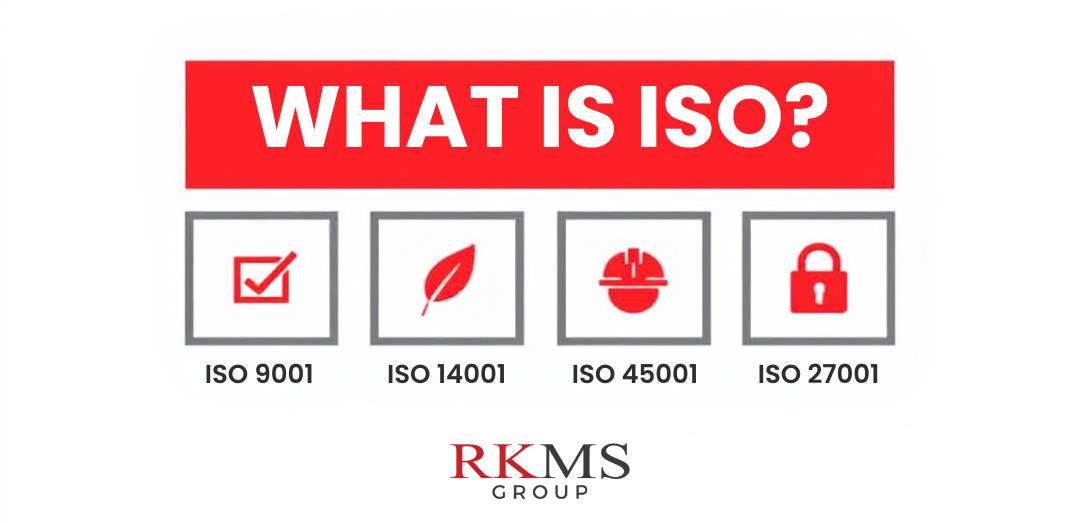
Many business leaders hear, “We should get ISO certified,” without ever getting a clear, plain-English answer to what ISO is or what ISO 9001, 14001, 45001 or 27001 actually mean for their organisation. Is it just paperwork? Is it only for big corporates? Do you really need more than one ISO standard?
This article is designed to cut through the jargon. By the end, you’ll have a clear understanding of what ISO is, what ISO 9001, ISO 14001, ISO 45001 and ISO 27001 really do for your organisation – and how they fit together to support a stronger, more resilient business.
When people first ask “what is ISO?”, they’re often met with technical language: clauses, audits, accreditation, certification bodies and so on. For many leaders, the first reaction is:
The reality is much simpler. What ISO gives you is a set of structured, internationally recognised ways of running important parts of your business. ISO standards help you:
In this article, we’ll look at four of the most common standards:
We’ll focus on what ISO is in practice, not the clause numbers.
At the simplest level, when we ask “what is ISO?”, we’re talking about the International Organization for Standardization – a global body that brings together experts to agree what “good” looks like in different areas of business and technology.
The documents they publish – ISO standards – are essentially agreed rulebooks or blueprints. They don’t tell you exactly how to run your organisation, but they do set out the principles and key elements you should have in place.
So when someone asks “what is ISO 9001” or “what is ISO 27001”, they’re really asking about a specific rulebook within this wider ISO family.
Another common question is “what is an ISO management system?”
It’s not just a pile of documents in a folder. An ISO management system is the whole way you plan, run, check and improve a particular area of your business, in line with a chosen ISO standard. That usually includes:
If it’s done well, the system is built around how your organisation really operates – not the other way round.
You can:
Certification can be valuable when:
However, you don’t have to be certified to get value from thinking in an ISO way. Many improvements come simply from adopting the underlying approach.
If you’ve ever wondered “what is ISO 9001?”, here’s the short answer:
ISO 9001 is a framework for making sure you consistently deliver what you promised to your customers.
ISO 9001 focuses on quality management – not just product quality, but the overall experience you provide. It helps you:
Think of it as a playbook for “how we do things here” so that customers get a consistent result, whether they deal with you next week, next year or via a different team.
In practical terms, an ISO 9001-aligned system often includes:
It’s about making your business more predictable – in a good way.
Done well, ISO 9001 can lead to:
At its heart, ISO 9001 supports a culture of “get it right, and keep getting better”.
When people search for “ISO 14001 explained” or “what is ISO 14001?”, they’re usually trying to understand how it links to their day-to-day operations.
ISO 14001 helps you understand and control how your business affects the environment.
Every organisation has an environmental footprint – energy use, waste, emissions, resource consumption, transport and more. ISO 14001 gives you a structured way to:
It moves you from reactive compliance (“let’s hope we’re doing the right thing”) to proactive environmental management.
In daily operations, an ISO 14001-based system typically means:
It’s not about perfection overnight; it’s about being systematic and improving.
The benefits of ISO 14001 reach beyond sustainability credentials:
In other words, when you ask “what is ISO 14001 doing for us?”, the answer is often “improving performance while protecting the planet”.
Health and safety can easily become a tick-box exercise. ISO 45001 exists to change that. When people ask “what is ISO 45001 and what are the benefits?”, they’re really asking about your approach to people’s wellbeing.
ISO 45001 is about preventing harm and building a genuine culture of safety at work.
ISO 45001 focuses on occupational health and safety. It asks you to:
It’s less about “Do we have the paperwork?” and more about “Are people actually safe?”
An ISO 45001-based system usually includes:
You end up with a more open, proactive approach to safety, rather than blame or avoidance.
The benefits are both human and commercial:
So when you consider “what is ISO 45001 doing for our organisation?”, the answer is clear: protecting your most important asset – your people.
Finally, let’s look at ISO 27001 meaning in practical terms. When people ask “what is ISO 27001?”, they’re often thinking about cyber security – but it’s broader than that.
ISO 27001 is a structured way to protect the information your business depends on.
Information security is not just an IT issue. It’s about:
ISO 27001 helps you identify where your information lives, what could go wrong, and how to control those risks.
In an ISO 27001-aligned system, you typically:
It’s a blend of technology, clear processes and behavioural expectations.
Most organisations now depend heavily on data: customer records, contracts, designs, financial information, intellectual property and more. Even if you don’t see yourself as a tech business:
So when you consider “what is ISO 27001 doing for us?”, the answer is: protecting your reputation, your relationships and your ability to operate.
So, what is the difference between ISO 9001, ISO 14001, ISO 45001 and ISO 27001, and how do they relate to each other?
You can think of the standards as four lenses looking at the same organisation:
Structurally, they have a lot in common: policy, planning, risk assessment, implementation, monitoring and continual improvement. That shared structure is deliberate.
Because of that shared structure, many organisations choose an integrated management system instead of four separate ISO systems:
Instead of four separate “projects”, you have one joined-up way of managing quality, environment, safety and information security.
You do not have to implement all four at once.
A common approach is:
The important thing is to ask, “What is our biggest area of risk or opportunity?” and start there. ISO should follow your strategy, not the other way round.
In the end, the most important question is not just “what is ISO?” in theory, but:
“What is ISO doing to make our business stronger?”
ISO standards are not about turning your organisation into a bureaucracy. Used well, they are about clarity, consistency and confidence.
To recap:
Individually, each standard answers a different version of “what is ISO doing for us?”
Together, they form a stronger business foundation – one that supports growth, resilience, reputation and trust.
If you’re considering where to begin, the best question is not “Which certificate should we buy?” but:
“Which areas of our business need more structure, control and confidence – for us and for our customers?”
From there, what ISO offers becomes less about numbers and more about outcomes.
Explore how these standards fit together to build a stronger business foundation.
Get free advice and guidance tailored to your exact business needs
ISO Audit Process: Inside the Audit – What Actually Happens During an ISO Audit ISO audit process concerns trigger immediate anxiety for many organisations. Visions
Beyond the Badge: How UKAS-Accredited and Non-Accredited ISO Both Build Trust – When Used Honestly. In B2B relationships, trust is not a “nice to have”
Get free advice and guidance tailored to your business needs