What is ISO? What ISO 9001, 14001, 45001 & 27001 Mean for Your Business
What is ISO? Demystifying 9001, 14001, 45001 and 27001 for Your Business If you’ve ever typed “what is ISO” into a search engine and been
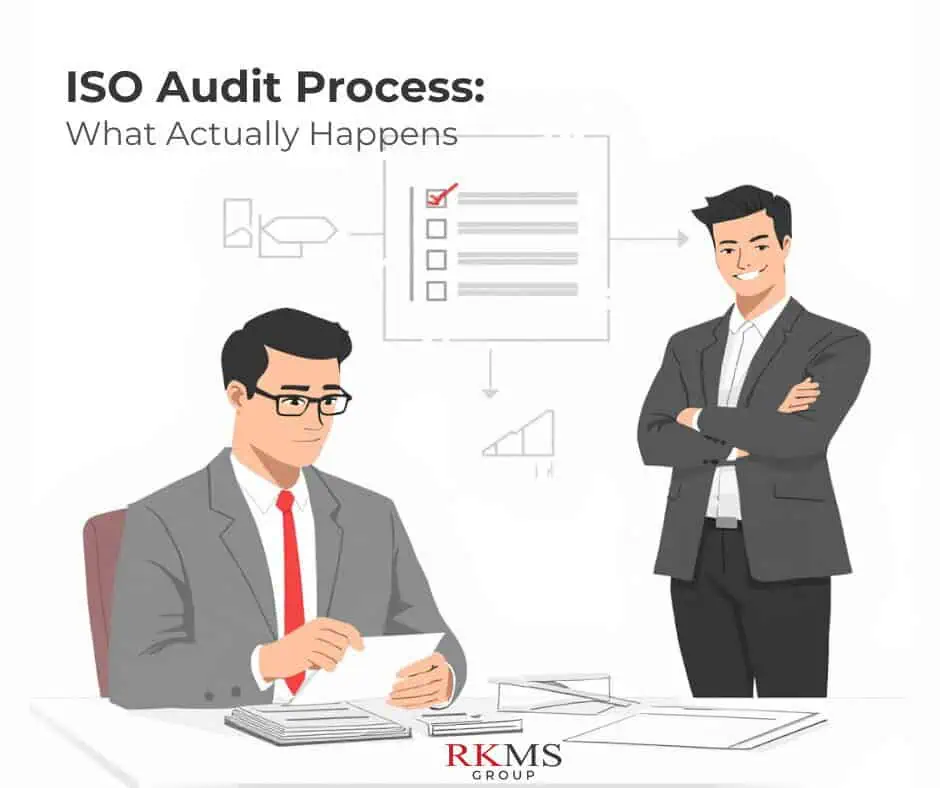
ISO audit process concerns trigger immediate anxiety for many organisations. Visions of intense questioning, endless documents, and the fear of “failing” are common — especially for first-time certification or newly appointed compliance leads.
The reality, however, is far less intimidating.
An ISO audit is a structured, professional review of your management system, not an interrogation or a test of individual performance. Once you understand the ISO audit process and what auditors are really looking for, much of the fear disappears.
This article walks you through exactly what happens during an ISO audit, what evidence auditors expect to see, and how to prepare and interact confidently — without overcomplicating things
At its core, the ISO audit process is a conformity assessment. The auditor’s job is to verify that your management system:
Importantly, auditors are not there to catch people out. They are assessing systems and processes, not judging individuals or trying to create failures.
There are several types of ISO audits within the wider ISO audit process:
While the depth varies, the overall approach remains consistent and predictable.
The ISO audit process begins well before the auditor arrives.
You’ll receive:
At this stage, preparation should focus on readiness, not perfection. Auditors expect to see a system that works — not one that was frantically polished the night before.
Good preparation within the ISO audit process includes:
What preparation is not:
For certification audits, Stage 1 within the ISO audit process is a readiness assessment, not a pass-or-fail event.
The auditor will typically review:
The purpose of Stage 1 in the ISO audit process is to confirm that:
Any gaps identified at Stage 1 are there to help you prepare — not to penalise you.
Stage 2 is what most people think of as “the audit” and represents the core of the ISO audit process.
It begins with an opening meeting, where the auditor:
From there, the ISO audit process follows a process-based approach. Auditors don’t check everything — they sample evidence to build confidence that your system works consistently.
Typical activities include:
The auditor is constantly asking one key question:
“Can this organisation demonstrate that it does what it says it does?”
One of the biggest sources of confusion in the ISO audit process is the idea of “evidence”.
ISO auditors look for objective evidence, which usually falls into three categories:
Crucially, evidence within the ISO audit process must show consistency, not perfection.
Auditor questions during the ISO audit process are typically open and neutral, such as:
The best approach for staff during the ISO audit process is:
A non-conformity within the ISO audit process simply means a requirement of the standard has not been fully met.
They are usually categorised as:
Non-conformities are not a judgement of competence and do not automatically mean certification failure. In most cases, they require corrective action to address the root cause and prevent recurrence.
Auditors also raise:
These are valuable insights, not criticisms.
Many problems in the ISO audit process arise from behaviour rather than system gaps. Common mistakes include:
The most successful audits happen when organisations are:
The audit concludes with a closing meeting, a standard part of the ISO audit process, where the auditor:
You’ll then receive a formal audit report. If corrective actions are required, these are typically submitted with evidence within an agreed timeframe.
Certification decisions are based on:
How issues are addressed — not whether they existed.
The key to a successful ISO audit process is understanding that it is a review of your system, not a test of your people.
Preparation, clarity, and honesty go much further than last-minute fixes or excessive documentation.
Get free advice and guidance tailored to your exact business needs

What is ISO? Demystifying 9001, 14001, 45001 and 27001 for Your Business If you’ve ever typed “what is ISO” into a search engine and been

Beyond the Badge: How UKAS-Accredited and Non-Accredited ISO Both Build Trust – When Used Honestly. In B2B relationships, trust is not a “nice to have”
Get free advice and guidance tailored to your business needs