The Human Side of ISO: Building Engagement, Accountability & Teamwork

The Human Side of ISO: Building Engagement, Accountability & Teamwork

human side of ISO

When many organisations think about ISO, they picture documentation, audits, and compliance checklists. What often gets overlooked is the human side of ISO — the way it shapes communication, strengthens accountability, and brings people together around shared goals.

ISO was never designed to be a paperwork exercise. At its core, it is a people-focused framework that helps organisations work better, more consistently, and more collaboratively. When implemented properly, ISO supports employees rather than constraining them, creating clarity without stripping away personality.

For family-run businesses and SMEs in particular, the human side of ISO can be transformative — reinforcing values, protecting culture, and empowering teams as the organisation grows.

Understanding the Human Side of ISO in Modern Organisations

The human side of ISO is about recognising that systems exist to support people, not the other way around. ISO standards provide structure, but they are intentionally flexible so they can reflect how a business genuinely operates.

Rather than forcing teams into rigid processes, ISO encourages organisations to:

  • Define clear ways of working

  • Share knowledge openly

  • Reduce reliance on individuals

  • Improve collaboration across teams

This approach is especially powerful in close-knit, family-run environments where roles often overlap and knowledge is informally shared. ISO helps capture that knowledge while keeping the business personal and people-led.

Why the Human Side of ISO Matters for Employee Engagement

Employee engagement improves when people understand their role, feel listened to, and see how their work contributes to the bigger picture. This is where the human side of ISO directly supports ISO employee engagement.

How ISO Encourages Employee Involvement

ISO standards actively promote employee participation by requiring organisations to:

  • Involve staff in defining processes

  • Identify risks and improvement opportunities collaboratively

  • Provide appropriate training and support

  • Encourage feedback at all levels

When employees help shape the systems they work within, engagement naturally increases. People are more committed to processes they recognise as their own rather than something imposed from above.

The human side of ISO shifts the mindset from being managed by systems to being supported by systems.

The Human Side of ISO and Clear Communication

Poor communication is one of the most common causes of mistakes, frustration, and inefficiency. ISO addresses this head-on by encouraging clarity, consistency, and transparency.

How the Human Side of ISO Improves Day-to-Day Communication

Through documented roles, responsibilities, and processes, ISO helps teams:

  • Understand who is responsible for what

  • Access the right information at the right time

  • Reduce misunderstandings and duplicated effort

  • Communicate changes clearly and consistently

This does not replace informal conversations — it strengthens them. The human side of ISO ensures important knowledge does not rely on memory or assumption, which becomes critical as teams grow or change.

Accountability Without Blame: A People-First Approach

Accountability is often misunderstood as fault-finding. The human side of ISO reframes accountability as clarity and ownership, not criticism.

ISO-based accountability focuses on:

  • Clearly defined responsibilities

  • Consistent expectations

  • Learning from issues rather than assigning blame

  • Improving systems instead of targeting individuals

When something goes wrong, the question becomes:

“What in the system allowed this to happen?”

Not:

“Who made the mistake?”

This approach protects morale, encourages honesty, and supports continuous improvement — all essential for a healthy workplace culture.

The Human Side of ISO in Quality Management Teamwork

Quality is not the responsibility of one department or one individual. ISO reinforces the idea that quality management teamwork is essential to sustainable success.

Embedding the Human Side of ISO into Teamwork

ISO standards encourage:

  • Cross-functional collaboration

  • Shared quality objectives

  • Management reviews that involve multiple perspectives

  • Team-based problem-solving

By breaking down silos, the human side of ISO helps departments understand how their work affects others. This leads to better cooperation, fewer handover issues, and a stronger sense of shared purpose.

In SMEs and family-run organisations, this formal recognition of teamwork often reflects existing values — ISO simply provides a framework to make them consistent and scalable.

Leadership and the Human Side of ISO

Leadership plays a critical role in bringing the human side of ISO to life. ISO expects leaders to do more than approve policies — they must actively support people and improvement.

Effective ISO leadership involves:

  • Setting clear direction

  • Providing resources and training

  • Encouraging open communication

  • Demonstrating commitment through actions

In people-led organisations, this often feels natural. ISO helps leaders translate values into everyday practice, ensuring culture remains strong even as the business grows.

The Human Side of ISO in Family-Run and SME Businesses

For family-run businesses, culture is often one of the organisation’s greatest strengths. The human side of ISO helps protect that culture rather than dilute it.

ISO supports family-run and SME businesses by:

  • Reducing reliance on key individuals

  • Capturing knowledge without bureaucracy

  • Supporting growth without losing identity

  • Creating consistency while remaining flexible

Rather than changing how people work, ISO provides reassurance that the business can continue to operate smoothly — even during change.

ISO as a Support System, Not a Paperwork Exercise

When organisations embrace the human side of ISO, systems stop being seen as administrative burdens and start becoming practical tools that support people.

A people-centric ISO system:

  • Reflects real working practices

  • Uses clear, accessible language

  • Evolves with the organisation

  • Supports learning and confidence

ISO should reduce stress, not create it — giving teams the structure they need to perform at their best.

Final Thoughts: Why the Human Side of ISO Matters

ISO is not about ticking boxes. It is about helping people do their jobs well, consistently, and confidently.

When organisations focus on the human side of ISO, they unlock:

  • Stronger employee engagement

  • Better communication

  • Clearer accountability

  • More effective teamwork

ISO becomes not just a standard to achieve, but a framework for sustainable, people-first success.

Ready to Strengthen Your Team Through ISO?

Learn how ISO can strengthen your team culture by improving communication, accountability, and engagement — while staying true to the values that make your organisation unique.

Share

Book a Free Consultation

Get free advice and guidance tailored to your exact business needs

Related Resources

Book a Free Consultation Consultation Consultation Consultation

Get free advice and guidance tailored to your business needs
The Future of ISO: Trends Every SME Should Know

The Future of ISO: Trends Every SME Should Know

Future of ISO

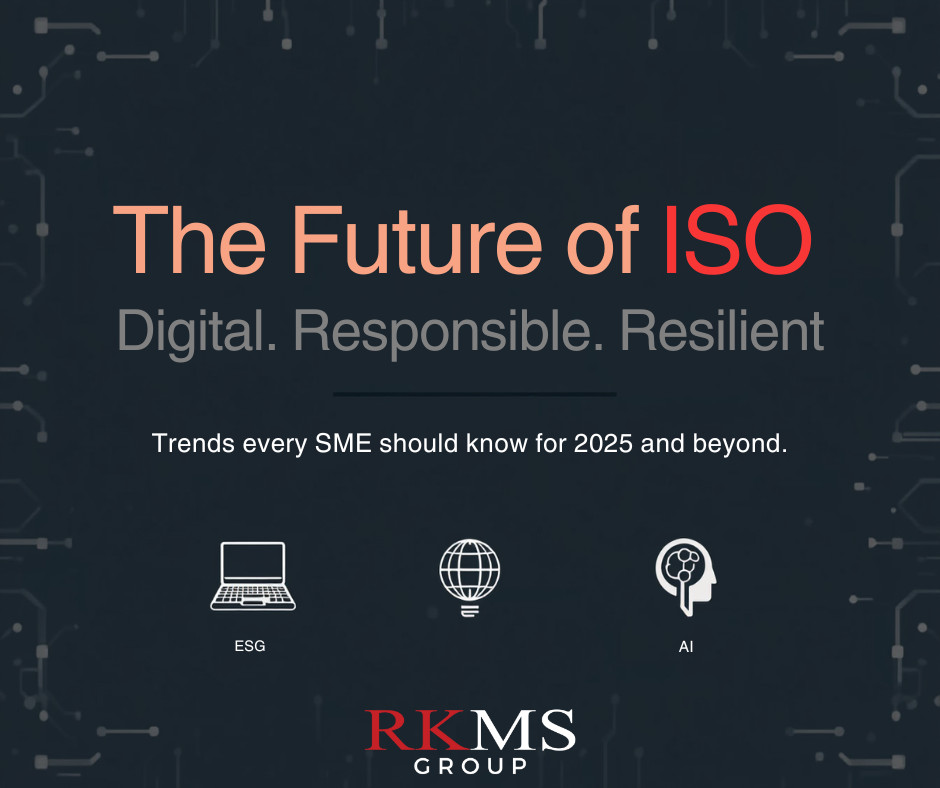
The future of ISO is no longer a distant concept reserved for regulators and large corporates. It is actively unfolding — reshaping how organisations approach compliance, governance, technology and sustainability. As we move towards 2026, ISO standards are evolving to reflect a world defined by digital transformation, ESG accountability and emerging technologies such as artificial intelligence.

For SMEs, understanding the future of ISO is critical. Those that prepare early will not only remain compliant but will also strengthen resilience, credibility and competitive advantage. Those that fail to adapt risk treating ISO as a static obligation in a rapidly changing environment.

This article explores the most important trends shaping the future of ISO — and what SMEs should be doing now to stay ahead.

Why the Future of ISO Is Entering a New Era

The future of ISO is being driven by fundamental shifts in how organisations operate. Global disruption, cyber risk, sustainability pressures and technological innovation have exposed the limitations of traditional, document-heavy compliance models.

In response, ISO standards are increasingly:

  • Strategic rather than administrative

  • Risk-led rather than reactive

  • Integrated rather than siloed

The future of ISO reflects a move away from “certification for certification’s sake”. Instead, ISO is becoming a framework that supports leadership decision-making, long-term planning and organisational resilience — particularly important for growing SMEs.

The Future of ISO Trends Shaping 2025 and Beyond

Several clear themes are defining the future of ISO standards as we begin 2026.

One of the most significant ISO trends for 2026 is organisational resilience. ISO frameworks are placing greater emphasis on risk-based thinking, continuity planning and adaptability in uncertain environments.

Another defining feature of the future of ISO is alignment with regulation and stakeholder expectations. ISO standards increasingly complement legal, regulatory and supply chain requirements, helping SMEs demonstrate due diligence and good governance.

Finally, the future of ISO standards strongly favours integrated management systems. Quality, information security, environmental and health and safety standards are designed to work together, reducing duplication and improving oversight.

The Future of ISO and Digital ISO Systems

Digital transformation sits at the heart of the future of ISO.

Traditional ISO systems often rely on spreadsheets, shared folders and manual audit preparation. While workable, these methods struggle to provide visibility, traceability and real-time assurance. Digital ISO systems are redefining how compliance is managed.

Within the future of ISO, digital ISO systems enable SMEs to:

  • Maintain centralised, live documentation


  • Track risks, actions and controls in real time


  • Reduce audit preparation time and disruption


  • Demonstrate continual improvement more effectively


Auditors are increasingly focused on how systems are used in practice, not just whether procedures exist. Digital ISO systems make it far easier to evidence engagement, ownership and governance — all core expectations within the future of ISO standards.

ESG and ISO in the Future of ISO Standards

ESG and ISO alignment is one of the most influential drivers shaping the future of ISO.

Environmental responsibility, social accountability and strong governance are no longer optional — even for SMEs. Customers, investors and supply chains are demanding transparency and ethical practice, and ISO standards are evolving to reflect this reality.

Within the future of ISO standards, ESG principles are increasingly embedded across frameworks rather than treated as standalone initiatives. This allows SMEs to:

  • Reduce environmental impact through structured systems

  • Strengthen social responsibility and workforce wellbeing

  • Improve governance, accountability and leadership oversight

Rather than creating additional reporting burdens, the future of ISO provides SMEs with a credible, internationally recognised way to embed ESG into everyday operations.

ISO 42001 and the Future of ISO for AI Governance

The introduction of ISO 42001 is a clear indicator of where the future of ISO is heading.

As artificial intelligence becomes more accessible, organisations face new risks around bias, transparency, ethics and accountability. ISO 42001 provides a structured Artificial Intelligence Management System to manage these risks responsibly.

For SMEs, ISO 42001 is particularly relevant. AI adoption is often informal and rapid, increasing exposure to governance and compliance risks. Within the future of ISO, ISO 42001 enables organisations to:

  • Control and document AI usage

  • Align AI systems with organisational values

  • Demonstrate responsible innovation to stakeholders

Importantly, ISO 42001 integrates with existing ISO standards, reinforcing the future of ISO as a unified, scalable management framework.

What the Future of ISO Means for SMEs

The future of ISO brings higher expectations — but also significant opportunity.

SMEs that align early with future ISO trends can:

  • Differentiate themselves in competitive markets

  • Meet customer and supply chain requirements more easily

  • Reduce operational and reputational risk

  • Build management systems that scale with growth

Conversely, organisations that treat ISO as a static compliance exercise may find themselves repeatedly reacting to change rather than planning for it.

Preparing Your Business for the Future of ISO

Preparing for the future of ISO does not mean adopting every new standard immediately. It means building flexible, future-ready systems.

Key steps for SMEs include:

  • Reviewing current ISO systems through a future-of-ISO lens

  • Transitioning towards digital ISO systems

  • Embedding ESG principles into existing processes

  • Working with advisors who understand future ISO trends, not just current requirements

This approach transforms ISO from a compliance obligation into a strategic capability.

The Future of ISO with RKMS

At RKMS, our approach is built around the future of ISO. We help SMEs move beyond short-term certification goals and towards management systems that are resilient, digital and aligned with emerging standards.

By combining deep ISO expertise with insight into ESG, digital transformation and ISO 42001, RKMS supports organisations that want to lead — not follow — the future of ISO.

Conclusion: Staying Ahead in the Future of ISO

The future of ISO is clear: more digital, more integrated and more closely aligned with how modern organisations operate. For SMEs, understanding the future of ISO is no longer optional — it is a competitive advantage.

Interested? — contact us to discuss your ISO future.

Share

Book a Free Consultation Consultation Consultation Consultation

Get free advice and guidance tailored to your business needs

Related Resources

Book a Free Consultation Consultation Consultation Consultation

Get free advice and guidance tailored to your business needs

ISO Compliance vs Certification: The Real Difference Between Certification, Accreditation & Compliance

ISO Compliance vs Certification: The Real Difference Between Certification, Accreditation & Compliance

ISO compliance vs certification

ISO compliance vs certification is one of those phrases that looks straightforward — until you’re asked for “proof” in a tender, a customer questionnaire, or a supplier audit. Add in “accreditation” (and the frequent mention of UKAS in the UK), and it’s no surprise businesses end up using the right words in the wrong way.

This decision is often made very early in an ISO journey and getting it wrong can undermine the credibility of the entire certification.

Understanding the difference between compliance, certification, and accreditation right from the start helps prevent costly missteps later.

The issue isn’t academic. Confusing ISO compliance vs certification (and mixing in accreditation) can lead to wasted spend, weak assurance, and uncomfortable procurement conversations where what you think you’ve proved isn’t what the buyer thinks they’ve asked for.

Let’s clear it up in plain English – definitions, real-world examples, and a simple “what do I actually need?” guide.

ISO compliance vs certification: the three terms in one sentence each

Compliance means you meet requirements (a standard, law, contract, or policy) with or without an external certificate.

Certification means an independent third party has assessed you against a defined standard and issued a certificate (often after an audit).

Accreditation means a recognised authority has confirmed that the organisation doing the certification is competent and impartial to carry it out.

If you only remember one thing, make it this:

ISO compliance is what you do. ISO certification is what a certifier confirms. Accreditation is who confirms the certifier.

ISO compliance vs certification explained (and what certification is....and isn’t)

ISO compliance vs certification in ISO “land”

When people say “we’re ISO certified”, they’re usually talking about management system certification – for example:

  • ISO 9001 (quality management)


  • ISO 27001 (information security)


  • ISO 14001 (environmental management)


This differs from product certification (where a specific product is tested/approved against a scheme). Management system certification is about how your organisation is run: policies, processes, controls, and continual improvement, not a single deliverable.

So in the ISO compliance vs certification debate, a useful simplification is:

  • ISO compliance = operating in line with the ISO requirements.


  • ISO certification = having an external certification body audit that system and issue a certificate.


What you actually get with ISO certification

Typically, certification includes:

  • A certificate stating the standard and your organisation name


  • A scope statement describing what parts of the business are covered (this matters more than most people realise)


  • An audit cycle (often initial assessment, surveillance audits, then recertification)


In other words, ISO certification is not just a document – it’s an ongoing assurance process.

What ISO certification is not

ISO certification is not a guarantee that:

  • nothing will ever go wrong,


  • you will never have an incident,


  • every employee always follows the process perfectly,


  • your legal obligations are automatically met.


Certification is evidence of assessment at a point in time and through an audit cycle – not a blanket promise of perfection. The strongest organisations use certification as a disciplined way to improve, not as a badge to “achieve and forget”.

UKAS accreditation explained (why it matters in the UK)

What accreditation does

Accreditation exists for a simple reason: if buyers and regulators rely on certification, they need confidence the certifier is credible.

Accreditation provides assurance that the organisation providing certification (or testing, inspection, calibration, etc.) is:

  • competent to perform the assessment,

  • impartial and properly governed,

  • consistent in how it audits and makes certification decisions.

UKAS accreditation explained in plain English

In the UK, UKAS (the United Kingdom Accreditation Service) is the national accreditation body. In most ISO compliance vs certification discussions, this is where people get tangled:

  • You want to demonstrate ISO conformity (compliance and/or certification).

  • A certification body audits you and issues an ISO certificate (if you meet requirements).

  • UKAS assesses whether that certification body is competent to provide that certification service.

So, UKAS typically doesn’t “certify your organisation to ISO”. UKAS generally accredits the certification bodies that do.

Scope matters (a lot)

Accreditation is not a generic stamp that applies to everything a provider does. It’s usually specific to standards and activities.

That means a provider may be accredited for some work, while also offering non-accredited services elsewhere. That isn’t automatically “wrong” – but it changes the strength of the assurance and how it will land with a buyer.

Practical takeaway: don’t only ask, “Are you accredited?” Ask, “Are you accredited for this ISO standard and this certification activity?”

Quick sanity-check: is the accredited claim meaningful?

  • Does the certificate clearly state the ISO standard (e.g., ISO 27001)?

  • Does it show a clear scope (what’s covered)?

  • Does it identify the certification body that issued it?

  • Can the certificate be verified (e.g., via certificate number or validation route)?

  • Does the “accredited” claim match the certification activity being sold?

If it’s vague, pause. In ISO compliance vs certification decisions, ambiguity is where money leaks and risk hides.

ISO compliance explained (the most misused term in the ISO compliance vs certification debate)

Compliance to what, exactly?

“Compliant” is only meaningful if you know what you’re complying with. Common sources include:

  • Standards (ISO requirements)

  • Laws and regulations (data protection, health & safety, sector rules)

  • Contracts and customer requirements (supplier codes, security schedules, KPIs)

  • Internal policies (your own governance decisions)

ISO compliance means your system aligns with the ISO requirements and you can evidence that alignment.

ISO compliance vs certification: the key distinction

You can be ISO compliant without being ISO certified. A business might implement ISO 9001- or ISO 27001-aligned controls and operate them effectively, without paying for external certification.

However, many buyers don’t just want reassurance – they want independent proof. That’s where certification becomes commercially useful: it’s a recognisable, third-party signal.

Evidence of ISO compliance (what it looks like)

If you claim ISO compliance (with or without certification), be prepared to evidence it. Depending on the standard, that might include:

  • Policies and procedures

  • Risk assessments and treatment plans

  • Training and awareness records

  • Internal audit reports

  • Incident logs and corrective actions

  • Management review records

  • Supplier assessments

  • Records showing controls are operating (not just written down)

A simple rule: documents show intention; records show reality. That’s central to credible ISO compliance vs certification messaging.

ISO compliance vs certification: the real-world differences at a glance

Term

What it is

Who evaluates?

What proof you get

Typical use

ISO compliance

Meeting ISO requirements

You (and possibly customers)

Evidence/records, self-declaration

Building foundations, meeting requirements without a certificate

ISO certification

Independent assessment to an ISO standard

A certification body

A certificate + scope + audit cycle

Tenders, buyer assurance, market credibility

Accreditation

Independent assurance the certifier is competent

An accreditation body (e.g., UKAS)

Accreditation status/scope for the certifier

Higher confidence in the certificate’s credibility

ISO compliance vs certification: when you need which

If you only need ISO compliance (not certification)

You may only need ISO compliance if:

  • you’re early-stage and building controls before formal assessment,


  • no customers or tenders require a certificate,


  • you’re in a lower-risk context and can evidence controls directly,


  • you’re meeting specific legal/contract requirements that don’t mandate certification.


Compliance-only can be legitimate – but it relies on internal discipline because no external audit cycle is forcing you to keep it current.

When ISO certification is the smarter option

You likely need certification if:

  • tenders explicitly ask for an ISO certificate,

  • procurement uses certification as a gating criterion,

  • competitors are certified and it’s becoming table stakes,

you want a consistent third-party assurance signal.

When accredited ISO certification matters most

You should consider accredited certification if:

  • the requirement explicitly asks for it,
  • you’re in a higher-risk context (critical services, sensitive data, regulated supply),
  • you want fewer procurement debates about credibility,
  • you need a stronger trust signal in the ISO compliance vs certification conversation.

One question that cuts through the noise:
“Is the requirement asking for ISO compliance, ISO certification, or accredited ISO certification?”

A Gap Analysis can also highlight whether UKAS accreditation is required based on your customers, regulators, and scope.

Download your Free Gap Analysis.

Red flags and good signs (avoid costly mistakes)

Red flags

  • “We’re ISO accredited.” (Organisations are typically certified; certifiers are accredited.)
  • Certificates with unclear or suspiciously broad scope
  • Providers promising “guaranteed certification”
  • “ISO compliant” claims with no evidence or no clarity on which ISO standard
  • Pressure selling and vague deliverables

Good signs

  • Clear explanations of scope, audit stages, and expectations
  • Focus on operational reality – not just documents
  • Transparent positioning on accredited vs non-accredited routes
  • Precise language in proposals and marketing

How to talk about ISO compliance vs certification correctly (and build trust)

Good options

  • “We are ISO certified to [standard] for [scope].”

  • “Our ISO certification covers [scope].”

  • “We operate an ISO-aligned management system and can provide evidence of implementation.”

  • “Our certificate is issued by a certification body accredited for this activity.”

Phrases to avoid

  • “We’re ISO accredited.”


  • “We’re fully compliant.” (With what – specifically?)


  • “UKAS certified us.” (UKAS typically accredits certifiers rather than certifying organisations.)


This isn’t pedantry. In practice, precise language reduces risk and increases confidence – exactly what buyers want when they ask about ISO compliance vs certification.

Conclusion: knowledge before investment

ISO compliance vs certification isn’t a trick question – it’s a clarity question. Compliance is how you operate. Certification is independent confirmation. Accreditation is confidence in the certifier. Get the terms right, and you’ll spend money on the right proof, for the right audience, for the right reasons.

Not sure which route is right for your organisation?

👉 Read our Blog: Beyond the Badge: How UKAS Accredited and Non-Accredited ISO both build trust – When used Honestly.

Alternatively, a short discovery call can help clarify certification routes, customer expectations, and risk before you commit.

👉 Book a discovery call

Understand the difference before you invest — knowledge is your best protection.

Next month, we’ll be breaking down ISO Clause 4.1 (Context of the Organisation) – the requirement that directly influences certification scope and accreditation decisions.

Understanding your organisation’s context is the next essential step in building a credible, compliant ISO management system.

Share

Book a Free Consultation Consultation Consultation Consultation

Get free advice and guidance tailored to your business needs
Related Resources

Book a Free Consultation Consultation Consultation Consultation

Get free advice and guidance tailored to your business needs
Continuous Improvement That Sticks: How Lean Builds a Culture That Lasts (and Still Supports ISO Compliance)

Continuous Improvement That Sticks: How Lean Builds a Culture That Lasts (and Still Supports ISO Compliance)

Cheap ISO UK

If your previous blog explored how continuous improvement becomes a culture, this is the practical follow-on: how to make that culture stick through everyday routines. The difference between good intentions and lasting change is rarely motivation. It’s structure.

This article shows how continuous improvement becomes a daily habit through PDCA, Lean management routines, and ISO-style discipline—so progress holds long after the launch meeting, the posters, and the initial enthusiasm.

Done well, a Lean-led approach doesn’t compete with compliance. It strengthens it. You get the best of both worlds: engaged teams who improve how work flows and an organisation that can demonstrate control, consistency, and evidence when it matters.

At the centre of both is a simple engine: Plan–Do–Check–Act (PDCA).

Continuous improvement culture is not a poster. It’s a routine.

Culture isn’t what’s written in a policy, a handbook, or a mission statement. Culture is what people repeat when things get busy, when priorities collide, and when mistakes happen.

A continuous improvement culture forms when teams repeatedly:

  • notice problems early,

  • fix them sensibly (not heroically),

  • learn what worked (and what didn’t),

  • and standardise improvements so they don’t disappear next week.

That rhythm is PDCA in practice—and it’s why Lean programmes feel “alive” rather than performative.

The common language: PDCA is the engine behind Lean and ISO

Lean and ISO often get framed as opposites: Lean is “practical”, ISO is “paperwork”. In reality, they can be highly complementary when you treat ISO as governance and Lean as the delivery mechanism.

PDCA is the shared language that bridges both.

Continuous improvement with PDCA in plain English

Plan: choose a problem worth solving
Not “we should improve communication”. Something you can see and measure:

  • client complaints about late updates,

  • repeat defects on the same job,

  • stockouts that cause urgent orders,

  • wasted hours searching for tools, files, or information.

Define what “better” means with one or two measures:

  • reduce rework from 18% to 10%,

  • cut tool-search time from 15 minutes per shift to 5,

  • reduce complaints from 12 per month to 6.

Do: run a small test, not a grand roll-out
Continuous improvement works fastest when you run small experiments:

  • trial a checklist for two weeks,

  • change the layout of a workspace for one shift pattern,

  • pilot a daily 10-minute huddle in one team.

Check: compare results to expectations (facts > opinions)
This is where many organisations quietly skip the work. “It feels better” isn’t a check.
Checking means:

  • did the measure move?

  • did the change create a new problem?

  • what did we learn?

Act: lock it in—or adjust and cycle again
If it worked, standardise it:

  • update the process,

  • train the team,

  • make it the new normal.

If it didn’t work, don’t hide it. Learn and run the next test.

This is why PDCA builds culture: repeating the cycle turns continuous improvement into habit, not a special event.

The Human Cost of Overcomplicated ISO Systems

Lean management programmes: shift from projects to routines

Many Lean management programmes fail for one reason: they become a collection of projects. Projects end. Culture doesn’t.

A Lean-led organisation builds routines that make continuous improvement unavoidable:

  • Daily huddles to surface issues early and assign actions fast

  • Visual management so performance is visible and abnormalities stand out

  • Standard work to create stability (you can’t improve chaos)

  • Structured problem-solving so teams fix causes, not symptoms

Lean is not “do more with less”. It’s “do less wasted work, so the same people deliver more value”.

Waste reduction isn’t ‘sacking people’—it’s continuous improvement of time, flow and productivity

Let’s tackle a common fear directly: waste reduction is not a polite way of saying redundancies.

In a healthy Lean system, waste is:

  • time spent waiting,

  • time spent fixing errors,

  • time spent hunting for information,

  • repeated approvals,

  • unnecessary movement,

  • excess inventory that ties up cash and creates confusion.

That’s not “people waste”. That’s process waste—and it costs money because time is money.

If someone is paid for eight hours but loses 90 minutes to rework, searching, waiting, and avoidable interruptions, the organisation hasn’t “saved money” by holding headcount flat. It has simply bought expensive time and then thrown a chunk of it away.

Continuous improvement is about getting the most from wages by enabling people to do productive, value-adding work:

  • fewer avoidable mistakes,

  • smoother handovers,

  • less firefighting,

better flow and less frustration.

Continuous improvement examples that remove wasted time (not jobs)

  • Searching for tools: 10 people × 10 minutes per day = 100 minutes daily. Across a year, that’s weeks of paid time spent walking and hunting rather than producing value.

  • Fixing avoidable defects: a 5-minute error can easily cost 45 minutes to correct once it moves downstream—especially when it triggers checks, approvals, and rework loops.

  • Handling client complaints: one complaint can consume multiple touchpoints—calls, emails, investigation, rework, and goodwill gestures—often far more time than doing it right first time.

  • Overstocking: you don’t just pay for stock. You pay in storage space, handling, obsolescence, counting, and the time spent searching through piles of “just in case”.

An efficient process and workspace don’t just look tidy. They return time to the team—and time is the one resource you never get back.

Where ISO fits: continuous improvement with compliance by design

Lean gives you speed and engagement. ISO-style management systems give you:

  • governance,

  • consistency,

  • traceability,

  • controlled change,

  • and a reliable way to prove you’re doing what you said you do.

The best combination is compliance by design, not compliance by inspection.

When continuous improvement is run through PDCA, you naturally create:

  • records of problems and actions,

  • checks on effectiveness,

  • updated processes where needed,

  • training/briefing evidence,

  • management review inputs (trends, risks, performance).

In other words: your improvement culture produces audit-friendly evidence as a by-product of running the organisation well—not a last-minute scramble before an external visit.

Continuous improvement and waste reduction that people can feel

Efficient processes and workspaces aren’t just “nice to have”. They directly reduce:

  • rework (less corrective action),

  • errors (fewer nonconformities),

  • client complaints (higher satisfaction and fewer escalations),

  • overstocking (less cash tied up and fewer mistakes),

  • time wasted searching for tools/files (more productivity and consistency).

If you want buy-in, lead with what people experience:

  • fewer interruptions,

  • fewer avoidable mistakes,

  • less “where’s that file/tool/part?”,

  • clearer priorities,

  • fewer last-minute panics.

That’s what makes continuous improvement stick: it improves daily life, not just dashboards.

Practical continuous improvement examples using PDCA (so it doesn’t stay abstract)

Below are realistic mini-cases you can run without turning your organisation upside down.

Example 1 — An efficient workspace reduces tool-search time and defects

Plan: Operators report frequent delays finding calibrated tools. Defects increase when “close enough” tools are used.

Do: Introduce shadow boards, labelled locations, and a simple “tool missing” escalation. Trial for two weeks on one line.

Check: Measure (a) tool-search time per shift, (b) defects linked to measurement.

Act: Standardise the layout and labels, add a quick weekly check, and make tool-control part of onboarding.

Result: less wasted time, fewer errors, and stronger control—excellent for quality and compliance.

Example 2 — A clearer process reduces rework and client complaints

Plan: Clients complain about inconsistent deliverables and late updates. Internally, teams redo work due to unclear requirements.

Do: Implement a standard intake template and a “definition of done” checklist. Pilot with one account team.
Check: Track rework rate, turnaround time, and complaint volume for four weeks.

Act: Standardise the template, train teams, and build the checklist into the workflow so it isn’t optional.

Result: fewer complaints, less rework, and an auditable trail of what was agreed and delivered.

Example 3 — Reduce overstocking without risking stockouts

Plan: Overstock ties up cash and creates confusion, yet teams still run out of critical items.

Do: Identify the top 20 fast-moving items. Introduce simple min/max levels and a visual reorder trigger (two-bin or kanban card).

Check: Measure stockouts, urgent orders, and inventory value over eight weeks.

Act: Expand to more items, standardise reorder rules, and review monthly.

Result: less waste in storage and handling, better availability, and clearer control of materials.

Example 4 — Daily management reduces firefighting (and improves accountability)

Plan: Late jobs and rushed fixes are common, but root causes are vague and ownership is blurred.

Do: Start a 10-minute daily huddle with three questions:

  1. What’s the plan today?

  2. What’s blocking us?

  3. What’s yesterday’s performance telling us?

Check: Track late jobs, escalations, and repeat issues.

Act: Standardise the huddle format and escalation rules; review weekly trends.

Result: fewer surprises, faster issue resolution, and a culture that tackles problems early.

Leadership behaviours that lock in a continuous improvement culture

Lean tools won’t save a culture that’s waiting for “the Lean person” to fix everything. Sustained continuous improvement requires leadership routines.

Leaders must:

  • ask for evidence (“What did we learn?” “Did it work?”),

  • protect time for improvement (small, regular, non-negotiable),

  • remove systemic barriers (not just chase symptoms),

  • reward standardisation as much as innovation.

Guardrails that prevent “Lean theatre”:

  • If it’s not measured, it’s not checked.

  • If it’s not standardised, it won’t stick.

  • If it’s not owned, it won’t scale.

Start small — 3 practical ways to apply continuous improvement today

  1. Run a 30-minute PDCA on one recurring annoyance
    Pick one friction point (searching, rework, waiting). Define “better” in one metric. Trial one change this week.

  2. Create one visual metric that makes problems obvious
    One board, one trend line, one agreed response when it goes off-track. Visibility turns “opinions” into action.

  3. Standardise one win
    When something works, lock it in: update the process, brief the team, and set a date to re-check in 30 days. Improvement without standardisation is just temporary luck.

Closing: the goal is a learning organisation, not a one-off programme

Lean gives you momentum. ISO-style discipline gives you consistency. Together, they create what most organisations actually want: a learning organisation that improves performance, reduces waste, and stays in control—not because someone is watching, but because it’s how work gets done.

Continuous improvement that lasts isn’t a campaign. It’s a cadence. And the best time to start is with one small PDCA cycle—this week.

Share

Book a Free Consultation Consultation Consultation Consultation

Get free advice and guidance tailored to your business needs
Related Resources

Book a Free Consultation Consultation Consultation Consultation

Get free advice and guidance tailored to your business needs
Risk Based Thinking ISO Explained: ISO 9001 for SMEs

Risk Based Thinking ISO Explained: ISO 9001 for SMEs

Risk Based Thinking ISO

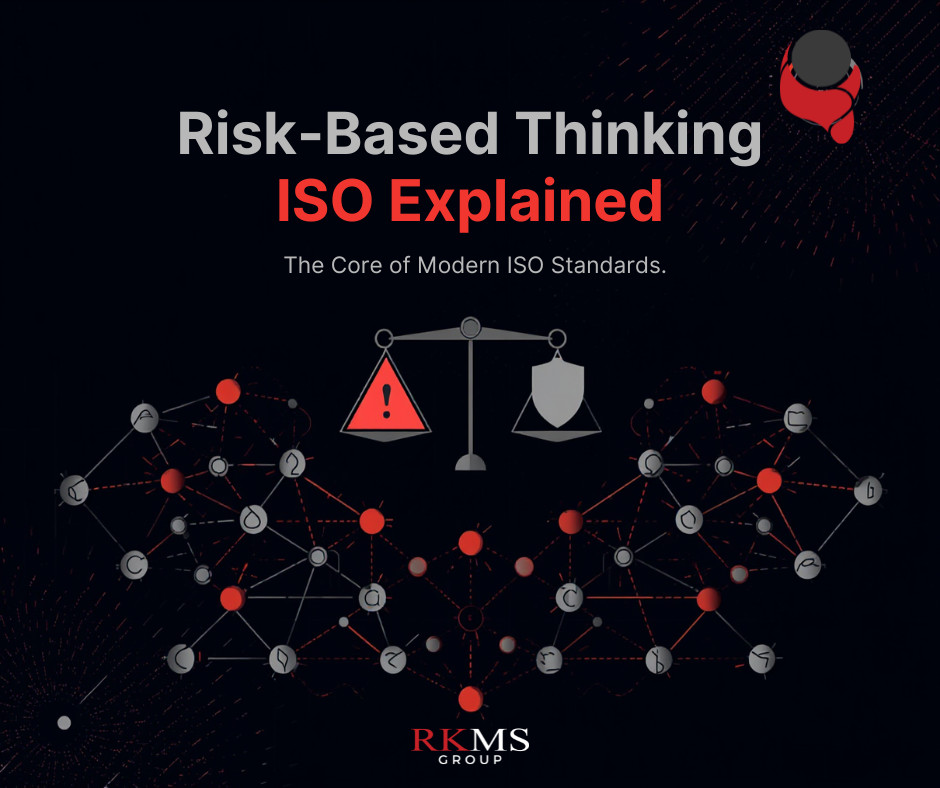
Modern businesses operate in an environment shaped by uncertainty — supply chain disruption, cyber threats, skills shortages and changing regulations. For small and medium-sized enterprises (SMEs), these uncertainties can have a disproportionate impact. This is why risk based thinking ISO principles are now central to modern ISO standards, including ISO 9001.

Rather than reacting to problems after they occur, ISO standards promote a proactive mindset: anticipating what could go wrong, understanding the potential impact, and putting sensible controls in place. Risk based thinking ISO is not about fear, paperwork or bureaucracy. It is about better planning, stronger decision-making and greater resilience.

This article explains what risk based thinking ISO really means, how it supports ISO 9001 risk management, and how SMEs can apply it in practical, everyday situations — from supplier risk to data protection and health & safety.

What Is Risk Based Thinking ISO and Why Does It Matter?

At its simplest, risk based thinking ISO means considering uncertainty when making decisions. ISO defines risk as the effect of uncertainty, which can be either negative (a threat) or positive (an opportunity).

Risk based thinking ISO requires organisations to:

  • Identify what could affect their objectives

  • Consider the likelihood and impact of those risks

  • Take proportionate action to control them

  • Review and improve over time

Importantly, ISO does not require complex risk management frameworks or formal risk registers. Instead, it expects organisations to embed risk awareness into everyday processes and leadership thinking.

For SMEs, this approach is particularly valuable. It allows businesses to manage uncertainty intelligently without adding unnecessary cost or administration.

Why Risk Based Thinking ISO Is Central to ISO 9001

The introduction of risk based thinking ISO in ISO 9001 marked a major shift in how quality management systems operate. Earlier versions of the standard focused heavily on procedures and corrective actions. ISO 9001 now focuses on prevention rather than correction.

ISO 9001 risk management requires organisations to:

  • Understand internal and external issues

  • Identify risks and opportunities that could affect quality objectives

  • Plan actions to address those risks

  • Integrate those actions into business processes

This approach aligns quality management with real business challenges. Instead of waiting for nonconformities, customer complaints or audit findings, organisations are expected to prevent problems before they occur.

For SMEs, this means ISO 9001 becomes a tool for proactive business management, not just a certification exercise.

How Risk Based Thinking ISO Supports Proactive Business Management

Proactive business management is about staying in control rather than reacting under pressure. Risk based thinking ISO supports this by encouraging leaders to ask structured questions before issues arise, such as:

  • What could prevent us from meeting customer expectations?

  • Where are we overly dependent on one supplier, system or individual?

  • What external changes could disrupt our operations?

By asking these questions early, SMEs gain visibility over vulnerabilities and can take low-cost, high-impact actions.

Risk based thinking ISO also helps organisations identify opportunities — for example, improving a process, strengthening a supplier relationship or adopting new technology safely.

Supplier Risk Planning Using Risk Based Thinking ISO

Supplier dependency is one of the most common risks facing SMEs. Many small businesses rely on a limited number of suppliers, often for cost or convenience reasons.

Common supplier risks include:

  • Late or missed deliveries

  • Inconsistent quality

  • Financial instability

  • Single-source dependency

Applying risk based thinking ISO

Rather than waiting for a supplier failure, SMEs can use risk based thinking ISO to:

  • Identify critical suppliers

  • Assess the impact of disruption

  • Put proportionate controls in place

Practical controls may include:

  • Approving alternative suppliers

  • Holding buffer stock for critical materials

  • Monitoring supplier performance trends

  • Including clear service expectations in contracts

This approach supports ISO 9001 risk management requirements while protecting customer delivery and reputation.

Managing Data Risk with Risk Based Thinking ISO

Data is essential to modern business operations, yet many SMEs underestimate the risks associated with data loss or cyber incidents.

Typical data risks include:

  • Loss of customer or operational data

  • Cyber-attacks or phishing

  • Inadequate backups

  • Uncontrolled access to sensitive information

Applying risk based thinking ISO

Risk based thinking ISO encourages SMEs to ask:

  • What data is critical to our business?

  • What would be the impact if it was lost or compromised?

  • How likely is this risk given our current controls?

Practical controls may include:

  • Regular automated backups

  • Role-based access controls

  • Strong password policies

  • Basic cyber-security awareness training

These actions demonstrate proactive business management and support both ISO 9001 and wider information security expectations.

Health & Safety Control Through Risk Based Thinking ISO

Health & safety is an area where risk based thinking ISO is often misunderstood. Many SMEs treat health & safety as a paperwork exercise rather than a preventative tool.

Common health & safety risks include:

  • Slips, trips and falls

  • Manual handling injuries

  • Equipment misuse

  • Work-related stress and fatigue

Applying risk based thinking ISO

Instead of relying on generic risk assessments, SMEs can:

  • Consider how work is actually carried out

  • Identify changes that increase risk (new staff, new equipment)

  • Encourage reporting of near-misses

Practical controls may include:

  • Task-specific training

  • Clear work instructions

  • Routine workplace walk-arounds

  • Open communication about hazards

Embedding risk based thinking ISO into daily activities helps prevent harm before incidents occur and supports a positive safety culture.

Benefits of Risk Based Thinking ISO for SMEs

Risk based thinking ISO delivers tangible benefits beyond ISO certification.

1. Fewer Disruptions

Identifying risks early reduces downtime, delays and last-minute problem solving.

2. Better Decision-Making

Leaders make informed decisions by weighing risk alongside opportunity.

3. Increased Business Resilience

SMEs become better prepared for supply issues, staff changes and market volatility.

4. Stronger Customer Confidence

Consistent delivery builds trust and long-term relationships.

5. Simpler ISO Compliance

Auditors look for awareness and control, not paperwork. Risk based thinking ISO makes audits smoother and more meaningful.

How to Embed Risk Based Thinking ISO in Everyday Business

Successful implementation does not require complex systems. Instead, SMEs should focus on leadership behaviour and consistency.

Start with leadership

  • Discuss risks during management meetings

  • Link risks to business objectives

  • Encourage forward-looking conversations

Integrate into processes

  • Ask “what could go wrong?” when planning changes

  • Consider risk when onboarding suppliers or staff

  • Review risks after incidents and near-misses

Keep it proportionate

  • Focus on what matters most

  • Avoid unnecessary documentation

  • Scale controls to the level of risk

When risk based thinking ISO becomes part of how people think — not just what they document — it delivers lasting value.

Risk Based Thinking ISO: A Smarter Way Forward

Risk based thinking ISO is not about restriction or fear. It is about confidence, clarity and control in an uncertain business environment. For SMEs, it provides a practical framework for proactive business management without unnecessary complexity.

By identifying risks early, planning proportionately and reviewing regularly, organisations strengthen resilience, protect customers and support sustainable growth.

ISO 9001 risk management is not a barrier — it is a foundation for smarter, stronger businesses.

Discover how risk based thinking ISO can make your business more resilient.

Whether you are new to ISO standards or looking to strengthen your existing management system, embedding risk-based thinking is one of the most effective steps you can take.

Share

Book a Free Consultation Consultation Consultation Consultation

Get free advice and guidance tailored to your business needs

Related Resources

Book a Free Consultation Consultation Consultation Consultation

Get free advice and guidance tailored to your business needs
ISO Culture: How Leadership Drives Real ISO Success

ISO Culture: How Leadership Drives Real ISO Success

ISO Culture

ISO success is often misunderstood. Many organisations assume that achieving certification is about procedures, documents, and audits. As a result, ISO becomes an administrative burden rather than a business asset.

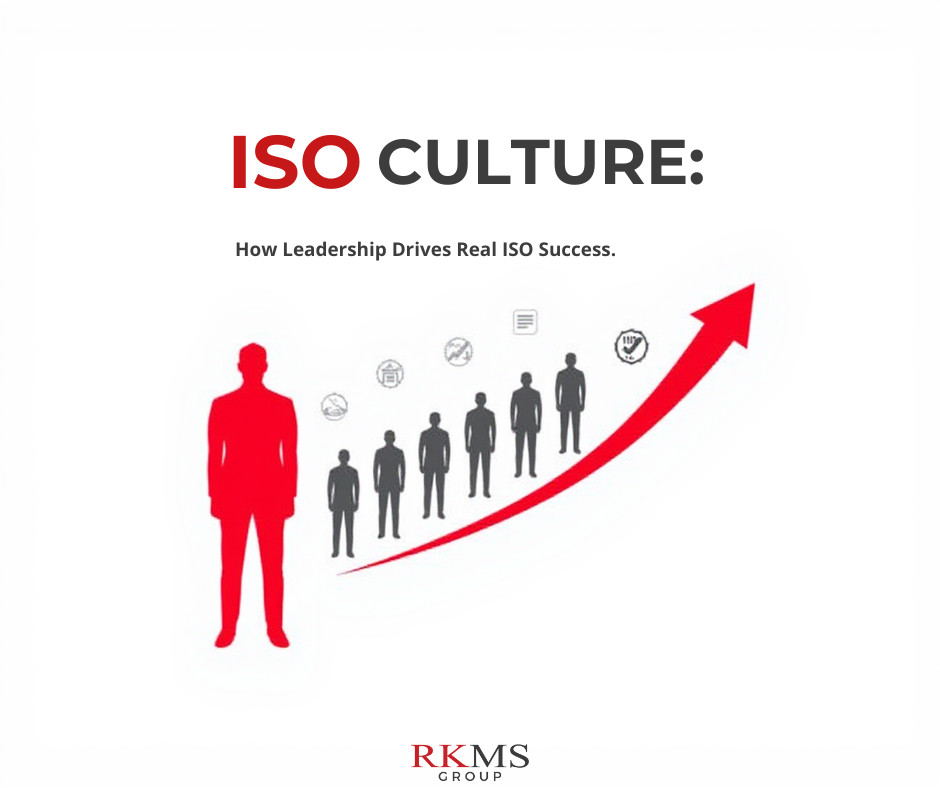
In reality, ISO success is not built on paperwork — it is built on ISO culture.

ISO culture reflects how people think, behave, and make decisions every day. And like any organisational culture, it is shaped first and foremost by leadership. Where leadership is engaged, ISO becomes embedded. Where leadership is distant, ISO becomes a tick-box exercise that delivers little long-term value.

Why ISO Culture Matters More Than Certification

Certification proves that a system exists. ISO culture proves that the system works.

Organisations with weak ISO culture often share the same characteristics:

  • Procedures exist but are ignored

  • Audits trigger panic rather than learning

  • Improvement actions stall once certification is achieved

By contrast, organisations with strong ISO culture treat ISO as “how we work”, not “what we show auditors”. Processes are followed because they make sense, not because they are written down.

ISO culture is what turns compliance into consistency — and consistency into improvement.

Leadership Responsibility in Building ISO Culture

ISO 9001 is clear that culture does not develop by accident. Clause 5, Leadership, places responsibility for the effectiveness of the management system directly with top management.

This includes responsibility for:

  • Setting direction and priorities

  • Aligning ISO objectives with business goals

  • Promoting continual improvement

  • Supporting people to follow and improve processes

ISO culture weakens when leadership responsibility is delegated too far. While tasks can be assigned, ownership of culture cannot.

Aligning ISO Culture with Business Strategy

ISO culture thrives when it supports what the business is trying to achieve.

When leaders align ISO objectives with strategic goals — such as growth, customer satisfaction, efficiency, or risk management — ISO becomes relevant. Staff can see why processes exist and how improvement benefits the organisation as a whole.

Where this alignment is missing, ISO feels artificial. People comply when they must, but disengage when pressure is removed.

Strong leadership ensures ISO culture reinforces strategy, rather than competing with it.

Resourcing ISO Culture Properly

Culture is shaped by what leaders prioritise. When improvement actions are delayed, audits are rushed, or ISO discussions are sidelined, the message is clear: ISO is optional.

Leaders strengthen ISO culture by:

  • Providing time for improvement activities


  • Empowering people to make changes


  • Acting decisively on audit findings and feedback


When leaders remove barriers instead of creating them, ISO becomes credible — and culture follows.

How Leadership Behaviour Shapes ISO Culture

ISO culture is not defined by policies. It is defined by behaviour.

Employees observe:

  • Whether leaders attend management reviews

  • How audit findings are discussed

  • Whether mistakes lead to learning or blame

  • How performance data is used in decisions

If leaders treat ISO as an administrative exercise, the organisation will too. If leaders use ISO as a decision-making tool, ISO becomes embedded into everyday operations.

Culture is built through consistency, not slogans.

From Compliance Culture to Improvement Culture

A compliance-driven ISO culture focuses on passing audits. An improvement-driven ISO culture focuses on performing better.

The shift happens when leadership:

  • Encourages questions about processes


  • Uses evidence rather than opinion


  • Treats non-conformities as opportunities, not failures


Over time, ISO stops feeling like an external requirement and starts functioning as an internal framework for improvement.

Engagement Starts at the Top

Staff engagement with ISO culture reflects leadership engagement almost perfectly.

When leaders explain why ISO matters — not just what is required — people are more likely to participate meaningfully. Engagement grows when staff understand how ISO supports customers, reduces frustration, and improves outcomes.

ISO culture becomes stronger when people feel ownership, not enforcement.

ISO Culture as a Driver of Long-Term Improvement

ISO delivers the most value when it is used as a management system, not a certification tool.

Management reviews, for example, are designed to be leadership-led discussions about:

  • Performance trends

  • Risks and opportunities

  • Improvement priorities

When leaders actively use these forums, ISO culture supports long-term thinking, data-driven decisions, and continual improvement.

Improvement becomes part of normal management behaviour — not an annual exercise.

Common Leadership Behaviours That Undermine ISO Culture

ISO culture weakens when leadership unintentionally sends the wrong signals, such as:

  • Treating ISO as a one-off project

  • Only engaging during external audits

  • Ignoring recurring issues

  • Allowing ISO objectives to drift away from business priorities

These behaviours erode trust in the system and reduce engagement across the organisation.

Embedding ISO Culture into Your Organisation

Embedding ISO culture does not require constant reference to the standard. It requires leadership behaviours that align with ISO principles:

  • Clear direction and priorities

  • Regular performance review

  • Constructive accountability

  • Continuous improvement mindset

When leadership behaviour and ISO requirements align, the system becomes sustainable — and certification becomes a natural outcome, not the goal.

Conclusion: ISO Culture is a Leadership Choice

ISO culture does not come from documentation. It comes from leadership decisions made every day.

Organisations that gain lasting value from ISO understand that culture determines success. When leaders demonstrate commitment, consistency, and accountability, ISO becomes embedded into how the organisation operates.

ISO culture is built from the top — and lived throughout the business.

Learn how to embed ISO into your company culture, speak with one of our team today 

Share

Book a Free Consultation Consultation Consultation Consultation

Get free advice and guidance tailored to your business needs

Related Resources

Book a Free Consultation Consultation Consultation Consultation

Get free advice and guidance tailored to your business needs

ISO Audit Process: What Actually Happens During an ISO Audit

ISO Audit Process: Inside the Audit – What Actually Happens During an ISO Audit

ISO Audit Process

ISO audit process concerns trigger immediate anxiety for many organisations. Visions of intense questioning, endless documents, and the fear of “failing” are common — especially for first-time certification or newly appointed compliance leads.

The reality, however, is far less intimidating.

An ISO audit is a structured, professional review of your management system, not an interrogation or a test of individual performance. Once you understand the ISO audit process and what auditors are really looking for, much of the fear disappears.

This article walks you through exactly what happens during an ISO audit, what evidence auditors expect to see, and how to prepare and interact confidently — without overcomplicating things

What Is the ISO Audit Process – Really?

At its core, the ISO audit process is a conformity assessment. The auditor’s job is to verify that your management system:

  • Meets the requirements of the relevant ISO standard


  • Is implemented in practice (not just on paper)


  • Is effective in achieving its intended outcomes


Importantly, auditors are not there to catch people out. They are assessing systems and processes, not judging individuals or trying to create failures.

There are several types of ISO audits within the wider ISO audit process:

  • Certification audits (initial approval)


  • Surveillance audits (ongoing annual checks)


  • Recertification audits (typically every three years)


While the depth varies, the overall approach remains consistent and predictable.

The ISO Audit Process Explained Step by Step

ISO Audit Process: Before the Audit – Preparation and Planning

The ISO audit process begins well before the auditor arrives.

You’ll receive:

  • Confirmation of audit scope and standard


  • An audit plan outlining timing, areas to be reviewed, and key contacts


  • Requests for key documents (often in advance)


At this stage, preparation should focus on readiness, not perfection. Auditors expect to see a system that works — not one that was frantically polished the night before.

Good preparation within the ISO audit process includes:

  • Ensuring documents are approved and current


  • Checking records are available and accessible


  • Making sure staff understand their role in the system


What preparation is not:

  • Writing brand-new procedures just for the audit


  • Coaching staff with scripted answers


  • Trying to hide weaknesses

ISO Audit Process: Stage 1 Audit – The Readiness Review

For certification audits, Stage 1 within the ISO audit process is a readiness assessment, not a pass-or-fail event.

The auditor will typically review:

  • Your management system scope

  • Key policies and objectives

  • Risk assessments and planning processes

  • Legal or regulatory awareness

  • Internal audit and management review arrangements

The purpose of Stage 1 in the ISO audit process is to confirm that:

  • Your system is designed in line with the standard

  • You are ready to proceed to Stage 2

Any gaps identified at Stage 1 are there to help you prepare — not to penalise you.

ISO Audit Process: Stage 2 Audit – The Main Event

Stage 2 is what most people think of as “the audit” and represents the core of the ISO audit process.

It begins with an opening meeting, where the auditor:

  • Confirms the scope and agenda

  • Explains how findings are graded

  • Reiterates that the audit is based on sampling

From there, the ISO audit process follows a process-based approach. Auditors don’t check everything — they sample evidence to build confidence that your system works consistently.

Typical activities include:

  • Reviewing records and documents

  • Interviewing staff at different levels

  • Observing activities and site conditions

The auditor is constantly asking one key question:
“Can this organisation demonstrate that it does what it says it does?”

ISO Audit Process: What Evidence Do Auditors Really Look For?

One of the biggest sources of confusion in the ISO audit process is the idea of “evidence”.

ISO auditors look for objective evidence, which usually falls into three categories:

  1. Records – completed forms, logs, reports, meeting minutes

  2. Interviews – staff explaining what they do and why

  3. Observations – seeing processes carried out in practice

Crucially, evidence within the ISO audit process must show consistency, not perfection.

ISO Audit Process: How Auditors Ask Questions

Auditor questions during the ISO audit process are typically open and neutral, such as:

  • “Can you show me how this process works?”

  • “What happens if something goes wrong here?”

  • “How do you know this is effective?”

The best approach for staff during the ISO audit process is:

  • Answer honestly and calmly

  • Explain what they actually do, not what the procedure says

  • Show evidence where possible

ISO Audit Process: Understanding Non-conformities Without the Fear

A non-conformity within the ISO audit process simply means a requirement of the standard has not been fully met.

They are usually categorised as:

  • Minor non-conformities – isolated or low-risk issues


  • Major non-conformities – systemic or high-risk failures


Non-conformities are not a judgement of competence and do not automatically mean certification failure. In most cases, they require corrective action to address the root cause and prevent recurrence.

Auditors also raise:

  • Observations


  • Opportunities for improvement


These are valuable insights, not criticisms.

ISO Audit Process: Common Mistakes and How to Avoid Them

Many problems in the ISO audit process arise from behaviour rather than system gaps. Common mistakes include:

  • Over-documenting processes that don’t add value

  • Treating the audit like an exam

  • Becoming defensive or argumentative

  • Trying to control every conversation

The most successful audits happen when organisations are:

  • Open and cooperative

  • Prepared but relaxed

  • Focused on showing real practices

ISO Audit Process: What Happens After the Audit?

The audit concludes with a closing meeting, a standard part of the ISO audit process, where the auditor:

  • Summarises findings


  • Explains any non-conformities


  • Outlines next steps and timelines


You’ll then receive a formal audit report. If corrective actions are required, these are typically submitted with evidence within an agreed timeframe.

Certification decisions are based on:

  • The effectiveness of your system


How issues are addressed — not whether they existed.

ISO Audit Process: How to Prepare Calmly and Confidently

The key to a successful ISO audit process is understanding that it is a review of your system, not a test of your people.

Preparation, clarity, and honesty go much further than last-minute fixes or excessive documentation.

Final Takeaway

When you understand the ISO audit process, know what evidence matters, and approach the audit professionally, it becomes a valuable tool for improvement — not something to fear.

Share

Book a Free Consultation Consultation Consultation Consultation

Get free advice and guidance tailored to your business needs

Related Resources

Book a Free Consultation Consultation Consultation Consultation

Get free advice and guidance tailored to your business needs

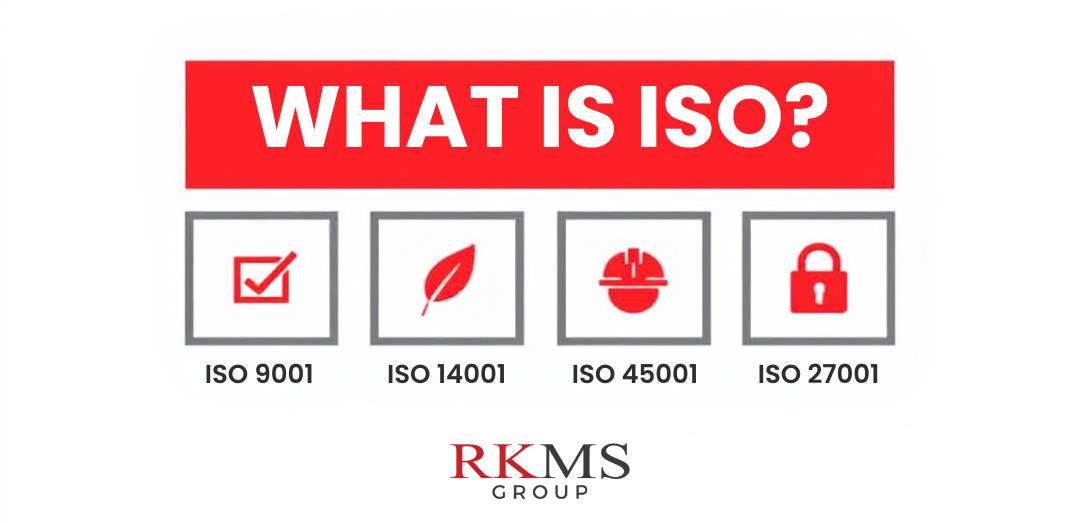
What is ISO? What ISO 9001, 14001, 45001 & 27001 Mean for Your Business

What is ISO? Demystifying 9001, 14001, 45001 and 27001 for Your Business

what is ISO

If you’ve ever typed “what is ISO” into a search engine and been hit with a wall of jargon, you’re not alone.

Many business leaders hear, “We should get ISO certified,” without ever getting a clear, plain-English answer to what ISO is or what ISO 9001, 14001, 45001 or 27001 actually mean for their organisation. Is it just paperwork? Is it only for big corporates? Do you really need more than one ISO standard?

This article is designed to cut through the jargon. By the end, you’ll have a clear understanding of what ISO is, what ISO 9001, ISO 14001, ISO 45001 and ISO 27001 really do for your organisation – and how they fit together to support a stronger, more resilient business.

What is ISO and why does it feel so complicated?

When people first ask “what is ISO?”, they’re often met with technical language: clauses, audits, accreditation, certification bodies and so on. For many leaders, the first reaction is:

  • “Which ISO do we actually need?”

  • “Is this just more red tape?”

  • “Will it slow the business down?”

The reality is much simpler. What ISO gives you is a set of structured, internationally recognised ways of running important parts of your business. ISO standards help you:

  • Work more consistently

  • Manage risk in a disciplined way

  • Demonstrate to customers that you’re serious about doing things properly

In this article, we’ll look at four of the most common standards:

  • ISO 9001 – quality

  • ISO 14001 – environment

  • ISO 45001 – health and safety

  • ISO 27001 – information security

We’ll focus on what ISO is in practice, not the clause numbers.

What is ISO and what do we mean by “ISO standards”?

What is ISO in a nutshell?

At the simplest level, when we ask “what is ISO?”, we’re talking about the International Organization for Standardization – a global body that brings together experts to agree what “good” looks like in different areas of business and technology.

The documents they publish – ISO standards – are essentially agreed rulebooks or blueprints. They don’t tell you exactly how to run your organisation, but they do set out the principles and key elements you should have in place.

So when someone asks “what is ISO 9001” or “what is ISO 27001”, they’re really asking about a specific rulebook within this wider ISO family.

What is an ISO management system actually in practice?

Another common question is “what is an ISO management system?”

It’s not just a pile of documents in a folder. An ISO management system is the whole way you plan, run, check and improve a particular area of your business, in line with a chosen ISO standard. That usually includes:

  • Policies (your intent and direction)

  • Processes and procedures (how things are done)

  • Roles and responsibilities

  • Records and evidence (what actually happened)

  • Regular reviews and improvements

If it’s done well, the system is built around how your organisation really operates – not the other way round.

What is ISO certification vs just “using the standard”?

You can:

  • Use an ISO standard informally as guidance – shaping your processes around its principles, or

  • Go for formal ISO certification, where an independent body audits you and confirms you meet the standard’s requirements.

Certification can be valuable when:

  • Customers or regulators expect it

  • You want a recognised mark of assurance

  • You’re bidding for tenders where ISO certification is a prerequisite

However, you don’t have to be certified to get value from thinking in an ISO way. Many improvements come simply from adopting the underlying approach.

What is ISO 9001 in simple terms?

If you’ve ever wondered “what is ISO 9001?”, here’s the short answer:

ISO 9001 is a framework for making sure you consistently deliver what you promised to your customers.

What is ISO 9001 really about – keeping your promises to customers

ISO 9001 focuses on quality management – not just product quality, but the overall experience you provide. It helps you:

  • Understand what customers need and expect

  • Design your processes to deliver that, reliably

  • Spot problems early and fix root causes

  • Keep improving rather than firefighting

Think of it as a playbook for “how we do things here” so that customers get a consistent result, whether they deal with you next week, next year or via a different team.

What is an ISO 9001 system like day to day?

In practical terms, an ISO 9001-aligned system often includes:

  • Clear, documented processes for key activities (sales, delivery, production, service)

  • Defined responsibilities and handovers to reduce errors and confusion

  • A structured way to handle issues, complaints and nonconformities

  • Regular reviews of performance, risks and opportunities for improvement

It’s about making your business more predictable – in a good way.

What are the business benefits of ISO 9001?

Done well, ISO 9001 can lead to:

  • Fewer mistakes and rework, saving time and cost

  • Happier customers who get what they were promised

  • Easier onboarding of new staff because processes are clear

  • Stronger credibility when tendering or seeking new clients

At its heart, ISO 9001 supports a culture of “get it right, and keep getting better”.

What is ISO 14001? ISO 14001 explained in plain English

When people search for “ISO 14001 explained” or “what is ISO 14001?”, they’re usually trying to understand how it links to their day-to-day operations.

ISO 14001 helps you understand and control how your business affects the environment.

What is ISO 14001 really doing – knowing and controlling your footprint

Every organisation has an environmental footprint – energy use, waste, emissions, resource consumption, transport and more. ISO 14001 gives you a structured way to:

  • Identify where you interact with the environment

  • Assess the risks and impacts (positive and negative)

  • Put sensible controls in place

  • Set objectives to reduce your impact over time

It moves you from reactive compliance (“let’s hope we’re doing the right thing”) to proactive environmental management.

What is an ISO 14001 system like in practice?

In daily operations, an ISO 14001-based system typically means:

  • Mapping your environmental aspects (e.g. waste streams, water use, emissions)

  • Setting measurable objectives and targets (e.g. reduce energy use by X%)

  • Implementing controls: recycling schemes, more efficient equipment, greener procurement

  • Monitoring key measures and regularly reviewing performance

It’s not about perfection overnight; it’s about being systematic and improving.

What are the business benefits of ISO 14001 beyond “being green”?

The benefits of ISO 14001 reach beyond sustainability credentials:

  • Reduced costs through lower energy, water and waste bills

  • Simpler compliance with environmental laws and regulations

  • Stronger brand and reputation with customers, investors and employees

  • Lower risk of environmental incidents, fines or negative publicity

In other words, when you ask “what is ISO 14001 doing for us?”, the answer is often “improving performance while protecting the planet”.

What is ISO 45001? Benefits of a proactive safety culture

Health and safety can easily become a tick-box exercise. ISO 45001 exists to change that. When people ask “what is ISO 45001 and what are the benefits?”, they’re really asking about your approach to people’s wellbeing.

ISO 45001 is about preventing harm and building a genuine culture of safety at work.

What is ISO 45001 really about – preventing harm, not just ticking boxes

ISO 45001 focuses on occupational health and safety. It asks you to:

  • Identify risks to people in and around your workplace

  • Put controls in place to reduce those risks

  • Involve workers in decisions about safety

  • Monitor performance and learn from incidents and near-misses

It’s less about “Do we have the paperwork?” and more about “Are people actually safe?”

What is an ISO 45001 system like in practice?

An ISO 45001-based system usually includes:

  • Structured risk assessments for tasks, equipment and environments

  • Clear responsibilities for leaders, managers and employees

  • Processes for reporting, investigating and learning from incidents and near-misses

  • Training, briefings and consultations so safety is a shared responsibility

You end up with a more open, proactive approach to safety, rather than blame or avoidance.

What are the tangible benefits of ISO 45001?

The benefits are both human and commercial:

  • Fewer accidents and injuries, and improved wellbeing

  • Less downtime and disruption from incidents

  • Lower insurance and legal risk

  • Higher morale and trust, because people feel looked after

So when you consider “what is ISO 45001 doing for our organisation?”, the answer is clear: protecting your most important asset – your people.

What is ISO 27001? ISO 27001 meaning for your business

Finally, let’s look at ISO 27001 meaning in practical terms. When people ask “what is ISO 27001?”, they’re often thinking about cyber security – but it’s broader than that.

ISO 27001 is a structured way to protect the information your business depends on.

What is ISO 27001 really about – keeping information secure, accurate and available

Information security is not just an IT issue. It’s about:

  • Confidentiality – who can see information

  • Integrity – whether information is accurate and trustworthy

  • Availability – whether you can access information when you need it

ISO 27001 helps you identify where your information lives, what could go wrong, and how to control those risks.

What is an ISO 27001 system like in practice?

In an ISO 27001-aligned system, you typically:

  • List your information assets – systems, databases, files, records

  • Assess risks: cyber attacks, human error, physical theft, system failures

  • Implement controls such as access management, encryption, backups and secure disposal

  • Establish policies for passwords, devices, remote working, data sharing and incident response

  • Test and review controls regularly to keep them effective

It’s a blend of technology, clear processes and behavioural expectations.

Why what ISO 27001 offers matters even if you’re “not an IT company”

Most organisations now depend heavily on data: customer records, contracts, designs, financial information, intellectual property and more. Even if you don’t see yourself as a tech business:

  • A security incident can disrupt operations, damage trust and create legal issues

  • Customers and partners increasingly expect robust information security

  • Being able to demonstrate your approach gives you an edge

So when you consider “what is ISO 27001 doing for us?”, the answer is: protecting your reputation, your relationships and your ability to operate.

What is the difference between ISO 9001, 14001, 45001 and 27001 – and how do they fit together?

So, what is the difference between ISO 9001, ISO 14001, ISO 45001 and ISO 27001, and how do they relate to each other?

Four “what is ISO…” answers looking at the same business

You can think of the standards as four lenses looking at the same organisation:

  • ISO 9001 – what is ISO 9001 about?
    Are we delivering consistent quality and satisfying customers?

  • ISO 14001 – what is ISO 14001 about?
    Are we managing our environmental impact responsibly?

  • ISO 45001 – what is ISO 45001 about?
    Are people safe and healthy at work?

  • ISO 27001 – what is ISO 27001 about?
    Are we protecting the information we rely on?

Structurally, they have a lot in common: policy, planning, risk assessment, implementation, monitoring and continual improvement. That shared structure is deliberate.

What is an integrated ISO management system?

Because of that shared structure, many organisations choose an integrated management system instead of four separate ISO systems:

  • One set of core processes, viewed through different lenses

  • Shared documents, audits and management reviews

  • Less duplication, less confusion, more coherence

Instead of four separate “projects”, you have one joined-up way of managing quality, environment, safety and information security.

What is the best place to start with ISO?

You do not have to implement all four at once.

A common approach is:

  • Start with ISO 9001 as the backbone, improving how you deliver for customers

  • Add ISO 14001 if environmental impact and sustainability are key

  • Add ISO 45001 where risks to people are significant

  • Add ISO 27001 if you hold sensitive information or operate digitally (which most do)

The important thing is to ask, “What is our biggest area of risk or opportunity?” and start there. ISO should follow your strategy, not the other way round.

What is ISO really giving you? A stronger business foundation

In the end, the most important question is not just “what is ISO?” in theory, but:

“What is ISO doing to make our business stronger?”

ISO standards are not about turning your organisation into a bureaucracy. Used well, they are about clarity, consistency and confidence.

To recap:

  • ISO 9001 helps you deliver consistent quality and keep your promises to customers.

  • ISO 14001 helps you manage your environmental impact and operate more sustainably.

  • ISO 45001 helps you protect people and build a proactive safety culture.

  • ISO 27001 helps you protect the information that keeps your business running.

Individually, each standard answers a different version of “what is ISO doing for us?”
Together, they form a stronger business foundation – one that supports growth, resilience, reputation and trust.

If you’re considering where to begin, the best question is not “Which certificate should we buy?” but:

“Which areas of our business need more structure, control and confidence – for us and for our customers?”

From there, what ISO offers becomes less about numbers and more about outcomes.

Explore how these standards fit together to build a stronger business foundation.

Share

Book a Free Consultation Consultation Consultation Consultation

Get free advice and guidance tailored to your business needs

Related Resources

Book a Free Consultation Consultation Consultation Consultation

Get free advice and guidance tailored to your business needs

Beyond the Badge: How UKAS-Accredited and Non-Accredited ISO Both Build Trust – When Used Honestly

Beyond the Badge: How UKAS-Accredited and Non-Accredited ISO Both Build Trust – When Used Honestly.

Accredited Certification

In B2B relationships, trust is not a “nice to have” – it is the deciding factor.

Customers, primes and procurement teams are more cautious than ever. They have to be. Supply chains are under scrutiny, regulators expect evidence, and every buyer has the same problem: everyone says they are reliable, compliant and quality-driven. Very few can prove it.

That is where ISO certification and accredited certification come in – and, more specifically, where choosing between UKAS-accredited ISO and reputable non-accredited ISO can shape how much confidence your customers and supply chain partners place in you.

There is another truth we need to acknowledge:

Not every organisation needs UKAS-accredited ISO – and non-accredited certification can still be entirely appropriate when it is chosen deliberately, delivered by a reputable provider, and communicated honestly.

This article unpacks that balance – and explains how Certa Qualitas and RKMS help SMEs navigate accredited certification and non-accredited routes confidently and transparently.

Why Trust Matters More Than Ever in B2B

Everyone Claims Quality – Buyers Want Proof

Most SMEs genuinely care about quality, safety and compliance. But so do their competitors – or at least, that is what everyone claims on their website.

From the buyer’s side, the picture looks different:

  • They must justify supplier choices internally.

  • They are under pressure to reduce risk in their supply chain.

  • They know that “we take quality seriously” is easy to say and hard to verify.

ISO certification – particularly ISO 9001, 14001, 45001 and other core standards – provides a structured, internationally recognised way of proving that your business does not just talk about quality and compliance; it runs on them. When that ISO is backed by accredited certification, the trust signal is even stronger.

From Paper Promises to Demonstrable Assurance

Policies, brochures and nice words still have their place, but tenders, frameworks and major clients increasingly look for independent, third-party assurance.

That is why you will see questions like:

  • “Are you ISO 9001 certified?”

  • “Is your certificate issued by a UKAS-accredited certification body?”

  • “Please upload your current certificates and last audit report.”

The detail behind those questions matters. ISO certification is the “badge” on the surface – but behind it sits a system of accredited certification and international recognition that determines how much weight that badge really carries in terms of ISO trust and ISO brand credibility. 

What Sits Behind the Badge – ISO, Accreditation, UKAS and the IAF

The Basics – ISO Standards vs Certification

First, a quick recap:

  • ISO develops international standards – for example, ISO 9001 (quality), ISO 14001 (environment), ISO 45001 (health & safety).

  • Certification bodies are the organisations that audit you against those standards and issue certificates.

  • Accreditation bodies are the bodies that check the checkers – they audit and approve certification bodies and underpin accredited certification.

So when you say “We are ISO 9001 certified”, what you really mean is:

“We have been assessed by a certification body, and they have confirmed we meet the requirements of ISO 9001.”

How reliable that statement appears to your customers depends heavily on who that certification body is and how they are supervised – in other words, whether your ISO sits under an accredited certification framework or not.

Where UKAS Fits In

In the UK, UKAS (United Kingdom Accreditation Service) is the government-recognised national accreditation body. Its job is to:

  • Assess certification bodies against internationally agreed criteria.

  • Confirm they are competent, impartial and consistent in how they audit.

  • Monitor them on an ongoing basis.

When a certification body is UKAS-accredited, it means UKAS has checked their processes, competence and impartiality – not just once, but continually.

That is why many procurement teams specifically ask for “UKAS-accredited ISO certification” or look for the crown-and-tick mark. It is a shorthand for:

“This certificate comes from a certification body that is independently and rigorously monitored as part of an accredited certification regime.”

How the International Accreditation Forum (IAF) Connects the Dots

Step back again and you find the International Accreditation Forum (IAF) – the global association of accreditation bodies (such as UKAS) and their accredited certification bodies.

The IAF manages agreements called Multilateral Recognition Arrangements (MLAs). In simple terms:

  • If an accreditation body like UKAS is a signatory to the IAF MLA, other signatory bodies around the world agree to recognise its accreditations as equivalent.


  • A certificate issued by a certification body accredited by a signatory such as UKAS is therefore broadly recognised and trusted internationally as accredited certification.


For SMEs working in international or complex supply chains, this offers real benefits:

  • Reduced duplication – fewer repeat audits just to satisfy different country requirements.


  • Stronger global customer confidence – your ISO credentials carry weight beyond the UK.


What Accreditation Does and Does Not Mean

Accreditation (through UKAS and the IAF framework):

  • Does mean:

    • Independent oversight of the certification body.

    • Consistent levels of competence and impartiality.

    • A stronger trust signal in regulated, high-risk or international contexts as part of formal accredited certification.

  • Does not mean:

    • That every non-accredited certificate is automatically “fake”.

    • That non-accredited routes never have value.

The crucial differentiator is honesty and reputation – both from the certification provider and from the organisation being certified, regardless of whether it chooses accredited certification or a non-accredited route.

Do You Always Need UKAS-Accredited ISO? A Balanced View

When UKAS-Accredited ISO Is Usually Expected

There are clear situations where UKAS-accredited ISO and formal accredited certification are either explicitly required or strongly preferred, for example:

  • Supplying into public sector contracts, frameworks or the NHS.

  • Working with large corporates or high-risk sectors (construction, engineering, energy, critical infrastructure).

  • Operating in heavily regulated environments where external scrutiny is intense.

  • Engaging in international tenders where IAF-recognised accredited certification eases acceptance.

In these cases, UKAS-accredited ISO (and the wider IAF framework it sits within):

  • Reduces the number of questions from procurement and auditors.

  • Speeds up supplier approval.

Provides ISO brand credibility that stands up under detailed supply chain due diligence.

When Non-Accredited Certification Can Be Entirely Appropriate

There are also legitimate situations where non-accredited ISO is a sensible, proportionate choice, for example:

  • Early-stage SMEs who want to embed structure, SME compliance and good practice but are not yet exposed to strict tender requirements.


  • Organisations that primarily need ISO to improve internal consistency, quality and control, rather than for external marketing.


  • Businesses serving local, relationship-led markets where customers ask for “ISO certified” but do not specify UKAS or accredited certification.


In these scenarios, a reputable non-accredited certification body can still:

  • Deliver robust audits.


  • Provide meaningful feedback and improvement opportunities.


  • Help you build a management system that genuinely works for your business.


The key phrase is reputable and transparent. Non-accredited certification is not automatically second-rate; the question is whether it is fit for purpose and honestly described alongside accredited certification options.

The Critical Piece – Open, Honest Conversations with Your Provider

Problems arise not from non-accredited certification itself, but from misunderstanding and misrepresentation.

Red flags to watch for include:

  • Providers who allow you to assume you are getting “proper UKAS ISO” or full accredited certification without explicitly confirming your certificate will not carry a UKAS mark.

  • “Instant” or “guaranteed pass” ISO where there is no real audit activity – just a template, an invoice and a certificate.

  • Combined consultancy and certification sold in a way that blurs independence – the same people designing your system and rubber-stamping it.

  • Providers who dismiss UKAS-accredited ISO and accredited certification as “unnecessary bureaucracy” when your customers or tenders clearly expect it.

By contrast, a trustworthy provider will:

  • Explain clearly whether the certificate will be UKAS-accredited (accredited certification) or non-accredited.

  • Help you weigh the pros and cons for your specific markets and contracts.

  • Support you in being honest with your own customers about what you hold.

This is exactly the approach Certa Qualitas and RKMS take. We offer both accredited certification through UKAS-accredited routes and reputable non-accredited certification routes, but we will always be transparent about which route you are on and why.

How ISO Certification Builds Trust at Three Levels

1. Trust with Customers and Clients

For your customers, ISO is a signal that:

  • You have agreed ways of working – not just informal habits.


  • You track and respond to problems rather than hiding them.


  • You care about legal, regulatory and contractual obligations.


Where buyers are risk-averse or answerable to regulators, UKAS-accredited ISO and formal accredited certification often give them extra confidence. The connection to UKAS and the IAF framework helps them justify the decision internally and strengthens overall ISO trust.

In other markets, non-accredited ISO can still add value when it is presented honestly. For example:

  • “We are ISO 9001 certified by [Name of Body]. This helps us control quality and continually improve.”


Trust is reinforced not just by the badge, but by how open you are about what that badge actually represents and whether it sits under accredited certification or not.

2. Trust Within Supply Chains

Primes and Tier 1 suppliers face increasing demands themselves – from regulators, shareholders and customers. They need suppliers who will not create surprises.

ISO helps them:

  • Assess operational maturity and reliability.

  • Evidence due diligence to their own stakeholders.

  • Reduce the need for repeated, bespoke supplier audits.

Here, UKAS-accredited ISO and accredited certification can significantly smooth onboarding and reduce additional checks. Equally, for less critical roles in the chain, non-accredited certification from a reputable body may be deemed proportionate – especially where relationships and performance history are strong.

3. Trust Inside Your Organisation

Finally, ISO builds trust internally:

  • Staff know what “good” looks like in their role.

  • Managers have clearer visibility of risks, issues and performance.

  • Growth becomes easier because processes do not live solely in people’s heads.

Whether you choose accredited certification or a non-accredited route, a well-implemented management system gives your team confidence that the organisation is well run – and that mistakes are an opportunity to learn, not to panic.

ISO as Part of Your Brand Story – Not Just a Certificate on the Wall

Turning Compliance into a Credibility Asset

ISO is more than a logo in your website footer. It is a powerful part of your brand story when used well.

You can:

  • Reference your management system in proposals and bids.

  • Show how you manage customer feedback, risks and continual improvement.

  • Demonstrate that you meet – and aim to exceed – your legal and regulatory obligations.

Clarity is crucial. For example:

  • “ISO 9001 certified” – when using a non-accredited provider.

  • “ISO 9001 certified by a UKAS-accredited certification body as part of accredited certification” – when you hold a UKAS-accredited certificate.

For exporters or those in global supply chains, being able to say your ISO certificate is issued under accredited certification by a UKAS-accredited, IAF-recognised certification body can add extra weight in overseas tenders and reinforces ISO brand credibility.

Practical Ways SMEs Can Use ISO to Stand Out

  • Highlight relevant ISO certifications in PQQs, ITTs and supplier questionnaires.

  • Use your ISO system as proof of how you manage quality, environment or safety in real-world scenarios.

  • Share small “before and after” stories – fewer complaints, improved delivery times, better retention of key clients.

Done honestly, whether under accredited certification or a non-accredited route, ISO becomes part of your authentic credibility, not just an icon in the footer.

Choosing the Right Route: How Certa Qualitas and RKMS Support You

An Honest Assessment of What You Actually Need

Our first job is not to sell you a particular route – it is to understand your context:

  • Who are your critical customers and target markets?


  • What do their contracts and tenders actually specify about accredited certification or ISO generally?


  • How fast do you need certification, and what internal resources do you have?


From there, we help you weigh:

  • UKAS-accredited / Accredited certification vs non-accredited certification.


  • Short-term pragmatism vs long-term strategy.


Budget, timescales and internal capacity.

Practical, Not Paper-Heavy, Management Systems

With RKMS, you are not buying a shelf full of ring-binders. You are building a management system that:

  • Fits how your business genuinely operates.

  • Is lean enough for an SME to maintain.

  • Is robust enough to satisfy external audits – whether as accredited certification or via a non-accredited route.

With Certa Qualitas as your certification partner, you have a provider committed to:

  • Clear, honest explanation of the route you are on.

  • Rigorous but constructive audits.

Ongoing support rather than one-off, “see you in three years” interactions.

Building and Maintaining Trust Over Time

Trust is not created on audit day. It builds through:

  • Annual surveillance audits and ongoing improvements.


  • How you handle non-conformities and corrective actions.


  • How you communicate your certification – accredited or non-accredited – to customers and stakeholders.


Our focus is on helping you build a system that stands up to scrutiny and grows with you – whichever certification route you choose.

Get accredited certification the right way with Certa Qualitas and RKMS.

Conclusion – Trust Isn’t an Add-On, It’s the Advantage

The real advantage of ISO is not the certificate itself. It is the confidence it gives to everyone who deals with you – customers, suppliers, staff and regulators.

Accreditation through UKAS and the IAF, as part of formal accredited certification, amplifies that confidence, especially where risk, regulation or international recognition matter. But non-accredited ISO from a reputable, transparent provider can still be entirely appropriate when chosen with eyes open.

The risk lies not in the label but in the lack of clarity.

Before you invest time and money in ISO, make sure you understand:

  • Whether you need accredited certification via UKAS-accredited ISO or not.


  • How your customers and markets view different routes.


  • Exactly what your chosen provider is offering.


And if you would like a straight conversation – without jargon or hard sell – about what is right for your organisation, we are here to help.

Get accredited certification the right way with Certa Qualitas and RKMS.

Share

Book a Free Consultation Consultation Consultation Consultation

Get free advice and guidance tailored to your business needs

Related Resources

Book a Free Consultation Consultation Consultation Consultation

Get free advice and guidance tailored to your business needs

SME ISO Audit Checklist: How to Prepare for Your Next External Audit

SME ISO Audit Checklist: How to Prepare for Your Next External Audit

ISO Audit Checklist

SME ISO audit checklist – three simple words that can turn audit panic into audit control.

For many UK SMEs, ISO external audits sit on a long list of competing priorities. Documentation may be scattered, people are busy doing the day job, and “ISO” can feel like a box-ticking exercise rather than a useful business tool.

The good news? Audits do not have to be stressful. With a clear, practical SME ISO audit checklist and a bit of structure, you can turn worry into confidence – and even use the audit to strengthen how your business runs.

This article walks you through a step-by-step SME ISO audit checklist you can use before each external audit.

Understanding Your ISO External Audit (in Plain English)

Before you dive into the details of audit preparation, it helps to be clear on what kind of audit you are facing and what the auditor is really there to do.

What Type of Audit Is Coming Up?

Most SMEs will see one of three types of ISO external audit in the UK:

  • Certification audit – Your first full assessment to achieve certification. Typically in two stages (Stage 1 “readiness review” and Stage 2 “full audit”).


  • Surveillance audit – A periodic check (often annually) to confirm your management system is still working and being used.


  • Recertification audit – A more in-depth review every few years (often three) to renew your certificate.


The level of scrutiny can vary, but the fundamentals of audit preparation are the same:

  • Have you defined how you work?


  • Are you following what you have defined?


  • Can you show evidence of this in practice during the ISO external audit?

What Your Auditor Is Really Looking For

It is easy to imagine the auditor as someone trying to “catch you out”. In reality, accredited auditors are there to confirm:

  • Conformance with the relevant standard(s) – e.g. ISO 9001 (quality), ISO 14001 (environment), ISO 45001 (health and safety) etc. 


  • Alignment between process and practice – You do what your documents and procedures say you do.


  • A functioning management system – Not a dusty manual, but a set of processes that help you run the business.


They will expect to see:

  • Documents – Policies, procedures, process maps, risk registers, etc.


  • Records – Evidence that activities have actually happened (training records, maintenance logs, inspection reports, minutes of meetings, etc.).


If something is not perfect, this does not automatically mean you will “fail”. The key is to be honest, open and able to show how you address issues and improve.

The SME ISO Audit Checklist – Overview

Think of this ISO audit checklist as a structured walk-through of your management system. You are checking:

  1. Do we have the right things in place?


  2. Are they current and used?


  3. Can we demonstrate evidence if asked?


In this article, we will look at six key sections in your SME ISO audit checklist:

  1. Governance & leadership


  2. Documentation & records


  3. Processes & controls


  4. People, competence & awareness


  5. Risk, improvement & nonconformities


  6. Site, equipment & safety (where applicable)


You can work through each section with your team and mark items as:

  • ✅ Green – in place and working


  • 🟠 Amber – partly in place / needs updating


  • 🔴 Red – missing or not effective

Section 1 – Governance, Leadership and Scope

This part of your SME ISO audit preparation checks the foundations of your management system.

Confirm Your Management System Scope

Your scope statement defines what your ISO management system covers. Before an audit, confirm:

  • Is the description of your products/services still accurate?

  • Have you added or removed locations?

  • Have you significantly changed key suppliers, outsourced processes, or your legal structure?

If your business has changed but your scope has not, update it and ensure the change is documented and communicated. An unclear scope is a common issue in ISO audit preparation for SMEs.

Leadership, Policy and Objectives

Auditors will look for real leadership involvement, not just signatures.

Check:

  • Policy

    • Is your quality / environmental / health & safety policy current?

    • Is it communicated – for example, on noticeboards, intranet, induction material?

    • Could key staff explain the basic intent of the policy in their own words?

  • Objectives

    • Have you set measurable objectives relevant to your standard and your business? (e.g. on-time delivery, customer satisfaction, waste reduction, safety performance.)

    • Are you monitoring progress and reviewing results?

Evidence might include:

  • Signed policy with review dates

  • KPI dashboards or reports

Team meeting minutes where objectives are discussed

Management Review and Key Decisions

Management review is your formal check-in on the management system.

Before the audit, confirm:

  • Have you held management review meetings at the planned frequency?

  • Are there minutes or outputs showing discussion of performance, risks, opportunities and improvement?

  • Are actions clearly assigned and followed up?

Auditors often use management review minutes to understand how leadership oversees the system.

Section 2 – Documentation and Record Control

Next, make sure your documents and records are controlled and retrievable – a core part of any ISO audit checklist.

Core Documents Up to Date

Check that your key documents:

  • Reflect how you currently operate (not how you worked three years ago).

  • Show version control (issue number, date, author, approval where appropriate).

  • Are accessible to the people who need them.

This might cover:

  • Quality/environmental/H&S manual (if you use one)

  • Process maps or flowcharts

  • Standard operating procedures (SOPs) and work instructions

  • Forms and templates

If staff have created their own spreadsheets and “workarounds”, bring them into your controlled system or tidy them up. This is a very common SME audit preparation task.

Record Control and Retrieval

A simple but powerful self-check:

Pick three types of record an auditor is likely to request – for example,

  • a training record,

  • a calibration certificate,

  • a customer complaint.

Time how long it takes you to find each one.

If it is a struggle, you may need to improve how records are stored and indexed.

Look at:

  • Training and competence records

  • Maintenance and calibration records

  • Inspection and test reports

  • Incident/accident and complaint logs

  • Evidence of corrective actions

The goal is not a perfect system, but one where you can consistently find what you need during an ISO external audit.

Section 3 – Processes, Controls and Evidence in Practice

Standards talk about “process approaches” and “operational controls”. Practically, this means:

  • You know your key business processes.

  • They are defined, followed, and effective.

You can show evidence that they work.

Critical Business Processes Mapped and Followed

Focus on processes that matter most to your customers and to risk, such as:

  • Sales/quotation and contract review

  • Purchasing and supplier management

  • Operations / service delivery / production

  • Inspection, testing and release

  • Delivery and after-sales support

Ask:

  • Do we have clear process flows or procedures?

  • Do people actually follow them?

  • Are there any obvious gaps between “what we say” and “what we do”?

Where practice has evolved, update your documentation rather than forcing people back to an outdated method.

Internal Audits Completed and Actions Closed

Your internal audits are like a rehearsal before the external audit and should form part of your ISO audit preparation checklist.

Confirm:

  • Have you completed internal audits according to your plan?

  • Do reports clearly state what was checked, what was found, and any nonconformities?

  • Are corrective actions assigned, with deadlines and evidence of completion?

If there are open actions, make sure you can explain:

  • Why they are still open

  • What you are doing about them

When you expect to close them

Supplier and Outsourcing Controls

For suppliers and outsourced processes, auditors will look at how you ensure external inputs do not undermine your management system.

Check:

  • Do you have an approved supplier list, with criteria for approval?

  • Is there evidence of ongoing evaluation (e.g. supplier performance reviews, records of issues and how they were handled)?

  • Where processes are outsourced, do you have appropriate agreements, specifications or controls in place?

Section 4 – People, Competence and Awareness

Even the best-written procedures fail if people do not understand them. This is a key area in SME ISO audit preparation.

Roles, Responsibilities and Authorities

Ask yourself:

  • Are key roles (e.g. quality manager, health and safety coordinator, process owners) clearly defined?

  • Does everyone understand who is responsible for what?

  • Are responsibilities documented in job descriptions, organisation charts or role profiles?

Auditors may pick a process and ask staff who is responsible for certain decisions. The answers should align with your documentation.

Competence, Training and Records

For roles that affect quality, environment or safety:

  • Have you defined competence requirements (skills, experience, qualifications)?

  • Do you have training plans for new starters and existing staff?

  • Are training records complete and up to date?

This might include:

  • Induction records

  • Toolbox talks or briefing sessions

  • Certificates for licences or safety-critical roles

Evidence of refresher training

Staff Awareness of the Management System

Auditors often speak to people at different levels and ask simple questions such as:

  • “What do you do if a customer complains?”

  • “Where would you find the procedure for this task?”

  • “Who do you report a safety concern to?”

Before the audit, brief your teams:

  • Explain the purpose of the audit.

  • Reassure them it is not a test of individuals.

Remind them where key procedures are and who to ask if they are unsure.

Section 5 – Risks, Opportunities, Improvement and Nonconformities

ISO standards place strong emphasis on risk-based thinking and continual improvement, which should appear clearly in your SME ISO audit checklist.

Risk and Opportunities Register

Review your approach to risk:

  • Do you have a risk register or equivalent list of key risks and opportunities?

  • Is it up to date, reflecting recent changes in your business or context?

  • Are actions to address risks clearly assigned and reviewed?

You do not need a complex system; you do need a structured and consistent one.

Nonconformities, Complaints and Incidents

Auditors do not expect you to have no problems. They expect you to handle them effectively.

Check:

  • How do you log nonconformities, complaints, incidents and near misses?

  • Is there evidence of investigation and root cause analysis where appropriate?

  • Do you look for trends over time?

Being able to show patterns and what you have done about them is a strong positive signal.

Corrective Actions and Learning

A powerful part of audit preparation is gathering a few “before and after” examples:

  • A recurring defect that has been addressed

  • A customer complaint that led to a process change

  • A safety incident that resulted in improved controls

Have a couple of short stories ready that show how you learn and improve.

Section 6 – Site, Equipment and Operational Controls (Where Applicable)

For organisations with physical premises, equipment and on-site activities, the auditor will usually carry out a walkthrough.

Condition of the Workplace

First impressions matter.

Look at:

  • General housekeeping – clear walkways, tidy work areas, safe storage

  • Signage – safety signs, instructions, emergency exits

  • Use of PPE where required

Minor issues are normal, but obvious unmanaged risks can raise serious questions.

Equipment Maintenance and Calibration

Check that:

  • You have an up-to-date list of critical equipment.

  • Maintenance schedules are in place and records are available.

  • Where measurement or test equipment is used to assure quality, calibration records are current.

Operational Controls and Work Instructions

On the shop floor or in service delivery areas:

  • Are the latest work instructions available and being followed?

  • Are any checklists, forms or visual aids up to date?

  • Do staff know what to do if something goes wrong or out of specification?

How to Use the Downloadable ISO Audit Readiness Checklist

The article gives you the logic; the ISO audit checklist gives you the tool.

One-Pager Gap Scan

Start with a quick RAG assessment:

  • Go through each section of the checklist.
  • Mark each item Red, Amber or Green.
  • Step back and see where the biggest clusters of red/amber sit.

This gives you an immediate view of where to focus in your SME ISO audit preparation.

Prioritising Actions in the Weeks Before the Visit

Not everything can be fixed at once. Use the checklist to prioritise:

  • Issues that directly affect customer satisfaction or safety.

  • Gaps that are simple to close quickly (e.g. missing signatures, outdated version numbers).

Items that support the narrative you want to present to the auditor: “We know where we are, we are working on X, Y and Z.”

Using It for Future Surveillance and Recertification Audits

Do not treat the checklist as a one-off. Build it into your routine:

  • Use it ahead of internal audits.


  • Review it as part of management review.


  • Repeat the RAG scan before each surveillance or recertification audit.

Final Steps Before Audit Day

In the final day or two before your ISO external audit:

  • Confirm the agenda and timings with the auditor.

  • Make sure key people know when they may be needed.

  • Prepare a quiet room or reliable online meeting link.

  • Have your core documents and key records easily accessible.

  • Take a calm “walkthrough” of your site with the audit in mind.

Remember:

  • No organisation is perfect.

  • Audits are about conformance and improvement, not blame.

  • A structured SME ISO audit checklist gives you confidence and helps the auditor see your strengths as well as your gaps.

With a clear ISO audit checklist and a simple, honest story about how you run your business, your next external audit can become a useful health check rather than a source of anxiety.

Share

Book a Free Consultation Consultation Consultation Consultation

Get free advice and guidance tailored to your business needs

Related Resources

Book a Free Consultation Consultation Consultation Consultation

Get free advice and guidance tailored to your business needs