
ISO Contract Traps: The 7-Year ISO Trap and How to Avoid Hidden Fees

ISO Contract Traps: The 7-Year ISO Trap and How to Avoid Hidden Fees

ISO Contract Traps

Understanding ISO Contract Traps — What They Are and Why They Matter

ISO contract traps are restrictive long-term agreements that lock businesses into paying inflated fees for certification support. They often include hidden renewal clauses, administrative penalties, and rising annual charges that make it difficult for clients to change providers.

At RKMS, we’ve helped hundreds of organisations untangle themselves from such contracts. Our goal is simple — to show that ISO certification can be fair, transparent, and affordable when handled ethically.

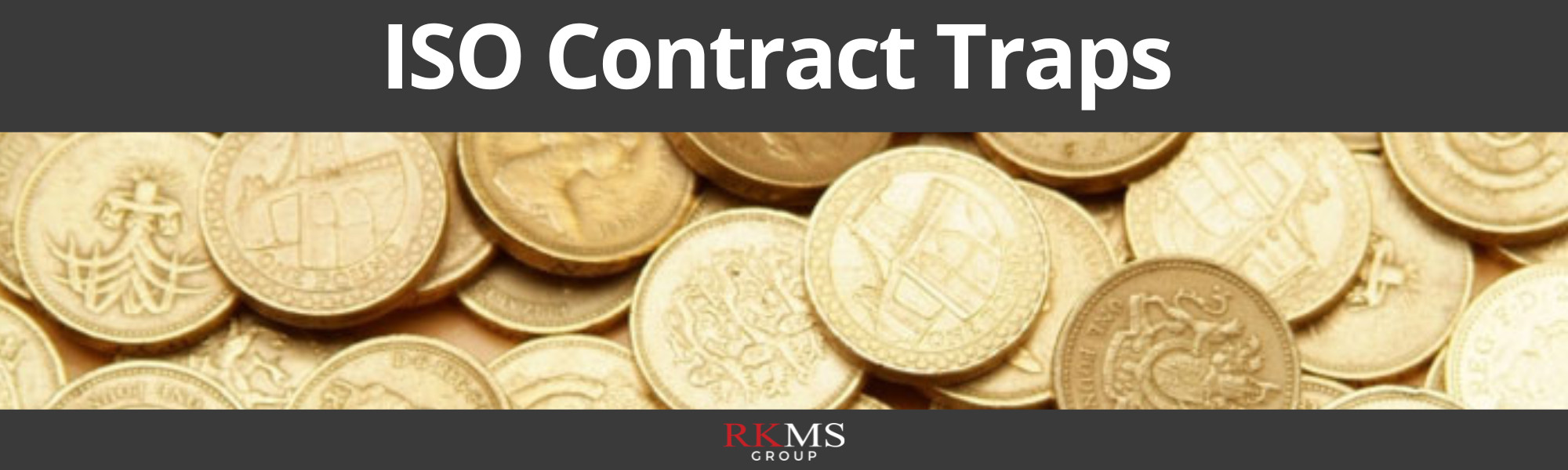
You can learn more about the official framework behind accreditation from UKAS – the United Kingdom Accreditation Service and the International Accreditation Forum.

Common ISO Contract Traps to Watch For

Multi-Year Lock-In Clauses

Some ISO providers insist on five- to seven-year contracts, limiting flexibility and driving costs up over time. While long-term partnerships can work well when transparent, any provider that refuses flexibility should raise concern.

Automatic Renewals and Exit Fees

Evergreen renewals are among the most dangerous ISO contract traps. Unless cancelled months in advance, the contract automatically renews — often at a higher rate. Some businesses even face “certificate release” fees when attempting to leave.

Certificate Ownership Issues

Always ensure the certificate is in your business name. If it’s held by your provider, you lose the right to move or verify accreditation independently.

For independent verification guidance, see ISO.orgCertification

Why ISO Contract Traps Persist

ISO certification is a technical purchase, not always handled by procurement or legal teams. Providers take advantage of that gap. They target SMEs seeking simple solutions, using phrases like “lifetime support” or “full management” to disguise restrictive terms.

At RKMS, we believe knowledge protects clients better than contracts. That’s why we share practical guidance freely — helping businesses make informed choices before signing anything.

How to Identify ISO Contract Traps Before You Sign

You can avoid most ISO contract traps by asking the right questions early:

  1. What’s the contract length?


  2. Who owns the certificate?


  3. Are there penalties for leaving?


  4. How are renewals handled?


  5. Is the certification body UKAS-accredited?

If a provider avoids clear answers, consider it a warning sign.

For more implementation guidance, visit our ISO 9001 Consultancy page to learn how transparent partnerships work in practice.

Escaping ISO Contract Traps — Your Options

Even if you’re already trapped, you can regain control:

  • Review the fine print: Look for termination windows or clause references to “evergreen” renewals.

  • Check certificate ownership: Contact the certification body directly if unsure.

  • Seek independent advice: RKMS offers a free ISO contract review to help you understand your options.

  • Transition carefully: We’ll help you move your system without disrupting certification or compliance.

Escaping ISO contract traps is possible — and often saves thousands of pounds annually.

The RKMS Difference — Transparency Over Traps

We understand that not all long-term ISO agreements are bad. RKMS also offers structured support packages, but our clients know every term before signing. The difference lies in honesty, flexibility, and control.

Aspect

ISO Contract Trap

RKMS Transparent Partnership

Contract Length

Fixed multi-year

Flexible or annual

Price Transparency

Hidden increases

Full cost breakdown

Certificate Ownership

Provider holds

Client owns

Exit Fees

Costly

None

Relationship

Dependency

Empowerment

Our clients stay with us because of value — not obligation.

How to Save Money While Avoiding ISO Contract Traps

You don’t need to overspend to achieve ISO 9001 certification. Here’s how:

  • Plan strategically: Map your implementation stages early.


  • Invest in training: Build internal capability to reduce consultancy reliance.


  • Leverage technology: Digital tools like EQMS software streamline documentation and audits.


  • Choose transparency: Demand written breakdowns of every cost.


For an example of how integrated systems cut ISO costs, read about what our clients have to say here

The True Cost of Ignoring ISO Contract Traps

The biggest cost of ignoring ISO contract traps isn’t financial — it’s operational. Lost flexibility, disrupted audits, and damaged reputations can harm your organisation’s credibility.

Businesses tied to rigid providers often delay improvements or stop engaging with their management system. This undermines ISO’s core purpose: continuous improvement.

Avoiding traps means protecting not only your budget but also your integrity.

Conclusion — Stay Informed and Stay Free

ISO contract traps thrive on confusion, small print, and misplaced trust. You can break that cycle by staying informed, asking the right questions, and partnering with providers who value transparency.

At RKMS, we’ll never lock you in or hide costs. Our ISO consultancy services empower your business to stay compliant, flexible, and in full control.

Don’t get stuck — ask us about flexible, transparent ISO support.

Your certification should serve you — not the other way round.

Share

Book a Free Consultation Consultation Consultation Consultation

Get free advice and guidance tailored to your business needs

Related Resources

Book a Free Consultation Consultation Consultation Consultation

Get free advice and guidance tailored to your business needs

The True Cost of ISO 9001 Certification (and How to Save Money Doing It)

The True Cost of ISO 9001 Certification (and How to Save Money Doing It)

ISO 9001 Certification

ISO 9001 certification is one of the most recognised quality standards in the world. It demonstrates a commitment to consistent processes, customer satisfaction and continuous improvement. Yet, for many organisations, the first question is not why they should do it, but how much it will cost.

The truth is that the cost of ISO 9001 certification can vary widely. Some businesses complete the journey for a few thousand pounds, while others invest much more. Understanding what drives these costs—and how to manage them effectively—is the key to achieving certification without overspending.

Understanding What ISO 9001 Certification Really Costs

Breaking down the main cost elements

When budgeting for ISO 9001 certification, it helps to understand the typical areas of expenditure:

  1. Certification body audit fees – The external audit process is mandatory and charged by accredited certification bodies. Fees usually depend on company size, number of sites and audit duration.

  2. Consultancy or internal resource costs – Whether you use a consultancy or manage the process internally, there are costs related to system development, documentation and process alignment.

  3. Training and staff involvement – Training employees on quality management principles and system use is essential for success.

  4. Documentation and process improvement – Many businesses underestimate the time and resource investment needed to create and maintain compliant documentation.

  5. Ongoing maintenance and re-certification – ISO 9001 is not a one-time project. Surveillance audits and continual improvement activities carry ongoing costs.

Why costs vary between organisations

No two ISO 9001 projects are identical. Costs can differ significantly depending on:

  • Organisation size and complexity – Multi-site operations or regulated industries naturally require more extensive systems.

  • Current level of process maturity – Businesses with well-established procedures typically spend less time (and money) implementing ISO requirements.

Choice of consultant or approach – Consultancy fees can range from affordable support to high-end, full-service engagements. The right approach depends on your internal capability.

The Hidden Costs Most Businesses Overlook

Even the most diligent organisations can face unexpected expenses during ISO implementation. Recognising these early can save both time and money.

Rework from poor documentation or weak preparation

A rushed or incomplete management system can lead to non-conformities during the audit. The time and cost of corrective actions, additional audits and consultant rework can quickly escalate. Investing in quality preparation from the outset always pays dividends.

Inefficient internal management systems

Manual or paper-based systems might seem cheaper initially, but over time they create inefficiencies. Lost documents, duplicated data entry and poor visibility can drain productivity. A digital system like RKMS’s EQMS centralises information, automates version control and simplifies reporting—reducing both effort and audit stress.

Poor choice of consultancy partner

The market is crowded with consultants offering vastly different levels of expertise. Some focus on rapid compliance rather than long-term sustainability, leading to additional costs later when systems fail to hold up under scrutiny. Partnering with an experienced consultancy that aligns certification with business improvement avoids paying twice for the same outcome.

How to Make ISO 9001 Certification Affordable

ISO 9001 certification does not have to be expensive. The secret is strategic investment—using the right combination of people, process and technology.

Combine consultancy, technology and certification

RKMS has developed an integrated model that brings together expert consultancy, cloud-based EQMS software and certification support.

  • Consultancy: Our specialists guide you through every stage, ensuring your system adds real business value rather than unnecessary paperwork.
  • eQMS software: This user-friendly platform reduces manual administration, controls documents automatically and simplifies audits.
  • Certification support: We prepare you for success, liaising with certification bodies and providing ongoing assistance.

By uniting these three elements, organisations avoid duplicated effort and hidden rework costs—achieving certification more efficiently and with lower overall spend.

Build internal capability early

Training your team to manage and maintain the quality system independently is one of the smartest cost-saving moves. It reduces future consultancy requirements and empowers staff to sustain improvements long after certification. RKMS provides practical training tailored to each client, ensuring knowledge transfer is embedded throughout the process.

Plan your certification journey strategically

A well-structured implementation plan avoids unnecessary costs. Mapping key activities across the project lifecycle—gap analysis, system development, training and audits—helps control budgets and prevent last-minute expenses. Many businesses also save by aligning certification with other management systems such as ISO 14001 or ISO 45001, taking advantage of shared documentation and combined audits.

The RKMS Advantage

Transparent pricing and proven results

At RKMS, we believe cost transparency builds trust. Our quotations clearly separate consultancy, software and certification elements so clients can see exactly what they are paying for.

Real-world results demonstrate how this approach delivers value. For example, one manufacturing client reduced their ISO 9001 implementation costs by 30% using the EQMS system to automate documentation and evidence management. Another service provider cut their audit preparation time in half by adopting an integrated consultancy and software model.

Why an all-in-one solution delivers better long-term value

Traditional ISO projects often rely on separate suppliers for consultancy, documentation and certification. This fragmentation can lead to inefficiencies, conflicting advice and duplicated costs. RKMS’s all-in-one model eliminates those barriers.

By combining expert guidance, intelligent technology and certification support under one roof, organisations gain a smoother journey to compliance, fewer disruptions and a system that supports continuous improvement year after year.

Conclusion – Spend Smarter, Not More

Achieving ISO 9001 certification is not simply an expense; it is an investment in quality, reputation and customer confidence. However, like any investment, success depends on how wisely you manage your resources.

Understanding the true cost of certification—both visible and hidden—helps you make informed choices. By integrating consultancy, software and certification, you can streamline implementation, reduce administrative effort and ensure long-term savings.

ISO 9001 does not have to be a financial burden. With RKMS, it becomes a cost-effective route to operational excellence.

Protecting Your Business: Choosing the Right Partner

Selecting the right certification partner is not just a cost decision. It is a matter of compliance and credibility. Genuine, accredited providers invest heavily in maintaining UKAS recognition and undergo regular scrutiny to ensure their audits meet the highest standards.

When you choose an accredited certification body, you are buying more than a certificate. You are buying global trust. Your certification becomes part of an internationally recognised network, opening doors to public sector contracts and private sector supply chains alike.

At RKMS, we have helped hundreds of UK organisations navigate this complex landscape. Our consultants understand how accreditation frameworks work and how to validate them correctly. Whether you already hold a certificate or are exploring ISO certification for the first time, we can ensure your investment leads to genuine, recognised results, not misleading paperwork.

Conclusion: Do Not Risk Your Reputation

In today’s compliance-driven market, an unrecognised ISO certificate is more than a minor oversight. It is a potential business risk. The difference between certified and accredited may sound academic, but in practice it determines whether your certificate is accepted or rejected, trusted or questioned.

The safest step you can take is simple: verify your accreditation before it costs you a contract.

A genuine, UKAS or IAF-recognised certificate protects your credibility, reassures your clients and positions your business for sustainable growth.

Check your certificate’s accreditation, or let RKMS verify it for free.
Your reputation deserves nothing less.

Share

Book a Free Consultation Consultation Consultation Consultation

Get free advice and guidance tailored to your business needs

Related Resources

Book a Free Consultation Consultation Consultation Consultation

Get free advice and guidance tailored to your business needs

Non-IAF ISO Certificates: 5 Shocking Mistakes That Could Damage Your Credibility

Non-IAF ISO Certificates: 5 Shocking Mistakes That Could Damage Your Credibility

Non-IAF ISO certificates

Understanding Non-IAF ISO Certificates

Non-IAF ISO certificates are becoming increasingly common across the UK — and many organisations do not realise the risks they carry. Thousands of businesses proudly display their ISO certificates, confident that the framed document represents genuine quality assurance. Yet being ISO certified does not always mean being accredited.

It is a subtle distinction with serious consequences. Accreditation validates your certificate’s credibility, proving that the body issuing it has itself been independently assessed and approved by a recognised authority. Without that approval, your ISO certificate may not be worth the paper it is printed on — especially for NHS, MOD or local government tenders.

Before you trust that logo or renewal notice, ask the critical question: Who verifies the verifier?

Certification vs Accreditation: The Key Difference

What “Certification” Really Means

When a business achieves ISO 9001, 14001, 45001 or 27001 certification, it means a certification body has audited its systems and confirmed compliance with the chosen standard. That certification body then issues a certificate.

The catch is simple: anyone can issue a certificate. There is no law preventing a company from calling itself a “certification body” and selling ISO certificates. This creates a confusing marketplace where two organisations can both say they are “ISO certified”, yet only one holds a certificate that would pass scrutiny during a government audit.

What “Accreditation” Adds

Accreditation is the assurance layer above certification. It proves that the certification body itself is competent, impartial and operates to international standards.

In the UK, the only nationally recognised accreditation body is UKAS – the United Kingdom Accreditation Service. UKAS is a member of the International Accreditation Forum (IAF), which ensures certificates accredited by one member nation are recognised globally.

When your certificate carries the UKAS “crown and tick” or an IAF-recognised logo, it means your certification has been validated by the international network underpinning ISO’s integrity. Without that mark, your certificate is classed among non-IAF ISO certificates and is effectively unverified.

The Rise of Non-IAF ISO Certificates and “Fake” Accreditations

The Loophole Explained

Not all certification bodies are willing or able to meet the strict UKAS or IAF requirements. Some exploit this by creating or partnering with their own “accreditation” schemes — entities that sound official but are not IAF-recognised.

They use technically correct yet misleading phrases such as:

  • “Accredited by an independent body”

  • “Certified to international standards”

  • “Compliant with ISO requirements”

While these statements seem legitimate, they hide a crucial fact: the accreditation carries no IAF recognition, meaning it has no formal weight in regulated tenders or audits.

How Businesses Are Misled

Many of these non-IAF ISO certificates feature gold seals, holograms or imitation logos resembling UKAS marks. To a busy business owner, they appear perfectly credible — until a buyer or auditor checks the UKAS or IAF database and finds no record of the accreditor.

The damage often surfaces too late, through failed tenders, revoked contracts or reputational harm. You can see how RKMS has helped clients recover from similar issues in our case studies.

Why It Matters: The Real-World Consequences

Tender Rejection and Compliance Failures

Government departments, NHS trusts and local authorities now routinely verify certificates for IAF recognition. Their procurement systems accept only UKAS or equivalent IAF-accredited certificates as valid evidence of ISO compliance.

If your business holds non-IAF ISO certificates, they may be automatically rejected, regardless of your management system’s quality. For organisations investing heavily in ISO implementation, the risk is clear — a non-accredited certificate undermines the very purpose of certification.

Damage to Credibility and Trust

Beyond tender eligibility, unrecognised certification can harm your professional reputation. Clients, auditors and partners increasingly check credentials. Once your business is linked to a questionable certificate, rebuilding trust becomes difficult.

Conversely, a UKAS-accredited certificate sends a strong, unambiguous message: your organisation meets internationally verified standards.

How to Check If Your Certificate Is Genuine

Verifying legitimacy is simple — and free. Before renewing or tendering, follow these checks:

  1. Look for the UKAS Crown and Tick.
    UKAS is the UK’s sole national accreditation body, appointed by government.

  2. Check the Certification Body on the UKAS Website.
    Use ukas.com → “Search Accredited Organisations.”

  3. Confirm International Recognition on the IAF Database.
    Visit iaf.nu to confirm official member status.

  4. Watch for Lookalike Logos.
    Non-IAF providers often mimic UKAS or IAF symbols — small design differences can reveal fakes.

  5. Ask RKMS to Verify It for Free.
    RKMS can quickly confirm whether your certificate is IAF-recognised, protecting your tender eligibility.

Protecting Your Business: Choosing the Right Partner

Selecting the right certification partner is about compliance and credibility. Genuine, accredited providers maintain UKAS recognition and undergo regular audits.

When you choose an accredited certification body, you’re buying more than a certificate — you’re buying global trust. Your certification becomes part of an internationally recognised network, opening doors to both public and private sector opportunities.

At RKMS, we’ve guided hundreds of UK organisations through this process. Our consultants know how accreditation frameworks operate and how to validate them properly. Whether you already hold certification or are starting from scratch, we’ll ensure your investment delivers genuine, recognised results — not non-IAF ISO certificates.

You can also explore our eEQMS software for smarter compliance management and reduced audit stress.

Conclusion — Verify Before You Trust

In today’s compliance-driven world, an unrecognised ISO certificate is a serious business risk. The difference between being certified and being accredited determines whether your certificate is accepted or rejected, trusted or questioned.

The safest action is simple: verify your accreditation before it costs you a contract. Genuine UKAS or IAF-recognised certification protects your credibility, reassures your clients and supports long-term growth.

Check your certificate’s accreditation — or let RKMS verify it for free.
Your reputation deserves nothing less.

Share

Book a Free Consultation Consultation Consultation Consultation

Get free advice and guidance tailored to your business needs
Related Resources

Book a Free Consultation Consultation Consultation Consultation

Get free advice and guidance tailored to your business needs

The Cost Of ISO 27001 Certification

How Much Does ISO 27001 Certification Cost in the UK – A Complete Price Guide

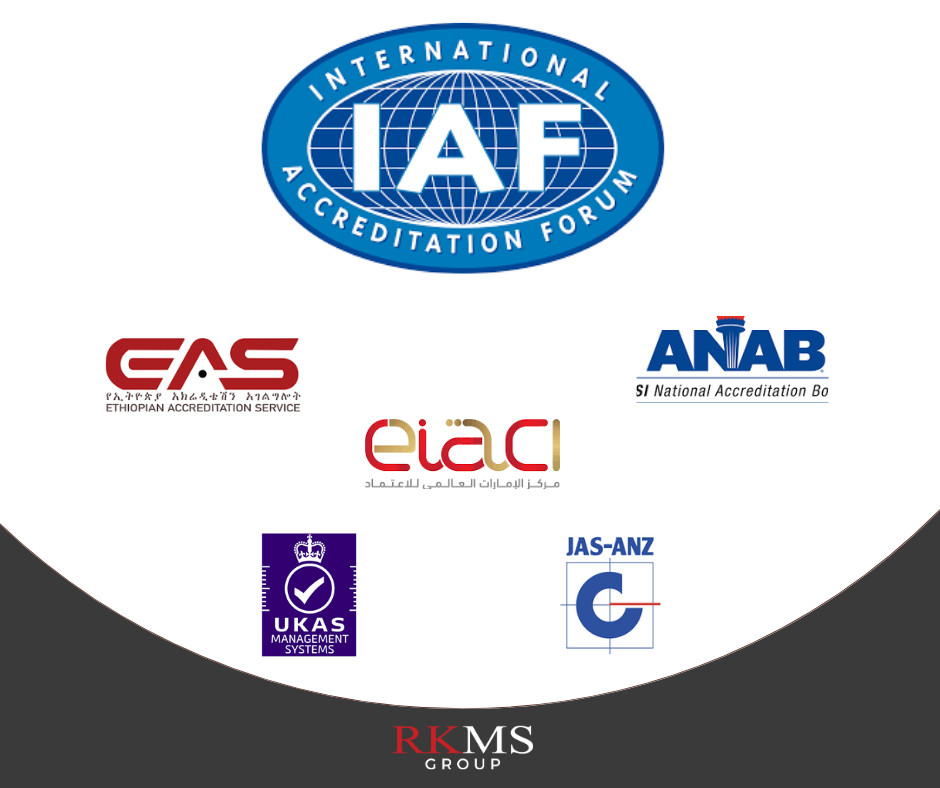
When organisations begin exploring ISO 27001 certification cost, they quickly find there’s no fixed price. The ISO 27001 cost depends on many variables: size of business, complexity of operations, number of sites, existing information security maturity, choice of certification body, and whether you choose a UKAS-accredited route or not.

This guide walks you through all the factors that affect the ISO 27001 price, typical cost ranges, hidden fees to watch out for, and how you can manage or reduce your investment while still gaining a certification that’s valued by customers and partners.

ISO 27001 certification cost breakdown showing price factors and UKAS vs non-UKAS differences

What Is ISO 27001 & Why It Matters

ISO/IEC 27001 is an internationally recognised standard for information security management systems (ISMS). Especially in sectors handling sensitive data (finance, healthcare, tech, etc.), it shows that you are committed to managing risks, protecting data, complying with legislation, and building trust.

For more on what ISO 27001 covers, see our detailed page on ISO-27001 Information Security.

Because ISO 27001 is complex and requires systematic risk management, controls, audits, documentation, training, etc., the cost to implement and certify tends to be higher compared with less demanding standards.

But the return in terms of risk reduction, reputational benefit, and possible new business often outweighs the investment.

Typical ISO 27001 Certification Cost Ranges in the UK

Based on recent data, including RKMS’s own figures for 2025, you can expect the ISO 27001 certification cost (implementation + accreditation + audit) to lie somewhere between:

£9,900 and £14,000

This range assumes a mid-sized organisation, with moderate complexity, possibly one or two sites, some documentation already in place, and using a UKAS-accredited certification body.

If your organisation is very small, has only basic needs, or you accept a non-UKAS certification, cost may be lower.

Conversely, for large organisations with multiple locations, complicated IT systems, high risk profile, or existing weak documentation, costs may exceed this range.

Major Factors That Affect ISO 27001 Cost & Price

To understand what will determine your ISO 27001 price, here are key elements:

FactorHow it affects cost
Organisation size (number of employees, locations)More sites and more employees mean more audits, more documentation, more chances for hidden cost.
Intensity & complexity of IT infrastructureIf you have complex networks, legacy systems, cloud-services environment, third-party integrations, etc., more risk assessments, controls, testing etc. are needed.
Existing documentation & maturityOrganisations that already have some processes, policies, controls, audits in place tend to spend much less than those starting from scratch.
Number of business processes / scopeThe broader the scope (e.g. including many departments, services, third-party suppliers), the higher the audit effort and ongoing maintenance.
Accreditation choice: UKAS vs non-UKASUKAS accreditation adds credibility (important to many customers), but it costs more. Non-UKAS certificates may look cheaper up front, but may not be accepted or trusted by some partners.
Consultancy & implementation supportHiring experienced consultants speeds up the process and reduces internal hidden costs (e.g. employee time diverted, training). However, it adds direct cost.
Frequency & duration of auditsInitial certification, surveillance audits, re-certification all come with fees. More frequent surveillance, more complex audits = higher cost.
Hidden costs / “opportunity costs”Time spent by staff, internal training, internal audit preparation, documentation writing, employee disruption are often underestimated.

UKAS vs Non-UKAS Certification - Price Implications

One of the biggest decisions affecting price is whether to go with a UKAS-accredited certification or a non-UKAS / “professional but non-accredited” certificate.

  • UKAS accreditation is internationally recognised, trusted by many customers, regulators, and partners. It means the certification body is assessed by UKAS and meets stringent criteria (as part of the IAF network). This adds to cost, via stricter audit requirements, more rigorous processes, and likely higher auditor fees.

  • Non-UKAS certificates may appear cheaper upfront but risk being less accepted or even rejected by stakeholders who require accredited evidence. Over time the cost (in terms of lost contracts, lower trust, or needing to re-certify with UKAS) can far outweigh the initial savings.

RKMS explains the difference between UKAS and non-UKAS certification, which helps you decide what’s the best balance of cost vs value for your organisation.

Implementation vs Doing It Yourself (‘DIY’ Models)

There are different ways to approach implementation and auditing:

  1. Full consultancy / turnkey support – you hire experts to guide or manage everything: gap assessments, documentation, training, internal audits, risk assessments, etc. This speeds up implementation and tends to reduce hidden costs but has higher direct cost.

  2. Partial support / hybrid models – maybe you do internal work but hire consultants for specific tasks (e.g. risk assessment, internal audit). This splits cost but still benefits from expert input.

  3. DIY / in-house implementation – trying to manage most tasks internally. This can look cheaper on paper, but the hidden costs are often significant: staff time diverted from regular work, risk of errors & delays, needing more training, delays in audit readiness. Often for small organisations with simple operations, or with existing compliance about information security, this may be viable.

RKMS’s own product issosmart offers options from “Install Yourself” to “Entire Install” with full support. For organisations with limited budgets, a hybrid or self-install model may be the most cost-efficient.

Example Breakdown of Costs

To make this more concrete, here’s a sample cost breakdown for a mid-sized company (say 50-200 staff, two locations):

ItemEstimated Cost (£)
Gap analysis / readiness review1,000 – 3,000
Documentation & policy writing2,000 – 4,000
Risk assessment & controls implementation2,500 – 5,000
Internal audits & corrective actions1,000 – 2,500
Certification audit (UKAS)3,000 – 5,000
Surveillance audits (annually)1,000 – 2,000
Training of staff / awareness500 – 2,000
Hidden / internal labour costsHighly variable

Depending on these variables, you may land lower than £10,000 or exceed £15,000+ for larger / more complex organisations.

How To Reduce Your ISO 27001 Certification Cost & Price Wisely

Here are practical tips to optimise your spend while still getting a strong certification:

  • Ensure scope is clearly defined – narrower scope = fewer departments / fewer processes = lower complexity. But make sure the scope still covers what your stakeholders expect.

  • Use existing documentation – policies, procedures, controls you already built for other certifications (e.g. data protection, privacy, health & safety) may be reusable.

  • Train internal champions early** – internal staff with good knowledge of ISO/ISMS can take on much of the heavy lifting.

  • Choose consultancy wisely – a consultancy with experience in your sector can do work faster, avoid pitfalls, reduce rework.

  • Plan for audits properly – have your internal audit, management review, corrective actions in place before the certification body comes in; failing audits or repeated corrective actions add cost.

  • Consider staged implementation – if budget is tight, spread implementation over phases, building incrementally.

  • Compare quotes from UKAS-accredited bodies – don’t just go with lowest price; check what services are included (audit days, travel, documentation review etc.).

What Kind of Return Can You Expect?

While ISO 27001 price seems like a significant investment, many of the “costs” are also value generators:

  • Reduced risk of data breaches, fines, and reputational damage.

  • Greater trust with customers, especially in regulated sectors.

  • A clearer framework for ongoing information security, which can reduce losses and inefficiencies.

  • Competitive advantage when bidding for contracts that require ISO 27001 or equivalent.

Often, the payback comes in avoided costs (incidents, non-compliance) rather than direct revenue, but that can still be substantial.

External Standards & References

To understand how accreditation and certification bodies are assessed, you may want to refer directly to:

These external bodies help set expectations and ensure your certification will be recognised and trusted beyond just seeing a certificate.

Summary

To bring together the main points:

  • The typical ISO 27001 certification cost in the UK ranges between £9,900-£14,000 for a mid-sized business with moderate complexity.

  • Your ISO 27001 cost depends heavily on scope, complexity, documentation maturity, consultant- vs DIY-based implementation, and whether you choose UKAS accreditation.

  • Beware of non-UKAS certificates that appear cheaper but may impose cost elsewhere (acceptance, re-work, lost opportunities).

  • Hidden costs (employee time, internal audits, documentation writing) often are underestimated.

  • Use strategies to reduce costs (narrow scope, reuse, smart consultancy, phased implementation) without compromising on value.

If you want tailored advice for your specific organisation, the experts at RKMS offer ISO-27001 consultancy that can help estimate your total cost, assess the right scope, and plan your certification path.

Share

Book a Free Consultation Consultation Consultation Consultation

Get free advice and guidance tailored to your business needs
Related Resources

Book a Free Consultation Consultation Consultation Consultation

Get free advice and guidance tailored to your business needs
What are Non-Conformity Reports (NCR’s)?

What are Non-Conformity Reports (NCR’s)?

What are Non-Conformity Reports

When you’re providing a product or service to someone, quality is key. In a perfect world, things would always work out as planned, though we all know that’s impossible. When things don’t quite go as planned, a non-conformity report is used, documenting all of the small details.

If you’re wondering what are non-conformity reports and what to do with them, we’ve got the answer to all of your questions below. We’ll provide examples and introduce you to key differences between minor and major non-conformance so that you’re prepared for whatever comes your way.

What Is Non-Conformance?

Before we get to what are non-conformity reports and what to do with them, let’s take a look at non-conformance. When an individual or a business enters into an agreement that doesn’t quite turn out as planned, that’s considered non-conformance. The agreement could be a contract for a product, service, or even a process.

If things do not meet expectations or companies finalise the contract without following industry standards, the purchasing party has a right to file a con-conformity report.

What Is a Non-conformance Report?

When an agreed-upon product, service, or procedure doesn’t turn out the way that was expected, a non-conformity report is there to report all of the details. It’s often used as a measure of quality assurance, helping to keep it from happening again. Some things that a non-conformity report will include are:

  • Exactly what went wrong
  • Why work didn’t meet expectations
  • How the problem can be prevented
  • What sort of corrective actions will be taken?
  • Company or individual who did not comply with regulations or expectations

Now that you know what are non-conformity reports and what to do with them, let’s take a look at some examples where you could use them.

When to Issue a Non-conformance Report?

Non-conformance reports are not a one size fits all kind of report. There are many instances where a report could be filed, including:

  • Issues involving construction or building that didn’t turn out as planned
  • Failure to inspect or test items, services, or products
  • Use of non-approved materials
  • Approved or agreed-upon procedures were not followed

There are many more where these come from, as it just depends on the industry in which a non-conformity report is being filed.

Who Can Issue a Non-conformance Report?

In most industries, there is someone that is overseeing the contract or project. The person in charge and overseeing the job from start to finish is the one that typically issues the non-conformance report. Due to the fact that it’s an official report that requires detailed information, it’s typically an issue for upper management or HR to take care of.

Difference Between Minor and Major Non-conformance

Non-conformance comes in many shapes and sizes, and some cases are worse than others. There are two types of non-conformances, each used in different circumstances.

Minor Non-Conformance

Minor non-conformance is an instance that doesn’t occur typically. Most minor non-conformance are easy to identify and have little to no impact on customers directly. A few examples of minor non-conformance include:

  • One document that lacks a signature
  • Alternations to any contract or document within the agreement
  • Lack of approvals throughout the process
  • Failure to follow the agreed-upon material

Major Non-Conformance

When there is an instance of major non-conformance, involve ed parties might have a hard time getting to the bottom of it. If steps are not taken to make things right, customers could be negatively impacted, something that no business wants to encounter. Some examples of major non-conformance include:

  • Lots of documents without proper signatures
  • Tons of alterations that didn’t have prior approval
  • Discovery of multiple violations
  • Issues that affect operations of the product or service

Example of a Non-conformance Report

A non-conformance report has to be carefully created, providing factual and current information about all those involved in the contract, the product or service involved, and the issues that occurred. Sections needed in a non-conformance report include:

  • The form number – there is a unique one for all filed reports
  • Any and all numbers involved in the project or service that help identify it (keep track of these)
  • Information about the providing company
  • Detailed accounts of how the company did not comply with contract information
  • Signatures, notaries, and a proposed corrective action

Tips for Writing an Effective Non-conformance Report

Now that you know what are non-conformity reports and what to do with them, we’ll leave you with some tips for writing an effective non-conformance report. 

Tip #1. Document as much as you can

This will help in case things get fuzzy when trying to recall all the tiny details.

Tip #2. Separate major and minor non-conformances

Because they are handled differently, it’s a good idea to separate both major and minor non-conformances. This will make the process of correction run smoother.

Tip #3. Determine who’s responsible

Identifying who is at fault and how they will make changes to fix everything is an important part of the process. Make sure those responsible know about it so they can take steps to resolve the issue.

Tip #4. Keep track of things

Even if the party responsible has agreed to get things back in order, you should still keep track of all changes and ensure that they are taking place correctly and efficiently.

Tip #5. Provide the steps

To keep things simple and clear for all of those involved, it’s a good idea to add steps that all parties can follow. In this way, you’ll have a clear outline of what you expect and how the party at fault can correct them.

Tip #6. Review and tweak

Make sure to review everything before handing it off and, if necessary, make changes to ensure that everything runs smoothly from start to finish. The more open and communicative all parties are, the better and faster all issues will be solved.

Share

Book a Free Consultation Consultation Consultation Consultation

Get free advice and guidance tailored to your business needs

Related Resources

Book a Free Consultation Consultation Consultation Consultation

Get free advice and guidance tailored to your business needs

A Complete Guide to the Certification Audit

A Complete Guide to the Certification Audit

The Complete Guide to the Certification Audit

As companies with various levels of complexity in their processes go through certifications to comply with ISO 90001 standards, fire and workplace safety protocols and a host of other requirements, they often have to go through a certification audit.

This is a guide to the certification audit and how a company can best prepare for, and handle the process of, such an audit.

What Does UKAS Accreditation Mean?

The United Kingdom Accreditation Services (UKAS) is the sole accreditation body in the UK. Appointed by the government under the Accreditation Regulations 2009 (S.I. No 2009/3155) and Schedule 33 of the Product Safety and Metrology etc. (Amendment etc.) (EU Exit) Regulations 2019 (S.I. 2019/696):

https://www.legislation.gov.uk/uksi/2009/3155/introduction/made

UKAS is the national body that can certify companies that provide testing, inspection, calibration and certification services based on internationally accepted standards. While they are recognised as the government body, they are independent from the UK Government.

When UKAS checks the checkers, they are essentially providing a guide to the certification audit for any business owner that is looking to get certified and searches for a professional group to conduct the audit. Any company that is UKAS certified is guaranteed to perform capably in their role, demonstrating the competence and impartiality that is required.

Since a UKAS assessment is viewed by everyone as having high integrity, suppliers who get certified from an accredited consultant can get by with a uniform audit from a single checker, and avoid situations such as having to be accredited by each of their customers.

Through their participation with multiple international forums such as European Cooperation for Accreditation (EA), International Laboratory Accreditation Cooperation (ILAC) and International Accreditation Forum (IAF), UKAS provides a further service to suppliers working with overseas clients – helping them to avoid costly and time consuming audits with overseas buyer.

Steps Involved in a Certification Audit

The UKAS is the National Certification body in the UK. The first step for any company looking to complete a certification audit is to choose a UKAS certified certification evaluator, as explained above.

The UKAS website allows you to search for accredited organisations by name:

https://www.ukas.com/find-an-organisation/

Another thing to check is whether or not the evaluator appointed has a well established track record in terms of the specific certification being conducted. Not every accredited consultant is equally good at all standards.

Below is a step-by-step guide to the accreditation audit. For illustration, we have chosen the ISO 9001 certification process. Other types of certifications will have their own requirements, but many of the steps below will be similar – since these are the typical ways to conduct a certification audit.

STEPS IN AN ISO 9001 CERTIFICATION AUDIT


  • Step 1 (Stage 1 Audit): The first step is typically a Stage 1 “desktop” audit. This is where the evaluator determines if all the quality management systems and documentation is set up properly, and (based on their findings) decides on the scope of a Stage 2 audit.


  • Step 2 (Stage 2 Audit): During the Stage 2 audit which follows Step 1, the evaluators will interview key personnel and most likely shadow their daily activities and protocols for a period of time. The intent is to determine that the system in place is a tried and tested one, that has been running for a period of time, and that the people who are involved with the operations of the organisation clearly understand and adhere to the requirements of the standards that the audit is being conducted against.


  • Step 3 (Certification): If everything goes well with the Stage 2 audit, then the evaluator makes a recommendation to the Certification Body, which will then issue a certificate within two to twelve weeks.


If the above steps can be done with a minimum of fuss, things will go smoothly. Once the initial audit is completed, there is a repeating pattern that comes into play, as follows:


  • Step 4 (Surveillance Audit): Some 9 to 12 months after the successful certification, there is a surveillance scheme that kicks in. The main thrust is to evaluate the quality management system, especially whether internal audits and management reviews are being performed competently. Also, an operational review is conducted, especially in situations where new installations are done within the period.  


  • Step 5 (Recertification): This takes a much longer view of how the organisation is being integrated within the philosophy of the ISO 9001 certification. This looks at how the company has absorbed and adopted the quality management system over a three year period, and then how it is preparing for the next period.

5 Tips to Help Prepare for and Go Through a Certification Audit

In this guide to the certification audit, we have explained both the importance of a UKAS certification and the steps that an organisation will have to go through.

Here are a few tips to make sure that your organisation is fully prepared and passes the audit with flying colors:

  • Prepare your detailed documentation in advance, so the Stage 1 audit goes well and the scope of the Stage 2 audit is better defined and as limited as possible given the circumstances.
  • Run a detailed internal audit ahead of time, choosing the right team and giving them the full authority to conduct a hardcore audit, asking any questions and detailing every process as they go along.
  • Understand the specific certification process, prepare the documentation accordingly and test it out.
  • Create both a current state and a gap report when there are situations that cannot be fully covered by the time of the external audit. Often times, having a time line and plan to cover gaps in place could aid greatly in getting the certification approved.
  • Choose the right external consultant – rely on their UKAS certification and their track record in terms of longevity and also experience with the specific audit you need them to perform.

The Final Word

As discussed, a UKAS certified checker is vital to have everything in place for businesses in the UK. Hopefully, the above guide to the certification audit will help you streamline your process and make the right choices that can help you in this regard.

Share

Book a Free Consultation Consultation Consultation Consultation

Get free advice and guidance tailored to your business needs

Related Resources

Book a Free Consultation Consultation Consultation Consultation

Get free advice and guidance tailored to your business needs

Why First Aid Training is Important

Why First Aid Training is Important

Why is First Aid Important?

Prior to the great shift towards working from home, the Labour Force Survey (LFS) reported some 581,000 self-reported workplace injuries as well as an additional 69,208 company-reported injuries. 147 of those injuries resulted in workplace fatalities. Despite these surprisingly high numbers, though, this represents a 580% downward turn over the past 50 years.

While better labour practices and regulations are certainly at the heart of this downward shift, it’s hard to deny the role that workplace first aid training has played in helping to prevent further on-the-job fatalities. As well as being a legal requirement, workplace first aid training saves lives and promotes a healthier work environment.

For those who doubt the benefits of first aid training, we’ve prepared a general breakdown of how your company could gain from such preparation. Not only is it affordable and mandated, but it could also save lives.

Why First Aid Training Matters

In the simplest of terms, first aid is any form of emergency medical care given immediately after an accident, injury, or illness. It aims to preserve the victim’s life, promote their healing, provide them with necessary emotional support, and prevent the situation from growing more severe than it already is.

Although most workplace injuries are relatively small—such as minor cuts, abrasions, bruises, or burns—first aid still provides the care necessary to keep workers from suffering a long-term injury. Should something more significant happen, employees will also be prepared to provide emergency first aid if needed.

It’s simply not enough to keep a first aid box on hand at the office. Even low-risk workplaces could benefit from hands-on, in-depth first aid training to prevent more severe health issues from escalating into a fatality. For example, if an employee were to suffer a heart attack or seizure at work, immediate care could save their life in the time it takes to get them to a hospital.

Legal Requirements for British Employers

Under the Health and Safety (First-Aid) Regulations of 1981, all employers within the UK must provide their employees with adequate and appropriate facilities, equipment, and personnel to guarantee their safety in the event of an accident, injury, or illness. These regulations even apply to the self-employed.

Employers and business owners are required to assess their first aid needs, including what should be included in their first-aid box, whether they require an on-site infirmary, and the number of first aid respondents required to provide satisfactory medical assistance.

While assessing your first aid needs, consider all potential workplace hazards, including chemicals, sharps, heavy loads, electrical hazards, and potential falls. For more information, please read the Health and Safety Executive’s pamphlet on workplace first aid requirements.

The Typical Costs of First Aid Training

You’ll be surprised to know that training employees in emergency first aid is not only beneficial but also relatively inexpensive. Currently, workplace first aid courses in the United Kingdom cost around £200.00-£300.00 per person. These courses generally take place over three days and train employees to manage:

  • Workplace hazards
  • Emergency care
  • CPR
  • Heimlich maneuvers
  • Shock and excessive bleeding
  • Unconscious or seizing coworkers

Along with treatment plans, workers gain hands-on knowledge of how to assess and react to high-stress situations in a calm and collected manner. With better reaction skills, workers can act safely and protect each other’s health in the event of a workplace accident or illness.

After completing their courses, your employees will be awarded certificates of completion, qualifying them in emergency workplace first aid. They can renew their certifications yearly by attending refresher courses to brush up on the skills they learned at their first training.

We offer three different accredited qualifications in first aid training with prices starting at £60 per person.

Benefits of Having First Aid Trained Staff

When it comes to first aid, cost shouldn’t be your main concern. Training and employing a staff of first aid responders comes with its own benefits:

  1. First aid saves employees’ lives – It should go without saying that providing injured or sick employees with immediate medical care greatly improves their chances of survival. The sooner you begin treating their illness or injuries, the sooner they can heal and return to normal health.
  2. First aid training prevents accidents – By learning about potential workplace hazards, your employees gain a greater understanding of how they can prevent and avoid accidents on the job. They’ll also be better able to prevent repeat accidents going forward. Treat first aid training as risk-reduction.
  3. First aid training boosts employee confidence and safety – After completing training, your employees will feel safer and more confident in the workplace knowing that they have the skills to save lives.
  4. Employees learn to properly use a first aid box – You’d be surprised by how few people can accurately detail what goes in a first aid box and how to use those contents. Training introduces employees to the contents of a first aid box and how to appropriately administer those materials.
  5. Employees learn to live safer lives – First aid skills might be taught within the context of work but that doesn’t mean they’re inapplicable outside of the office. Your employees will be able to apply what they’ve learned in the real world, at home, and with their families too.
  6. First aid training builds team confidence and company morale – Not only will your employees feel more confident in themselves, but they’ll also feel more confident in each other. First aid training builds company morale by encouraging employees to work together and think as a team for the better good.

At first glance, it may seem as if first aid training is limited and offers few actionable benefits but as you examine its outcomes, we believe you’ll see that first aid training is more than just a legal requirement—it’s an investment in your staff and business.

Conclusion

With more than 30 years of experience in ISO standards, first aid training, and workplace health and safety, we can ensure that worker first aid training is more than it may seem. It can save lives, prevent long-term injury, and improve the overall morale and confidence of your staff. Contact us today for more information on how you can participate in workplace first aid training.

Share

Book a Free Consultation Consultation Consultation Consultation

Get free advice and guidance tailored to your business needs

Related Resources

Book a Free Consultation Consultation Consultation Consultation

Get free advice and guidance tailored to your business needs

The Cost of a Fire Risk Assessment

The Cost of a Fire Risk Assessment

Cost of a Fire Risk Assessment

Fire risk assessments are not only required as a matter of law, they have become crucial in the modern age where properties and people are squeezed tight in urban spaces.

In this article, we will review how fire risk assessments have become routine in the UK, how to abide by the requirements and the cost of a fire risk assessment.

Why is a Fire Risk Assessment Important?

A fire risk assessment is a vital part of maintaining a safe workplace and protect people and commerce in the vicinity of a business. It is also a legal requirement for any business that cannot be classified as a private home.

In the UK, the Home Office requires that any business (with a license under enactment in force) whose premises are occupied by more than 5 people will need to perform regular assessments and maintain a written record which must be produced to the authorities on demand.

Any business owner and/or manager bears the primary responsibility (the “responsible person”) and would be in trouble if they were not compliant. Violations could lead to a stiff fine and even jail time for those shirking their duties in this regard.

There is a 5-step checklist that provides guidance on the necessary steps to be followed:

https://www.gov.uk/government/publications/fire-safety-risk-assessment-5-step-checklist

Let’s review what the cost of fire risk assessment should be in a typical scenario.

The Typical Costs of Hiring a Consultant to do a Fire Risk Assessment

There are a few things that a fire risk assessment must cover, including:

  • Identifying fire hazards
  • Identifying the people who would be at risk
  • Evaluating the risks, prior to removing (or at least reducing) them
  • Documenting the findings, then preparing plans to address emergencies and training the workforce on how to adhere to the same
  • Regularly reviewing and continuing the updating of the fire risk assessments

Who Performs Fire Risk Assessments?

For some businesses, the fire risk assessment may be done by the “responsible person” (e.g. owner or manager) or a designated person or team. However, this may not be possible in certain situations, where the owner/manager may not feel qualified to handle the task and/or the task may be too complicated.

Businesses with certain characteristics could require help from seasoned consultants. For example:

  • Large complex businesses with substantial premises
  • Heritage buildings
  • Small or medium sized business that may not have people suited for the job inhouse

Which Consultants can you Hire?

If the responsible person – or the duty holder, as the person may be known – need to hire an outside consultant, the following brochure from the UK government provides guidance about the type of “experts” that could be hired:

https://www.london-fire.gov.uk/media/5496/fsf_guide_october_20.pdf

To gauge competency, two aspects of the consultant’s background can be probed:

  • The consultants should be part of Professional Body Registration schemes, and
  • Certified for this specific activity by a UKAS accredited agency

Additionally, getting detailed background information, proof of prior work in your specific industry and references are all prudent steps to take.

What is the Cost of a Fire Risk Assessment

Potential Costs of a Fire Risk Assessment

A lone fire risk assessment can cost under £200. However, given the ongoing nature of the requirement, and especially if the assessment is complex, such an assessment may not suffice in the face of official scrutiny.

A fire risk assessment by a certified consultant can cost anywhere from £200 to more than £1,200 according to industry publications. Where a specific assessment can end up depends on a number of factors, including but not limited to:

  • Physical area of the premises to be assessed – includes factors such as the number of buildings, the number of floors within each building, the total size (floor area, common areas, basements etc.) to be assessed etc.
  • Other characteristics of the premises – such as the usage of the buildings and the overall risk level (infrastructural risks etc.) of the buildings.
  • The characteristics of the occupants, including the number of occupants during office hours and the number who sleep in the building. Any specific vulnerability specific to occupants (e.g. age or disabilities) must also be considered.

Another important consideration is the type of fire risk assessment required, as mentioned at the outset. The cost of a fire risk assessment by a branded fire protection equipment manager, performed on premises/businesses that need significant work and equipment to remove or reduce fire risks, will likely run a business owner towards the high-end figures.

There are certain complex fire risk assessments that could cost companies that do not prepare some groundwork tens of thousands of pounds. There are ways to prevent those cost overruns.

Primary Risk Manager Logo

How Primary Risk Manager can Reduce Costs and Save Time

The Primary Risk Manager is a certified tool that is available from a company with over 20 years of experience in conducting safety audits in the UK market. They are ISO 9001 certified, and specifically geared towards helping companies help themselves.

The goal of the team supporting and implementing the Primary Risk Management software on behalf of a client is simple – to save the client time, money and headaches. The way to accomplish this and avoid any unanticipated cost overruns or unpleasant surprises is to prepare businesses prior to ever having to hire consultants to do their fire risk assessment.

A cornerstone of the Primary Risk Manager team’s approach is to help their clients perform a thorough due diligence in anticipation of Primary Authority Scheme requirements. These span not only the best practices in operational governance, but utilise a well-developed approach to risk management with “joined up” systems and a service backed approach.

The Primary Risk Manager tool has become even more potent as a time and money saving tool post the 2012 health and safety (fees) regulations, where businesses can have to pay significant fees and/or fines without being able to comply on codes and keep updating their systems. The impact could be significant in terms of saving fees that could range from £750 to several thousands of pounds.

The consultant team has saved clients time and money over and over again due to their commitment not only to the organisation being assessed but a willingness to help the clients take over initial aspects of detailed due diligence and then helping them engage with other key stakeholders including the authorities who would inspect and sign off on the reports.

Learn more about Primary Risk Manager

Share

Book a Free Consultation Consultation Consultation Consultation

Get free advice and guidance tailored to your business needs

Related Resources

Book a Free Consultation Consultation Consultation Consultation

Get free advice and guidance tailored to your business needs

What is Business Process Improvement?

What is Business Process Improvement?

Business Improvement Process

What is Business Process Improvement?

Business Process Improvement (BPI) is a way for businesses to evaluate and improve their business approach via various different methodologies and techniques.

Techniques include six sigma tools, simulation methods, process mapping, and other methods that we’ll explore in this article. Read on to learn about these tools, as well as the benefits of BPI and how it works. 

Understanding - What is Business Process Improvement?

So, you may be wondering, what is Business Process Improvement? In essence, BPI is a type of management exercise meant to look in detail. It examines what a business is currently doing to succeed and grow. This drastic change gets to the root of any issues to transform them into business value.

This may include analysing data that shows how operations are working on large and small scales. It may also include analysing how individual employees or company members are performing in their roles. These each affect the larger picture. 

The Purpose of Business Process Improvement

Some of the main goals of Business Process Improvement include:

  • Improving business accuracy
  • Increasing business efficiency
  • Improving the effectiveness of the business processes
  • Ultimately replanning the business processes to implement the improvements
  • Reducing company waste (including wasted time and funds)

And a lot of the time, meeting these goals, in turn, creates a better relationship with the company’s customers. The aim is to improve these areas so that the business can meet customer or industry demands. Further, they can adhere to regulations that may be quickly changing. 

Different BPI Methodologies

When we ask ourselves, what is Business Process Improvement?, it’s important to understand the methods it consists of.

Enterprise leaders will use various techniques to get to the root of any issues in their business processes. These include data analysis, cost assessments, waste elimination, and various other multi-step methodologies. We will explain in detail below.

Six Sigma

Businesses use Six Sigma tools to help satisfy customers in the end. This method of BPI does so by reducing overall defects in the processes. 

There are a couple of different Six Sigma tools; namely, there are DMADV and DMAIC. Each of these acronyms represents a multi-step method. They work to analyse, design, and improve the company’s processes.

DMADV – The point of DMADV is to create a high-quality product that pleases the customer(s). It works by doing the following:

  • Defining – defining the goals of the project and the customer’s needs
  • Measuring – collecting and recording data regarding what the customer sees as a quality product (by using a CTQ – Critical to Quality Tree)
  • Analysing – determining what’s necessary to design the quality product
  • Designing – designing and documenting the manufacturing in detail
  • Verifying – verifying the customer’s needs and presenting the newly outlined process 

DMAIC – The point of DMAIC is to identify and solve problems. It works by:

  • Defining – defining the problem
  • Measuring – measuring CTQ and data
  • Analysing – analysing data with GAP analysis (finding the cause of the problem to understand the gap between the current and future state of the business)
  • Improving – testing a solution to the problem that is cost-effective and beneficial
  • Controlling – put into effect the solutions that worked in the test

Learn more about Six Sigma here.

Process Mapping

Process mapping is a process of improving data analysis via diagram tools like flow charts, value stream mapping, and BPMN. BPMN (Business Process Modeling Notation) is a specific flow chart that maps all of the steps in a business process. It maps the company’s activities in detail. 

Lean Manufacturing

Lean manufacturing, as it suggests, is to slim down the company’s process in a sense. It does this by working to eliminate waste of inventory, defects, overproduction, transport, motion, waiting, and over-processing. 

One specific type of lean tool is PDCA (plan, do, check, act). It’s a problem-solving method aimed to reduce waste in the most efficient ways possible. 

SIPOC

In BPI, SIPOC Analysis stands for Suppliers, Inputs, Processes, Outputs, and Customers. It’s a type of diagram used to document business processes and problem solve them. 

You use this technique to identify the specific suppliers of processes and the steps they take from start to finish. This technique basically aims to understand how the processes currently work and who the customers are.

DRIVE 

The DRIVE technique involves:

  • Defining
  • Reviewing
  • Verifying
  • Executing

DRIVE is another problem-solving process aimed to create a plan, as well as analyse and review data. You verify the plan’s effectiveness and follow through before gathering feedback.

This detailed method is good for businesses who want to create and implement a solution based on real data.

Total Quality Management (TQM)

Total Quality Management is a systematic goal-achieving solution for a company. In this method, the employees of a company work together as a team. 

As the plan ensues, the company monitors the customers’ satisfaction with the quality of products.

Simulation Techniques

There are several different simulation techniques. Each is for testing improvement plans on a budget and with little risk involved.

The company simulates a certain operation or company process. This might work with a software or other method. The insights gained from simulations help companies see where improvements must happen.

Benefits of Business Process Improvement

The main benefits of business process improvement include:

  • Improved customer satisfaction
  • Improved company systems and processes
  • Integration of new or improved technology
  • Lessened risk for errors and waste
  • Productivity on both individual and company-wide levels
  • Ability to meet industry regulations and rules (compliance)

Overall, the aim of BPI is to improve a company’s overall operation, from the drawing board to the customer. If they meet all goals, they should satisfy customers. And this can optimise money, time, and resources.

Conclusion

Many people wonder what is Business Process Improvement and how it works. BPI (Business Process Improvement) is a forward-thinking set of approaches to improving the operations of a company. Owing to techniques like Lean Manufacturing, Six Sigma methods, process simulations, and more, companies use BPI to reduce errors/waste and optimise their customers’ satisfaction. 

These techniques involve defining goals, analysing and measuring data, testing improvements to solve problems, and evaluating the customer’s needs. Benefits include not only the above-mentioned ones, but also the potential for a company to improve as a team and learn to be efficient and successful.

Interested in how business process improvement can help your business?

Our lean programme has run for over 18 years helping over 650 companies accross many sectors. It has identified £65 million in business savings and improvements since its conception. You could also attract funding of up to 95% of the costs.

Find out more by following the link below.

Share

Book a Free Consultation Consultation Consultation Consultation

Get free advice and guidance tailored to your business needs

Related Resources

Book a Free Consultation Consultation Consultation Consultation

Get free advice and guidance tailored to your business needs

What is Lean for Manufacturing?

What is Lean for Manufacturing?

Lean for Manufacturing

What is Lean for Manufacturing?

When it comes to manufacturing processes, the term lean refers to a state of manufacturing that has reduced waste in order to optimise production. 

Lean manufacturing aims to identify all areas of waste in a company (wasted time, resources, energy, etc.). Then, a company can work to eliminate waste and change processes to be more efficient and competitive. Read on to learn more about what is lean for manufacturing, its benefits, and how it all started.

A Brief Introduction to Lean for Manufacturing

Lean manufacturing is a type of business process improvement that seeks to eliminate waste, improve company efficiency, optimise processes, cut expenses, become innovative, and more. Companies try to achieve these goals via various concepts, tools, and practices.

In the end, lean manufacturing helps companies move efficiently as the marketplace continues to change regularly. Lean manufacturing uses various tools and concepts like improvement, flexibility, automation, and more.

Tools and Strategies of Lean for Manufacturing

There are various tools that companies use to implement the lean strategy. In order to eliminate waste and reduce cost, companies will use the following strategies:

  • Rank order clustering
  • Control charts
  • Value stream mapping
  • Poka-yoke (error proofing method)
  • Total productive maintenance
  • The Toyota way (this method is a bit alternative to the others but aims to improve the workflow in order to eliminate unevenness rather than waste)
  • 5S (workplace organisation methods)
  • Single-point scheduling

Types of Waste Lean Manufacturing Eliminates

Waste in a company goes beyond just money, time, and resources. Waste can even come down to the individual employee level, where a company evaluates who is wasting away time or not getting work done right on the first try. 

Waste in lean manufacturing involves three terms:

  1. Muda – Muda refers to waste in the form of work that doesn’t add any value to the company. 
  2. Mura – Mura refers to waste in the form of unevenness (fluctuating demands in the market). 
  3. Muri – Muri refers to waste in the form of overburden. Poor resource allocation (trying to do too much at once) leads to overburden. 

Key Lean Manufacturing Concepts

Lean manufacturing is a set of principles that address a larger goal. The following concepts of lean each play a role in creating company efficiency and conservation. 

Automation

Automation is a concept used in lean manufacturing that seeks to make processes more efficient with automation. Automated processes guarantee consistency, which means less errors and waste overall when properly implemented. 

Minimisation of Waste

Perhaps the more obvious concept of lean strategies, minimising waste is something companies always keep in mind when lean manufacturing. This means looking for waste in all areas of the company, from employee idleness to waste of utility resources or cashflow. 

Perfect First-Time Quality 

This is the idea that if you can do certain tasks or operations perfectly on the first try, you can reduce waste. It aims to reduce wasted time, resources, and more, although methods like automation may be necessary to achieve this concept.

Continuous Improvement

A company can’t hope to remain efficient if they don’t continually strive to improve. Continuous improvement is a concept that values operational choices you can tweak and improve in the future to become even more efficient.

Flexibility

Continuous improvement is a good segue into flexibility since you need it for improvements to keep happening. A company must be flexible in its processes so it can reduce waste. For example, if you improve a process but don’t allow a way to change it easily in the future, you could be wasting a lot of time and energy.

Optimising Long Term Relationships with Vendors

Optimal vendor management is another key concept of lean manufacturing. It costs a lot of money to change suppliers at a business since turnover often means changing costs and less opportunity to get good deals. Long term relationships formed with vendors leads to opportunities to get discounts, buy in bulk for cheaper, and stay consistent with costs. 

Load Levelling

Load levelling is a way of reducing the frequent and larger fluctuations in customer demand. Companies can either level by volume or level by product. 

Pull Processing

Pull systems attempt to reduce waste by only providing what the customers need at a given time. The company will only replace products or materials as needed and once they are out of stock. This method solely meets customer demand so that money is not wasted on goods that may wait a long time to finally sell.

History of Lean Manufacturing and How it Started

Lean manufacturing traces its roots back to the Toyota Production System. After World War II, Toyota gained success by adopting American production techniques, like those of Henry Ford and Edwards Deming.

Toyota sought to involve employees in the company processes together. They also started to make processes that improved efficiency and quick changes. Eventually, American companies saw the success of Toyota and started adopting their optimised methods but with new names. 

Americans called these processes World Class Manufacturing, Stockless Production, etc. Nowadays, these methodologies have been fine-tuned into what we now call lean manufacturing. 

You can learn more about the history of Lean Manufacturing here.

Benefits of Lean for Manufacturing

There are many benefits to using lean manufacturing in a company. Namely, lean manufacturing leads to: 

  • Reduction or elimination of waste – this is perhaps the most obvious benefit but is also one of the most important
  • Increased profits and financial improvements – overall, lean manufacturing leads to higher profit margins considering the contrasting lack of wasted funds in the manufacturing process
  • More customer satisfaction – lean manufacturing seeks to meet the customer’s values, so by following this concept you can satisfy more customers
  • Speed – improving processes and reducing waste can lead to faster and better processes overall
  • Improvement to company morale – lean manufacturing has principles that value teamwork

Conclusion

When most people ask what is lean for manufacturing? they don’t often realise that lean manufacturing is more than just reducing waste. 

Originating in the mid-20th century, lean manufacturing is a set of concepts, tools, and strategies for saving time and money, improving customer satisfaction, and making enhancements to a company’s overall processes.

Interested in implementing lean manufactuing in your business?

Our lean programme has run for over 18 years helping over 650 companies accross many sectors. It has identified £65 million in business savings and improvements since its conception. You could also attract funding of up to 95% of the costs.

Find out more by following the link below.

Share

Book a Free Consultation Consultation Consultation Consultation

Get free advice and guidance tailored to your business needs

Related Resources

Book a Free Consultation Consultation Consultation Consultation

Get free advice and guidance tailored to your business needs