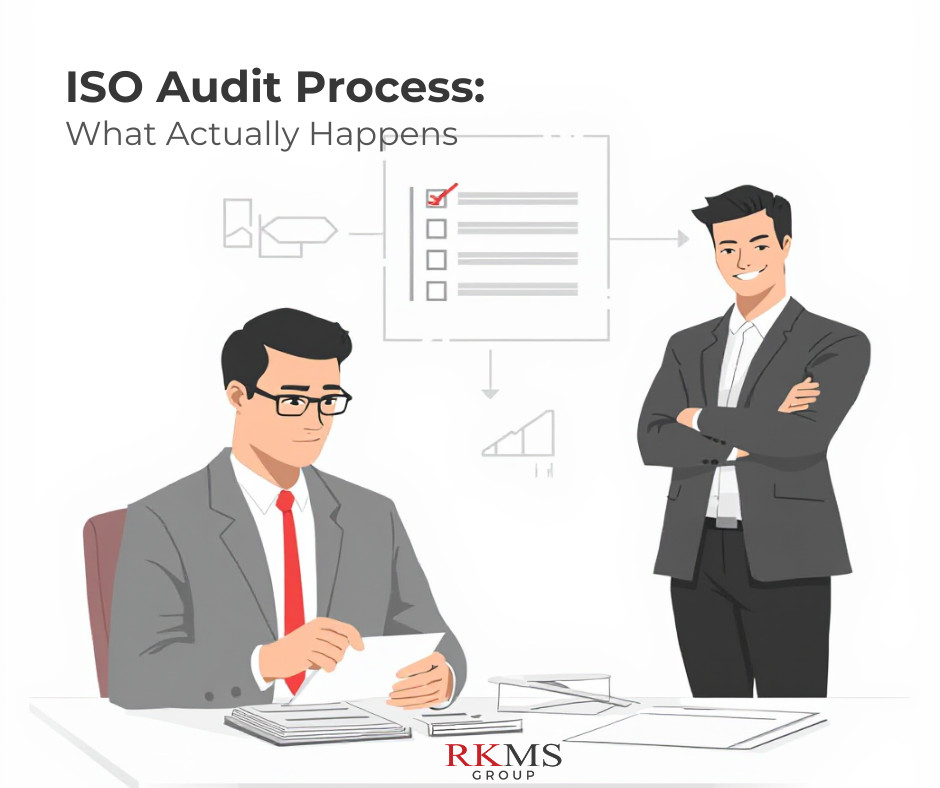
ISO Audit Process: What Actually Happens During an ISO Audit

ISO Audit Process: Inside the Audit – What Actually Happens During an ISO Audit

ISO Audit Process

ISO audit process concerns trigger immediate anxiety for many organisations. Visions of intense questioning, endless documents, and the fear of “failing” are common — especially for first-time certification or newly appointed compliance leads.

The reality, however, is far less intimidating.

An ISO audit is a structured, professional review of your management system, not an interrogation or a test of individual performance. Once you understand the ISO audit process and what auditors are really looking for, much of the fear disappears.

This article walks you through exactly what happens during an ISO audit, what evidence auditors expect to see, and how to prepare and interact confidently — without overcomplicating things

What Is the ISO Audit Process – Really?

At its core, the ISO audit process is a conformity assessment. The auditor’s job is to verify that your management system:

  • Meets the requirements of the relevant ISO standard


  • Is implemented in practice (not just on paper)


  • Is effective in achieving its intended outcomes


Importantly, auditors are not there to catch people out. They are assessing systems and processes, not judging individuals or trying to create failures.

There are several types of ISO audits within the wider ISO audit process:

  • Certification audits (initial approval)


  • Surveillance audits (ongoing annual checks)


  • Recertification audits (typically every three years)


While the depth varies, the overall approach remains consistent and predictable.

The ISO Audit Process Explained Step by Step

ISO Audit Process: Before the Audit – Preparation and Planning

The ISO audit process begins well before the auditor arrives.

You’ll receive:

  • Confirmation of audit scope and standard


  • An audit plan outlining timing, areas to be reviewed, and key contacts


  • Requests for key documents (often in advance)


At this stage, preparation should focus on readiness, not perfection. Auditors expect to see a system that works — not one that was frantically polished the night before.

Good preparation within the ISO audit process includes:

  • Ensuring documents are approved and current


  • Checking records are available and accessible


  • Making sure staff understand their role in the system


What preparation is not:

  • Writing brand-new procedures just for the audit


  • Coaching staff with scripted answers


  • Trying to hide weaknesses

ISO Audit Process: Stage 1 Audit – The Readiness Review

For certification audits, Stage 1 within the ISO audit process is a readiness assessment, not a pass-or-fail event.

The auditor will typically review:

  • Your management system scope

  • Key policies and objectives

  • Risk assessments and planning processes

  • Legal or regulatory awareness

  • Internal audit and management review arrangements

The purpose of Stage 1 in the ISO audit process is to confirm that:

  • Your system is designed in line with the standard

  • You are ready to proceed to Stage 2

Any gaps identified at Stage 1 are there to help you prepare — not to penalise you.

ISO Audit Process: Stage 2 Audit – The Main Event

Stage 2 is what most people think of as “the audit” and represents the core of the ISO audit process.

It begins with an opening meeting, where the auditor:

  • Confirms the scope and agenda

  • Explains how findings are graded

  • Reiterates that the audit is based on sampling

From there, the ISO audit process follows a process-based approach. Auditors don’t check everything — they sample evidence to build confidence that your system works consistently.

Typical activities include:

  • Reviewing records and documents

  • Interviewing staff at different levels

  • Observing activities and site conditions

The auditor is constantly asking one key question:
“Can this organisation demonstrate that it does what it says it does?”

ISO Audit Process: What Evidence Do Auditors Really Look For?

One of the biggest sources of confusion in the ISO audit process is the idea of “evidence”.

ISO auditors look for objective evidence, which usually falls into three categories:

  1. Records – completed forms, logs, reports, meeting minutes

  2. Interviews – staff explaining what they do and why

  3. Observations – seeing processes carried out in practice

Crucially, evidence within the ISO audit process must show consistency, not perfection.

ISO Audit Process: How Auditors Ask Questions

Auditor questions during the ISO audit process are typically open and neutral, such as:

  • “Can you show me how this process works?”

  • “What happens if something goes wrong here?”

  • “How do you know this is effective?”

The best approach for staff during the ISO audit process is:

  • Answer honestly and calmly

  • Explain what they actually do, not what the procedure says

  • Show evidence where possible

ISO Audit Process: Understanding Non-conformities Without the Fear

A non-conformity within the ISO audit process simply means a requirement of the standard has not been fully met.

They are usually categorised as:

  • Minor non-conformities – isolated or low-risk issues


  • Major non-conformities – systemic or high-risk failures


Non-conformities are not a judgement of competence and do not automatically mean certification failure. In most cases, they require corrective action to address the root cause and prevent recurrence.

Auditors also raise:

  • Observations


  • Opportunities for improvement


These are valuable insights, not criticisms.

ISO Audit Process: Common Mistakes and How to Avoid Them

Many problems in the ISO audit process arise from behaviour rather than system gaps. Common mistakes include:

  • Over-documenting processes that don’t add value

  • Treating the audit like an exam

  • Becoming defensive or argumentative

  • Trying to control every conversation

The most successful audits happen when organisations are:

  • Open and cooperative

  • Prepared but relaxed

  • Focused on showing real practices

ISO Audit Process: What Happens After the Audit?

The audit concludes with a closing meeting, a standard part of the ISO audit process, where the auditor:

  • Summarises findings


  • Explains any non-conformities


  • Outlines next steps and timelines


You’ll then receive a formal audit report. If corrective actions are required, these are typically submitted with evidence within an agreed timeframe.

Certification decisions are based on:

  • The effectiveness of your system


How issues are addressed — not whether they existed.

ISO Audit Process: How to Prepare Calmly and Confidently

The key to a successful ISO audit process is understanding that it is a review of your system, not a test of your people.

Preparation, clarity, and honesty go much further than last-minute fixes or excessive documentation.

Final Takeaway

When you understand the ISO audit process, know what evidence matters, and approach the audit professionally, it becomes a valuable tool for improvement — not something to fear.

Share

Book a Free Consultation Consultation Consultation Consultation

Get free advice and guidance tailored to your business needs

Related Resources

Book a Free Consultation Consultation Consultation Consultation

Get free advice and guidance tailored to your business needs

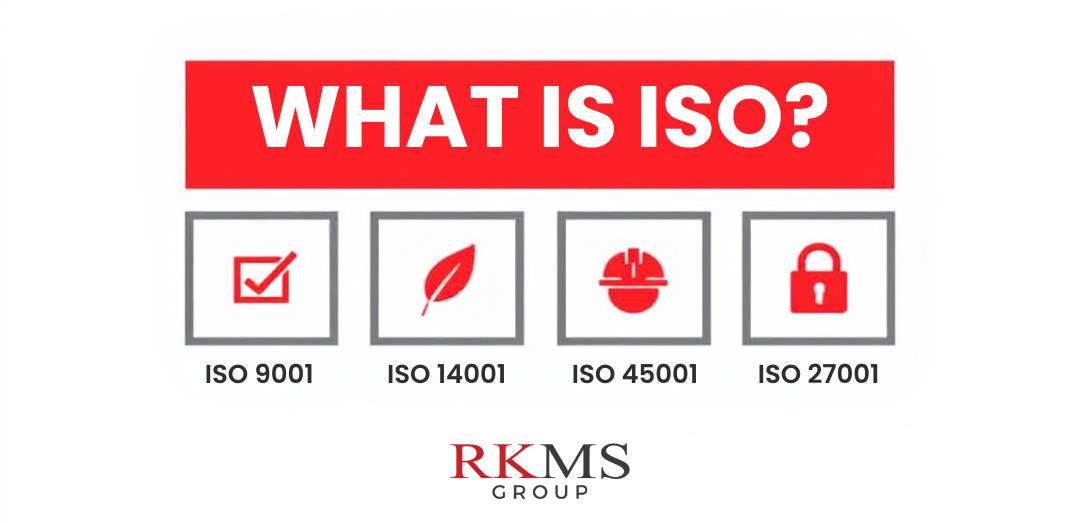
What is ISO? What ISO 9001, 14001, 45001 & 27001 Mean for Your Business

What is ISO? Demystifying 9001, 14001, 45001 and 27001 for Your Business

what is ISO

If you’ve ever typed “what is ISO” into a search engine and been hit with a wall of jargon, you’re not alone.

Many business leaders hear, “We should get ISO certified,” without ever getting a clear, plain-English answer to what ISO is or what ISO 9001, 14001, 45001 or 27001 actually mean for their organisation. Is it just paperwork? Is it only for big corporates? Do you really need more than one ISO standard?

This article is designed to cut through the jargon. By the end, you’ll have a clear understanding of what ISO is, what ISO 9001, ISO 14001, ISO 45001 and ISO 27001 really do for your organisation – and how they fit together to support a stronger, more resilient business.

What is ISO and why does it feel so complicated?

When people first ask “what is ISO?”, they’re often met with technical language: clauses, audits, accreditation, certification bodies and so on. For many leaders, the first reaction is:

  • “Which ISO do we actually need?”

  • “Is this just more red tape?”

  • “Will it slow the business down?”

The reality is much simpler. What ISO gives you is a set of structured, internationally recognised ways of running important parts of your business. ISO standards help you:

  • Work more consistently

  • Manage risk in a disciplined way

  • Demonstrate to customers that you’re serious about doing things properly

In this article, we’ll look at four of the most common standards:

  • ISO 9001 – quality

  • ISO 14001 – environment

  • ISO 45001 – health and safety

  • ISO 27001 – information security

We’ll focus on what ISO is in practice, not the clause numbers.

What is ISO and what do we mean by “ISO standards”?

What is ISO in a nutshell?

At the simplest level, when we ask “what is ISO?”, we’re talking about the International Organization for Standardization – a global body that brings together experts to agree what “good” looks like in different areas of business and technology.

The documents they publish – ISO standards – are essentially agreed rulebooks or blueprints. They don’t tell you exactly how to run your organisation, but they do set out the principles and key elements you should have in place.

So when someone asks “what is ISO 9001” or “what is ISO 27001”, they’re really asking about a specific rulebook within this wider ISO family.

What is an ISO management system actually in practice?

Another common question is “what is an ISO management system?”

It’s not just a pile of documents in a folder. An ISO management system is the whole way you plan, run, check and improve a particular area of your business, in line with a chosen ISO standard. That usually includes:

  • Policies (your intent and direction)

  • Processes and procedures (how things are done)

  • Roles and responsibilities

  • Records and evidence (what actually happened)

  • Regular reviews and improvements

If it’s done well, the system is built around how your organisation really operates – not the other way round.

What is ISO certification vs just “using the standard”?

You can:

  • Use an ISO standard informally as guidance – shaping your processes around its principles, or

  • Go for formal ISO certification, where an independent body audits you and confirms you meet the standard’s requirements.

Certification can be valuable when:

  • Customers or regulators expect it

  • You want a recognised mark of assurance

  • You’re bidding for tenders where ISO certification is a prerequisite

However, you don’t have to be certified to get value from thinking in an ISO way. Many improvements come simply from adopting the underlying approach.

What is ISO 9001 in simple terms?

If you’ve ever wondered “what is ISO 9001?”, here’s the short answer:

ISO 9001 is a framework for making sure you consistently deliver what you promised to your customers.

What is ISO 9001 really about – keeping your promises to customers

ISO 9001 focuses on quality management – not just product quality, but the overall experience you provide. It helps you:

  • Understand what customers need and expect

  • Design your processes to deliver that, reliably

  • Spot problems early and fix root causes

  • Keep improving rather than firefighting

Think of it as a playbook for “how we do things here” so that customers get a consistent result, whether they deal with you next week, next year or via a different team.

What is an ISO 9001 system like day to day?

In practical terms, an ISO 9001-aligned system often includes:

  • Clear, documented processes for key activities (sales, delivery, production, service)

  • Defined responsibilities and handovers to reduce errors and confusion

  • A structured way to handle issues, complaints and nonconformities

  • Regular reviews of performance, risks and opportunities for improvement

It’s about making your business more predictable – in a good way.

What are the business benefits of ISO 9001?

Done well, ISO 9001 can lead to:

  • Fewer mistakes and rework, saving time and cost

  • Happier customers who get what they were promised

  • Easier onboarding of new staff because processes are clear

  • Stronger credibility when tendering or seeking new clients

At its heart, ISO 9001 supports a culture of “get it right, and keep getting better”.

What is ISO 14001? ISO 14001 explained in plain English

When people search for “ISO 14001 explained” or “what is ISO 14001?”, they’re usually trying to understand how it links to their day-to-day operations.

ISO 14001 helps you understand and control how your business affects the environment.

What is ISO 14001 really doing – knowing and controlling your footprint

Every organisation has an environmental footprint – energy use, waste, emissions, resource consumption, transport and more. ISO 14001 gives you a structured way to:

  • Identify where you interact with the environment

  • Assess the risks and impacts (positive and negative)

  • Put sensible controls in place

  • Set objectives to reduce your impact over time

It moves you from reactive compliance (“let’s hope we’re doing the right thing”) to proactive environmental management.

What is an ISO 14001 system like in practice?

In daily operations, an ISO 14001-based system typically means:

  • Mapping your environmental aspects (e.g. waste streams, water use, emissions)

  • Setting measurable objectives and targets (e.g. reduce energy use by X%)

  • Implementing controls: recycling schemes, more efficient equipment, greener procurement

  • Monitoring key measures and regularly reviewing performance

It’s not about perfection overnight; it’s about being systematic and improving.

What are the business benefits of ISO 14001 beyond “being green”?

The benefits of ISO 14001 reach beyond sustainability credentials:

  • Reduced costs through lower energy, water and waste bills

  • Simpler compliance with environmental laws and regulations

  • Stronger brand and reputation with customers, investors and employees

  • Lower risk of environmental incidents, fines or negative publicity

In other words, when you ask “what is ISO 14001 doing for us?”, the answer is often “improving performance while protecting the planet”.

What is ISO 45001? Benefits of a proactive safety culture

Health and safety can easily become a tick-box exercise. ISO 45001 exists to change that. When people ask “what is ISO 45001 and what are the benefits?”, they’re really asking about your approach to people’s wellbeing.

ISO 45001 is about preventing harm and building a genuine culture of safety at work.

What is ISO 45001 really about – preventing harm, not just ticking boxes

ISO 45001 focuses on occupational health and safety. It asks you to:

  • Identify risks to people in and around your workplace

  • Put controls in place to reduce those risks

  • Involve workers in decisions about safety

  • Monitor performance and learn from incidents and near-misses

It’s less about “Do we have the paperwork?” and more about “Are people actually safe?”

What is an ISO 45001 system like in practice?

An ISO 45001-based system usually includes:

  • Structured risk assessments for tasks, equipment and environments

  • Clear responsibilities for leaders, managers and employees

  • Processes for reporting, investigating and learning from incidents and near-misses

  • Training, briefings and consultations so safety is a shared responsibility

You end up with a more open, proactive approach to safety, rather than blame or avoidance.

What are the tangible benefits of ISO 45001?

The benefits are both human and commercial:

  • Fewer accidents and injuries, and improved wellbeing

  • Less downtime and disruption from incidents

  • Lower insurance and legal risk

  • Higher morale and trust, because people feel looked after

So when you consider “what is ISO 45001 doing for our organisation?”, the answer is clear: protecting your most important asset – your people.

What is ISO 27001? ISO 27001 meaning for your business

Finally, let’s look at ISO 27001 meaning in practical terms. When people ask “what is ISO 27001?”, they’re often thinking about cyber security – but it’s broader than that.

ISO 27001 is a structured way to protect the information your business depends on.

What is ISO 27001 really about – keeping information secure, accurate and available

Information security is not just an IT issue. It’s about:

  • Confidentiality – who can see information

  • Integrity – whether information is accurate and trustworthy

  • Availability – whether you can access information when you need it

ISO 27001 helps you identify where your information lives, what could go wrong, and how to control those risks.

What is an ISO 27001 system like in practice?

In an ISO 27001-aligned system, you typically:

  • List your information assets – systems, databases, files, records

  • Assess risks: cyber attacks, human error, physical theft, system failures

  • Implement controls such as access management, encryption, backups and secure disposal

  • Establish policies for passwords, devices, remote working, data sharing and incident response

  • Test and review controls regularly to keep them effective

It’s a blend of technology, clear processes and behavioural expectations.

Why what ISO 27001 offers matters even if you’re “not an IT company”

Most organisations now depend heavily on data: customer records, contracts, designs, financial information, intellectual property and more. Even if you don’t see yourself as a tech business:

  • A security incident can disrupt operations, damage trust and create legal issues

  • Customers and partners increasingly expect robust information security

  • Being able to demonstrate your approach gives you an edge

So when you consider “what is ISO 27001 doing for us?”, the answer is: protecting your reputation, your relationships and your ability to operate.

What is the difference between ISO 9001, 14001, 45001 and 27001 – and how do they fit together?

So, what is the difference between ISO 9001, ISO 14001, ISO 45001 and ISO 27001, and how do they relate to each other?

Four “what is ISO…” answers looking at the same business

You can think of the standards as four lenses looking at the same organisation:

  • ISO 9001 – what is ISO 9001 about?
    Are we delivering consistent quality and satisfying customers?

  • ISO 14001 – what is ISO 14001 about?
    Are we managing our environmental impact responsibly?

  • ISO 45001 – what is ISO 45001 about?
    Are people safe and healthy at work?

  • ISO 27001 – what is ISO 27001 about?
    Are we protecting the information we rely on?

Structurally, they have a lot in common: policy, planning, risk assessment, implementation, monitoring and continual improvement. That shared structure is deliberate.

What is an integrated ISO management system?

Because of that shared structure, many organisations choose an integrated management system instead of four separate ISO systems:

  • One set of core processes, viewed through different lenses

  • Shared documents, audits and management reviews

  • Less duplication, less confusion, more coherence

Instead of four separate “projects”, you have one joined-up way of managing quality, environment, safety and information security.

What is the best place to start with ISO?

You do not have to implement all four at once.

A common approach is:

  • Start with ISO 9001 as the backbone, improving how you deliver for customers

  • Add ISO 14001 if environmental impact and sustainability are key

  • Add ISO 45001 where risks to people are significant

  • Add ISO 27001 if you hold sensitive information or operate digitally (which most do)

The important thing is to ask, “What is our biggest area of risk or opportunity?” and start there. ISO should follow your strategy, not the other way round.

What is ISO really giving you? A stronger business foundation

In the end, the most important question is not just “what is ISO?” in theory, but:

“What is ISO doing to make our business stronger?”

ISO standards are not about turning your organisation into a bureaucracy. Used well, they are about clarity, consistency and confidence.

To recap:

  • ISO 9001 helps you deliver consistent quality and keep your promises to customers.

  • ISO 14001 helps you manage your environmental impact and operate more sustainably.

  • ISO 45001 helps you protect people and build a proactive safety culture.

  • ISO 27001 helps you protect the information that keeps your business running.

Individually, each standard answers a different version of “what is ISO doing for us?”
Together, they form a stronger business foundation – one that supports growth, resilience, reputation and trust.

If you’re considering where to begin, the best question is not “Which certificate should we buy?” but:

“Which areas of our business need more structure, control and confidence – for us and for our customers?”

From there, what ISO offers becomes less about numbers and more about outcomes.

Explore how these standards fit together to build a stronger business foundation.

Share

Book a Free Consultation Consultation Consultation Consultation

Get free advice and guidance tailored to your business needs
Related Resources

Book a Free Consultation Consultation Consultation Consultation

Get free advice and guidance tailored to your business needs
Beyond the Badge: How UKAS-Accredited and Non-Accredited ISO Both Build Trust – When Used Honestly

Beyond the Badge: How UKAS-Accredited and Non-Accredited ISO Both Build Trust – When Used Honestly.

Accredited Certification

In B2B relationships, trust is not a “nice to have” – it is the deciding factor.

Customers, primes and procurement teams are more cautious than ever. They have to be. Supply chains are under scrutiny, regulators expect evidence, and every buyer has the same problem: everyone says they are reliable, compliant and quality-driven. Very few can prove it.

That is where ISO certification and accredited certification come in – and, more specifically, where choosing between UKAS-accredited ISO and reputable non-accredited ISO can shape how much confidence your customers and supply chain partners place in you.

There is another truth we need to acknowledge:

Not every organisation needs UKAS-accredited ISO – and non-accredited certification can still be entirely appropriate when it is chosen deliberately, delivered by a reputable provider, and communicated honestly.

This article unpacks that balance – and explains how Certa Qualitas and RKMS help SMEs navigate accredited certification and non-accredited routes confidently and transparently.

Why Trust Matters More Than Ever in B2B

Everyone Claims Quality – Buyers Want Proof

Most SMEs genuinely care about quality, safety and compliance. But so do their competitors – or at least, that is what everyone claims on their website.

From the buyer’s side, the picture looks different:

  • They must justify supplier choices internally.

  • They are under pressure to reduce risk in their supply chain.

  • They know that “we take quality seriously” is easy to say and hard to verify.

ISO certification – particularly ISO 9001, 14001, 45001 and other core standards – provides a structured, internationally recognised way of proving that your business does not just talk about quality and compliance; it runs on them. When that ISO is backed by accredited certification, the trust signal is even stronger.

From Paper Promises to Demonstrable Assurance

Policies, brochures and nice words still have their place, but tenders, frameworks and major clients increasingly look for independent, third-party assurance.

That is why you will see questions like:

  • “Are you ISO 9001 certified?”

  • “Is your certificate issued by a UKAS-accredited certification body?”

  • “Please upload your current certificates and last audit report.”

The detail behind those questions matters. ISO certification is the “badge” on the surface – but behind it sits a system of accredited certification and international recognition that determines how much weight that badge really carries in terms of ISO trust and ISO brand credibility. 

What Sits Behind the Badge – ISO, Accreditation, UKAS and the IAF

The Basics – ISO Standards vs Certification

First, a quick recap:

  • ISO develops international standards – for example, ISO 9001 (quality), ISO 14001 (environment), ISO 45001 (health & safety).

  • Certification bodies are the organisations that audit you against those standards and issue certificates.

  • Accreditation bodies are the bodies that check the checkers – they audit and approve certification bodies and underpin accredited certification.

So when you say “We are ISO 9001 certified”, what you really mean is:

“We have been assessed by a certification body, and they have confirmed we meet the requirements of ISO 9001.”

How reliable that statement appears to your customers depends heavily on who that certification body is and how they are supervised – in other words, whether your ISO sits under an accredited certification framework or not.

Where UKAS Fits In

In the UK, UKAS (United Kingdom Accreditation Service) is the government-recognised national accreditation body. Its job is to:

  • Assess certification bodies against internationally agreed criteria.

  • Confirm they are competent, impartial and consistent in how they audit.

  • Monitor them on an ongoing basis.

When a certification body is UKAS-accredited, it means UKAS has checked their processes, competence and impartiality – not just once, but continually.

That is why many procurement teams specifically ask for “UKAS-accredited ISO certification” or look for the crown-and-tick mark. It is a shorthand for:

“This certificate comes from a certification body that is independently and rigorously monitored as part of an accredited certification regime.”

How the International Accreditation Forum (IAF) Connects the Dots

Step back again and you find the International Accreditation Forum (IAF) – the global association of accreditation bodies (such as UKAS) and their accredited certification bodies.

The IAF manages agreements called Multilateral Recognition Arrangements (MLAs). In simple terms:

  • If an accreditation body like UKAS is a signatory to the IAF MLA, other signatory bodies around the world agree to recognise its accreditations as equivalent.


  • A certificate issued by a certification body accredited by a signatory such as UKAS is therefore broadly recognised and trusted internationally as accredited certification.


For SMEs working in international or complex supply chains, this offers real benefits:

  • Reduced duplication – fewer repeat audits just to satisfy different country requirements.


  • Stronger global customer confidence – your ISO credentials carry weight beyond the UK.


What Accreditation Does and Does Not Mean

Accreditation (through UKAS and the IAF framework):

  • Does mean:

    • Independent oversight of the certification body.

    • Consistent levels of competence and impartiality.

    • A stronger trust signal in regulated, high-risk or international contexts as part of formal accredited certification.

  • Does not mean:

    • That every non-accredited certificate is automatically “fake”.

    • That non-accredited routes never have value.

The crucial differentiator is honesty and reputation – both from the certification provider and from the organisation being certified, regardless of whether it chooses accredited certification or a non-accredited route.

Do You Always Need UKAS-Accredited ISO? A Balanced View

When UKAS-Accredited ISO Is Usually Expected

There are clear situations where UKAS-accredited ISO and formal accredited certification are either explicitly required or strongly preferred, for example:

  • Supplying into public sector contracts, frameworks or the NHS.

  • Working with large corporates or high-risk sectors (construction, engineering, energy, critical infrastructure).

  • Operating in heavily regulated environments where external scrutiny is intense.

  • Engaging in international tenders where IAF-recognised accredited certification eases acceptance.

In these cases, UKAS-accredited ISO (and the wider IAF framework it sits within):

  • Reduces the number of questions from procurement and auditors.

  • Speeds up supplier approval.

Provides ISO brand credibility that stands up under detailed supply chain due diligence.

When Non-Accredited Certification Can Be Entirely Appropriate

There are also legitimate situations where non-accredited ISO is a sensible, proportionate choice, for example:

  • Early-stage SMEs who want to embed structure, SME compliance and good practice but are not yet exposed to strict tender requirements.


  • Organisations that primarily need ISO to improve internal consistency, quality and control, rather than for external marketing.


  • Businesses serving local, relationship-led markets where customers ask for “ISO certified” but do not specify UKAS or accredited certification.


In these scenarios, a reputable non-accredited certification body can still:

  • Deliver robust audits.


  • Provide meaningful feedback and improvement opportunities.


  • Help you build a management system that genuinely works for your business.


The key phrase is reputable and transparent. Non-accredited certification is not automatically second-rate; the question is whether it is fit for purpose and honestly described alongside accredited certification options.

The Critical Piece – Open, Honest Conversations with Your Provider

Problems arise not from non-accredited certification itself, but from misunderstanding and misrepresentation.

Red flags to watch for include:

  • Providers who allow you to assume you are getting “proper UKAS ISO” or full accredited certification without explicitly confirming your certificate will not carry a UKAS mark.

  • “Instant” or “guaranteed pass” ISO where there is no real audit activity – just a template, an invoice and a certificate.

  • Combined consultancy and certification sold in a way that blurs independence – the same people designing your system and rubber-stamping it.

  • Providers who dismiss UKAS-accredited ISO and accredited certification as “unnecessary bureaucracy” when your customers or tenders clearly expect it.

By contrast, a trustworthy provider will:

  • Explain clearly whether the certificate will be UKAS-accredited (accredited certification) or non-accredited.

  • Help you weigh the pros and cons for your specific markets and contracts.

  • Support you in being honest with your own customers about what you hold.

This is exactly the approach Certa Qualitas and RKMS take. We offer both accredited certification through UKAS-accredited routes and reputable non-accredited certification routes, but we will always be transparent about which route you are on and why.

How ISO Certification Builds Trust at Three Levels

1. Trust with Customers and Clients

For your customers, ISO is a signal that:

  • You have agreed ways of working – not just informal habits.


  • You track and respond to problems rather than hiding them.


  • You care about legal, regulatory and contractual obligations.


Where buyers are risk-averse or answerable to regulators, UKAS-accredited ISO and formal accredited certification often give them extra confidence. The connection to UKAS and the IAF framework helps them justify the decision internally and strengthens overall ISO trust.

In other markets, non-accredited ISO can still add value when it is presented honestly. For example:

  • “We are ISO 9001 certified by [Name of Body]. This helps us control quality and continually improve.”


Trust is reinforced not just by the badge, but by how open you are about what that badge actually represents and whether it sits under accredited certification or not.

2. Trust Within Supply Chains

Primes and Tier 1 suppliers face increasing demands themselves – from regulators, shareholders and customers. They need suppliers who will not create surprises.

ISO helps them:

  • Assess operational maturity and reliability.

  • Evidence due diligence to their own stakeholders.

  • Reduce the need for repeated, bespoke supplier audits.

Here, UKAS-accredited ISO and accredited certification can significantly smooth onboarding and reduce additional checks. Equally, for less critical roles in the chain, non-accredited certification from a reputable body may be deemed proportionate – especially where relationships and performance history are strong.

3. Trust Inside Your Organisation

Finally, ISO builds trust internally:

  • Staff know what “good” looks like in their role.

  • Managers have clearer visibility of risks, issues and performance.

  • Growth becomes easier because processes do not live solely in people’s heads.

Whether you choose accredited certification or a non-accredited route, a well-implemented management system gives your team confidence that the organisation is well run – and that mistakes are an opportunity to learn, not to panic.

ISO as Part of Your Brand Story – Not Just a Certificate on the Wall

Turning Compliance into a Credibility Asset

ISO is more than a logo in your website footer. It is a powerful part of your brand story when used well.

You can:

  • Reference your management system in proposals and bids.

  • Show how you manage customer feedback, risks and continual improvement.

  • Demonstrate that you meet – and aim to exceed – your legal and regulatory obligations.

Clarity is crucial. For example:

  • “ISO 9001 certified” – when using a non-accredited provider.

  • “ISO 9001 certified by a UKAS-accredited certification body as part of accredited certification” – when you hold a UKAS-accredited certificate.

For exporters or those in global supply chains, being able to say your ISO certificate is issued under accredited certification by a UKAS-accredited, IAF-recognised certification body can add extra weight in overseas tenders and reinforces ISO brand credibility.

Practical Ways SMEs Can Use ISO to Stand Out

  • Highlight relevant ISO certifications in PQQs, ITTs and supplier questionnaires.

  • Use your ISO system as proof of how you manage quality, environment or safety in real-world scenarios.

  • Share small “before and after” stories – fewer complaints, improved delivery times, better retention of key clients.

Done honestly, whether under accredited certification or a non-accredited route, ISO becomes part of your authentic credibility, not just an icon in the footer.

Choosing the Right Route: How Certa Qualitas and RKMS Support You

An Honest Assessment of What You Actually Need

Our first job is not to sell you a particular route – it is to understand your context:

  • Who are your critical customers and target markets?


  • What do their contracts and tenders actually specify about accredited certification or ISO generally?


  • How fast do you need certification, and what internal resources do you have?


From there, we help you weigh:

  • UKAS-accredited / Accredited certification vs non-accredited certification.


  • Short-term pragmatism vs long-term strategy.


Budget, timescales and internal capacity.

Practical, Not Paper-Heavy, Management Systems

With RKMS, you are not buying a shelf full of ring-binders. You are building a management system that:

  • Fits how your business genuinely operates.

  • Is lean enough for an SME to maintain.

  • Is robust enough to satisfy external audits – whether as accredited certification or via a non-accredited route.

With Certa Qualitas as your certification partner, you have a provider committed to:

  • Clear, honest explanation of the route you are on.

  • Rigorous but constructive audits.

Ongoing support rather than one-off, “see you in three years” interactions.

Building and Maintaining Trust Over Time

Trust is not created on audit day. It builds through:

  • Annual surveillance audits and ongoing improvements.


  • How you handle non-conformities and corrective actions.


  • How you communicate your certification – accredited or non-accredited – to customers and stakeholders.


Our focus is on helping you build a system that stands up to scrutiny and grows with you – whichever certification route you choose.

Get accredited certification the right way with Certa Qualitas and RKMS.

Conclusion – Trust Isn’t an Add-On, It’s the Advantage

The real advantage of ISO is not the certificate itself. It is the confidence it gives to everyone who deals with you – customers, suppliers, staff and regulators.

Accreditation through UKAS and the IAF, as part of formal accredited certification, amplifies that confidence, especially where risk, regulation or international recognition matter. But non-accredited ISO from a reputable, transparent provider can still be entirely appropriate when chosen with eyes open.

The risk lies not in the label but in the lack of clarity.

Before you invest time and money in ISO, make sure you understand:

  • Whether you need accredited certification via UKAS-accredited ISO or not.


  • How your customers and markets view different routes.


  • Exactly what your chosen provider is offering.


And if you would like a straight conversation – without jargon or hard sell – about what is right for your organisation, we are here to help.

Get accredited certification the right way with Certa Qualitas and RKMS.

Share

Book a Free Consultation Consultation Consultation Consultation

Get free advice and guidance tailored to your business needs
Related Resources

Book a Free Consultation Consultation Consultation Consultation

Get free advice and guidance tailored to your business needs
SME ISO Audit Checklist: How to Prepare for Your Next External Audit

SME ISO Audit Checklist: How to Prepare for Your Next External Audit

ISO Audit Checklist

SME ISO audit checklist – three simple words that can turn audit panic into audit control.

For many UK SMEs, ISO external audits sit on a long list of competing priorities. Documentation may be scattered, people are busy doing the day job, and “ISO” can feel like a box-ticking exercise rather than a useful business tool.

The good news? Audits do not have to be stressful. With a clear, practical SME ISO audit checklist and a bit of structure, you can turn worry into confidence – and even use the audit to strengthen how your business runs.

This article walks you through a step-by-step SME ISO audit checklist you can use before each external audit.

Understanding Your ISO External Audit (in Plain English)

Before you dive into the details of audit preparation, it helps to be clear on what kind of audit you are facing and what the auditor is really there to do.

What Type of Audit Is Coming Up?

Most SMEs will see one of three types of ISO external audit in the UK:

  • Certification audit – Your first full assessment to achieve certification. Typically in two stages (Stage 1 “readiness review” and Stage 2 “full audit”).


  • Surveillance audit – A periodic check (often annually) to confirm your management system is still working and being used.


  • Recertification audit – A more in-depth review every few years (often three) to renew your certificate.


The level of scrutiny can vary, but the fundamentals of audit preparation are the same:

  • Have you defined how you work?


  • Are you following what you have defined?


  • Can you show evidence of this in practice during the ISO external audit?

What Your Auditor Is Really Looking For

It is easy to imagine the auditor as someone trying to “catch you out”. In reality, accredited auditors are there to confirm:

  • Conformance with the relevant standard(s) – e.g. ISO 9001 (quality), ISO 14001 (environment), ISO 45001 (health and safety) etc. 


  • Alignment between process and practice – You do what your documents and procedures say you do.


  • A functioning management system – Not a dusty manual, but a set of processes that help you run the business.


They will expect to see:

  • Documents – Policies, procedures, process maps, risk registers, etc.


  • Records – Evidence that activities have actually happened (training records, maintenance logs, inspection reports, minutes of meetings, etc.).


If something is not perfect, this does not automatically mean you will “fail”. The key is to be honest, open and able to show how you address issues and improve.

The SME ISO Audit Checklist – Overview

Think of this ISO audit checklist as a structured walk-through of your management system. You are checking:

  1. Do we have the right things in place?


  2. Are they current and used?


  3. Can we demonstrate evidence if asked?


In this article, we will look at six key sections in your SME ISO audit checklist:

  1. Governance & leadership


  2. Documentation & records


  3. Processes & controls


  4. People, competence & awareness


  5. Risk, improvement & nonconformities


  6. Site, equipment & safety (where applicable)


You can work through each section with your team and mark items as:

  • ✅ Green – in place and working


  • 🟠 Amber – partly in place / needs updating


  • 🔴 Red – missing or not effective

Section 1 – Governance, Leadership and Scope

This part of your SME ISO audit preparation checks the foundations of your management system.

Confirm Your Management System Scope

Your scope statement defines what your ISO management system covers. Before an audit, confirm:

  • Is the description of your products/services still accurate?

  • Have you added or removed locations?

  • Have you significantly changed key suppliers, outsourced processes, or your legal structure?

If your business has changed but your scope has not, update it and ensure the change is documented and communicated. An unclear scope is a common issue in ISO audit preparation for SMEs.

Leadership, Policy and Objectives

Auditors will look for real leadership involvement, not just signatures.

Check:

  • Policy

    • Is your quality / environmental / health & safety policy current?

    • Is it communicated – for example, on noticeboards, intranet, induction material?

    • Could key staff explain the basic intent of the policy in their own words?

  • Objectives

    • Have you set measurable objectives relevant to your standard and your business? (e.g. on-time delivery, customer satisfaction, waste reduction, safety performance.)

    • Are you monitoring progress and reviewing results?

Evidence might include:

  • Signed policy with review dates

  • KPI dashboards or reports

Team meeting minutes where objectives are discussed

Management Review and Key Decisions

Management review is your formal check-in on the management system.

Before the audit, confirm:

  • Have you held management review meetings at the planned frequency?

  • Are there minutes or outputs showing discussion of performance, risks, opportunities and improvement?

  • Are actions clearly assigned and followed up?

Auditors often use management review minutes to understand how leadership oversees the system.

Section 2 – Documentation and Record Control

Next, make sure your documents and records are controlled and retrievable – a core part of any ISO audit checklist.

Core Documents Up to Date

Check that your key documents:

  • Reflect how you currently operate (not how you worked three years ago).

  • Show version control (issue number, date, author, approval where appropriate).

  • Are accessible to the people who need them.

This might cover:

  • Quality/environmental/H&S manual (if you use one)

  • Process maps or flowcharts

  • Standard operating procedures (SOPs) and work instructions

  • Forms and templates

If staff have created their own spreadsheets and “workarounds”, bring them into your controlled system or tidy them up. This is a very common SME audit preparation task.

Record Control and Retrieval

A simple but powerful self-check:

Pick three types of record an auditor is likely to request – for example,

  • a training record,

  • a calibration certificate,

  • a customer complaint.

Time how long it takes you to find each one.

If it is a struggle, you may need to improve how records are stored and indexed.

Look at:

  • Training and competence records

  • Maintenance and calibration records

  • Inspection and test reports

  • Incident/accident and complaint logs

  • Evidence of corrective actions

The goal is not a perfect system, but one where you can consistently find what you need during an ISO external audit.

Section 3 – Processes, Controls and Evidence in Practice

Standards talk about “process approaches” and “operational controls”. Practically, this means:

  • You know your key business processes.

  • They are defined, followed, and effective.

You can show evidence that they work.

Critical Business Processes Mapped and Followed

Focus on processes that matter most to your customers and to risk, such as:

  • Sales/quotation and contract review

  • Purchasing and supplier management

  • Operations / service delivery / production

  • Inspection, testing and release

  • Delivery and after-sales support

Ask:

  • Do we have clear process flows or procedures?

  • Do people actually follow them?

  • Are there any obvious gaps between “what we say” and “what we do”?

Where practice has evolved, update your documentation rather than forcing people back to an outdated method.

Internal Audits Completed and Actions Closed

Your internal audits are like a rehearsal before the external audit and should form part of your ISO audit preparation checklist.

Confirm:

  • Have you completed internal audits according to your plan?

  • Do reports clearly state what was checked, what was found, and any nonconformities?

  • Are corrective actions assigned, with deadlines and evidence of completion?

If there are open actions, make sure you can explain:

  • Why they are still open

  • What you are doing about them

When you expect to close them

Supplier and Outsourcing Controls

For suppliers and outsourced processes, auditors will look at how you ensure external inputs do not undermine your management system.

Check:

  • Do you have an approved supplier list, with criteria for approval?

  • Is there evidence of ongoing evaluation (e.g. supplier performance reviews, records of issues and how they were handled)?

  • Where processes are outsourced, do you have appropriate agreements, specifications or controls in place?

Section 4 – People, Competence and Awareness

Even the best-written procedures fail if people do not understand them. This is a key area in SME ISO audit preparation.

Roles, Responsibilities and Authorities

Ask yourself:

  • Are key roles (e.g. quality manager, health and safety coordinator, process owners) clearly defined?

  • Does everyone understand who is responsible for what?

  • Are responsibilities documented in job descriptions, organisation charts or role profiles?

Auditors may pick a process and ask staff who is responsible for certain decisions. The answers should align with your documentation.

Competence, Training and Records

For roles that affect quality, environment or safety:

  • Have you defined competence requirements (skills, experience, qualifications)?

  • Do you have training plans for new starters and existing staff?

  • Are training records complete and up to date?

This might include:

  • Induction records

  • Toolbox talks or briefing sessions

  • Certificates for licences or safety-critical roles

Evidence of refresher training

Staff Awareness of the Management System

Auditors often speak to people at different levels and ask simple questions such as:

  • “What do you do if a customer complains?”

  • “Where would you find the procedure for this task?”

  • “Who do you report a safety concern to?”

Before the audit, brief your teams:

  • Explain the purpose of the audit.

  • Reassure them it is not a test of individuals.

Remind them where key procedures are and who to ask if they are unsure.

Section 5 – Risks, Opportunities, Improvement and Nonconformities

ISO standards place strong emphasis on risk-based thinking and continual improvement, which should appear clearly in your SME ISO audit checklist.

Risk and Opportunities Register

Review your approach to risk:

  • Do you have a risk register or equivalent list of key risks and opportunities?

  • Is it up to date, reflecting recent changes in your business or context?

  • Are actions to address risks clearly assigned and reviewed?

You do not need a complex system; you do need a structured and consistent one.

Nonconformities, Complaints and Incidents

Auditors do not expect you to have no problems. They expect you to handle them effectively.

Check:

  • How do you log nonconformities, complaints, incidents and near misses?

  • Is there evidence of investigation and root cause analysis where appropriate?

  • Do you look for trends over time?

Being able to show patterns and what you have done about them is a strong positive signal.

Corrective Actions and Learning

A powerful part of audit preparation is gathering a few “before and after” examples:

  • A recurring defect that has been addressed

  • A customer complaint that led to a process change

  • A safety incident that resulted in improved controls

Have a couple of short stories ready that show how you learn and improve.

Section 6 – Site, Equipment and Operational Controls (Where Applicable)

For organisations with physical premises, equipment and on-site activities, the auditor will usually carry out a walkthrough.

Condition of the Workplace

First impressions matter.

Look at:

  • General housekeeping – clear walkways, tidy work areas, safe storage

  • Signage – safety signs, instructions, emergency exits

  • Use of PPE where required

Minor issues are normal, but obvious unmanaged risks can raise serious questions.

Equipment Maintenance and Calibration

Check that:

  • You have an up-to-date list of critical equipment.

  • Maintenance schedules are in place and records are available.

  • Where measurement or test equipment is used to assure quality, calibration records are current.

Operational Controls and Work Instructions

On the shop floor or in service delivery areas:

  • Are the latest work instructions available and being followed?

  • Are any checklists, forms or visual aids up to date?

  • Do staff know what to do if something goes wrong or out of specification?

How to Use the Downloadable ISO Audit Readiness Checklist

The article gives you the logic; the ISO audit checklist gives you the tool.

One-Pager Gap Scan

Start with a quick RAG assessment:

  • Go through each section of the checklist.
  • Mark each item Red, Amber or Green.
  • Step back and see where the biggest clusters of red/amber sit.

This gives you an immediate view of where to focus in your SME ISO audit preparation.

Prioritising Actions in the Weeks Before the Visit

Not everything can be fixed at once. Use the checklist to prioritise:

  • Issues that directly affect customer satisfaction or safety.

  • Gaps that are simple to close quickly (e.g. missing signatures, outdated version numbers).

Items that support the narrative you want to present to the auditor: “We know where we are, we are working on X, Y and Z.”

Using It for Future Surveillance and Recertification Audits

Do not treat the checklist as a one-off. Build it into your routine:

  • Use it ahead of internal audits.


  • Review it as part of management review.


  • Repeat the RAG scan before each surveillance or recertification audit.

Final Steps Before Audit Day

In the final day or two before your ISO external audit:

  • Confirm the agenda and timings with the auditor.

  • Make sure key people know when they may be needed.

  • Prepare a quiet room or reliable online meeting link.

  • Have your core documents and key records easily accessible.

  • Take a calm “walkthrough” of your site with the audit in mind.

Remember:

  • No organisation is perfect.

  • Audits are about conformance and improvement, not blame.

  • A structured SME ISO audit checklist gives you confidence and helps the auditor see your strengths as well as your gaps.

With a clear ISO audit checklist and a simple, honest story about how you run your business, your next external audit can become a useful health check rather than a source of anxiety.

Share

Book a Free Consultation Consultation Consultation Consultation

Get free advice and guidance tailored to your business needs

Related Resources

Book a Free Consultation Consultation Consultation Consultation

Get free advice and guidance tailored to your business needs
SME ISO ROI: Real ISO Benefits from UK Case Studies

ISO benefits UK SMEs: Real ROI from Case Studies

ISO benefits UK SMEs

ISO benefits UK SMEs in more ways than many owners realise. If you run a small or medium-sized enterprise in the UK, you have probably heard some version of: *“Our bigger customers are asking for ISO – do we really need it?”*  

For many SMEs, ISO certification starts life as a tender requirement. What often surprises owners and directors is how much it changes the way the business runs day to day – and the impact that has on revenue, costs and risk.

In this article, we will walk through three realistic ISO case study UK examples – anonymised but based on the kinds of results SMEs regularly achieve. You will see the before and after for each, along with the common themes that drive real SME ISO ROI.

Why SMEs Are Turning to ISO in the UK

The pressure on growing SMEs

As an SME grows, the pressure on systems and consistency increases. Common triggers include:

  • Larger customers and public sector bodies requiring ISO 9001, ISO 14001 or ISO 27001 as a condition of doing business.


  • Rising expectations around quality, sustainability and data security.


  • A sense that the company is “held together by goodwill and late nights” rather than robust processes.


Owners often describe the same picture:

  • Key tasks exist only in certain people’s heads.


  • Problems are fixed reactively rather than prevented.


  • Tenders are lost because competitors can show a more professional, certified approach.

From “tick-box” to tangible ROI

The misconception is that ISO is mainly about paperwork. In reality, done properly it is about:

  • Defining how work should be done.

  • Measuring performance in a simple, useful way.

  • Using that information to improve and grow.

The real question is not “do we need ISO?” but “what could ISO unlock for our business?” To answer that, let’s look at three ISO success stories.

ISO Case Study UK #1 – Manufacturing SME Wins on Quality (ISO 9001)

Before ISO – Quality issues costing real money

Profile:
A precision components manufacturer in the North of England with 45 staff, supplying larger OEMs in automotive and engineering.

Challenges:

  • Rework and scrap levels fluctuating between 6–8% of output.


  • Different shifts setting up machines “their own way”, leading to variation.


  • Lost tenders because potential customers wanted evidence of a formal quality management system, ideally ISO 9001.


The impact was significant:

  • Margins were squeezed by scrap, rework and urgent remakes.


  • Delivery dates slipped, putting pressure on relationships.


  • The business felt “stuck” in the mid-tier, unable to move up the supply chain.

The ISO 9001 implementation journey

Rather than drowning the business in documents, the ISO project focused on clarity and consistency:

  • Process mapping workshops with team leaders and operators to agree the best way of working for core processes: order intake, production planning, machining, inspection, despatch.

  • Standard work instructions for critical operations, with photos and checklists rather than long text.

  • Simple KPIs on a monthly dashboard: defect rate, on-time delivery, customer complaints, right-first-time.

  • Internal audits designed as constructive process health checks, not blame exercises.

An experienced ISO consultant kept the system realistic, using the company’s language and existing templates where possible, and guiding them through certification.

After ISO – Measurable quality and growth

Within the first 12–18 months:

  • Defect and rework rates reduced by around a third.


  • On-time delivery improved and became more predictable.


  • Customer complaints fell, and when issues did occur they were handled in a more structured way.


Crucially, the business could now:

  • Demonstrate ISO 9001 certification on tender submissions.


  • Evidence their performance with data from the management system.


They began to win work with larger OEMs who previously regarded them as “too small” or “too informal”. Internally, staff reported:

  • Clearer expectations.


  • Fewer last-minute emergencies.


  • A sense that quality was “how we work every day”, not a once-a-year panic.


For this manufacturer, SME ISO ROI showed up in higher win rates, stronger margins and a more stable production environment.

ISO Success Story #2 – Service/Facilities SME Cuts Costs & Waste (ISO 14001)

Before ISO – Rising costs and environmental risk

Profile:
A facilities and maintenance company with 60 staff operating across the UK, providing FM services to commercial and public sector clients.

Issues:

  • Fuel and energy costs increasing year-on-year with no clear picture of where the waste was.


  • Waste contractors managed on an ad-hoc basis, with limited records or reporting.


  • More tenders asking detailed questions about environmental performance and ISO 14001.


Directors were concerned about:

  • Hidden environmental risks and potential non-compliance.


  • Losing out to competitors that could demonstrate stronger sustainability credentials.

Implementing ISO 14001 without slowing the business down

The ISO 14001 project started with an environmental review:

  • Mapping where the organisation used energy, fuel and water, and where it generated waste.


  • Identifying legal requirements and current gaps.


From there, the company set a small number of practical, measurable objectives:

  • Reduce fuel usage per job by improving route planning and driver behaviour.


  • Increase recycling rates and reduce general waste to landfill.


  • Improve monitoring of environmental incidents and near-misses.


Staff engagement was fundamental:

  • Short toolbox talks to explain why changes were being made.


  • Simple checklists for site teams, aligned with tasks they already performed.


  • Integration with the existing job management system so environmental checks did not become a separate, forgotten process.

After ISO – Lower costs, stronger reputation

Over the following 18 months, the business saw:

  • A noticeable reduction in fuel spend through better planning and driver awareness.


  • Reduced waste disposal costs as more materials were segregated for recycling.


  • Greater confidence that environmental regulations were being met and demonstrated.


Commercially, ISO 14001 became:

  • A differentiator in tenders where sustainability carried a specific score.


  • A support for their marketing as a responsible partner for landlords and public sector bodies.


Here, SME ISO ROI was visible in reduced operating costs, stronger compliance and a more competitive position in bids.

ISO Case Study UK #3 – Tech/IT SME Unlocks Bigger Contracts (ISO 27001 + More)

Before ISO – Security concerns blocking growth

Profile:
A 30-person software and IT services company supplying solutions to financial and healthcare clients.

Challenges:

  • Prospects routinely asking detailed security questions the business found time-consuming to answer.

  • Frameworks and large contracts specifying ISO 27001 certification as a minimum requirement.

  • Board-level concern about the potential impact of a security incident on reputation and growth.

Although the company had many good practices in place, they were informal and not always documented.

Building an ISO 27001-ready management system

The ISO 27001 journey focused on tightening and formalising existing controls:

  • Conducting an information security risk assessment to identify key assets (systems, data, people) and the threats they faced.

  • Implementing and documenting controls for:

    • Access management and user provisioning.

    • Backups and recovery testing.

    • Incident reporting and response.

    • Supplier management and due diligence.

  • Delivering regular awareness training for all staff, not just IT.

  • Aligning security processes with an existing service management and quality framework to avoid duplication.

Again, an ISO specialist ensured the documentation was lean, practical and aligned with the way the business actually worked.

After ISO – Trust, efficiency and revenue growth

Post-certification, the company experienced several benefits:

  • Security questionnaires for tenders became far easier to answer by referencing ISO 27001 controls and documentation.


  • They qualified for larger frameworks where certification was mandatory, opening up a new tier of opportunity.


  • Internally, there was greater awareness of security, fewer minor incidents and clearer responsibilities.


For this SME, ISO 27001 acted as a passport into more demanding markets, supporting both growth and resilience – another clear demonstration of SME ISO ROI in practice.

Common Themes: What These ISO Success Stories Have in Common

From informal habits to defined processes

Across manufacturing, services and tech, the pattern is the same:

  • Before ISO, ways of working were largely informal and varied between teams or individuals.


  • With ISO, processes became documented, agreed and easier to train and repeat.


This shift makes businesses less vulnerable to staff changes and more capable of scaling without losing control.

Using data to drive decisions

Each SME began to track a handful of meaningful measures:

  • Defects, complaints and on-time delivery in manufacturing.


  • Fuel, waste and environmental incidents in services.


  • Security incidents and audit findings in IT.


Regular review meetings turned these numbers into actions: fixing root causes, investing where it mattered, and demonstrating improvement to customers and auditors.

Culture change – ISO as a team sport

Perhaps the most powerful common factor is cultural:

  • Staff were involved in designing better processes, not simply told to follow new rules.

  • ISO was positioned as “how we run the business” rather than “extra work for audits”.

This cultural shift is often where long-term SME ISO ROI is truly generated.

Is ISO Worth It for UK SMEs? Understanding How ISO Benefits UK SMEs

ISO does involve investment:

  • Time from managers and staff.
  • Certification and surveillance fees.
  • In many cases, support from an ISO consultant.

However, the return typically appears through three main routes:

  1. Efficiency and cost reduction
    • Less rework, scrap and firefighting.
    • Lower energy, waste and compliance costs.
  2. Revenue and market access
    • Ability to bid for tenders that require ISO certification.
    • Increased trust from larger customers and regulated sectors.
  3. Risk reduction and resilience
    • Fewer costly failures or incidents.
    • Smoother continuity when people change roles or leave.

When you look at efficiency, revenue and risk together, it becomes clear that ISO benefits UK SMEs far beyond simply winning a certificate.

How to Start Your Own ISO Journey – Practical Steps

Clarify your business goals first

Before choosing any standard, ask:

  • Are you trying to unlock specific tenders or sectors?

  • Is quality, environment or information security your biggest priority – or a combination?

For many SMEs:

  • ISO 9001 is the logical starting point for quality and consistency.

  • ISO 14001 supports environmental performance and sustainability goals.

  • ISO 27001 is key where data and information security are central.

Gap analysis – where are you today?

A simple gap analysis compares:

  • What you already do.


  • What the standard expects.


This can be done internally using checklists, or more thoroughly with an ISO specialist. The output is a prioritised plan, not a criticism – a map from today’s reality to certification.

Build a realistic implementation plan

Successful SMEs tend to:

  • Break the project into phases with clear responsibilities.

  • Start with high-impact processes and controls.

  • Communicate regularly with staff about why ISO matters and how it will help them.

Short, regular working sessions often beat long, infrequent meetings that get postponed.

Choosing the right support and certification body

Finally, consider:

  • Working with an ISO consultancy that understands SMEs and keeps systems practical.

  • Selecting a UKAS-accredited certification body where appropriate, as many customers specifically look for this.

The right partners will make the journey smoother and help you get value beyond the certificate on the wall.

Real-Life ISO Benefits in a Single View

Across our three ISO case study UK examples, the benefits can be summarised simply:

  • Manufacturing (ISO 9001):

    • Lower defects and rework.

    • More reliable delivery.

    • Access to higher-value customers.

  • Services/Facilities (ISO 14001):

    • Reduced fuel and waste costs.

    • Stronger environmental compliance.

    • Better tender scores on sustainability.

  • Tech/IT (ISO 27001):

    • Easier security assurance for clients.

    • Qualification for larger frameworks.

    • Reduced risk of damaging incidents.

Common ISO benefits for SMEs include improved reputation, better control, and a more confident, data-driven approach to running the business.

Conclusion & Next Steps

ISO certification is often seen as a hurdle to clear for tenders. In reality, as these ISO success stories show, it can be a turning point in how an SME operates, competes and grows.

These UK case studies show that SME ISO ROI comes from treating ISO as a practical management framework, not just a badge for the wall. The most successful SMEs:

  • Focus on clear goals and measurable outcomes.
  • Use ISO to embed better processes and data-driven decisions.
  • Engage their teams in building more resilient ways of working.

These UK case studies show that ISO benefits UK SMEs by providing a practical framework for consistent quality, cost control and trusted relationships with larger customers.

See how other SMEs achieved success — and start your journey today.

Book a free, no-obligation discussion to explore what ISO could deliver for your organisation and how to turn certification into genuine business value.

Share

Book a Free Consultation Consultation Consultation Consultation

Get free advice and guidance tailored to your business needs

Related Resources

Book a Free Consultation Consultation Consultation Consultation

Get free advice and guidance tailored to your business needs

ISO 14001 45001 27001 for SMEs: When to Add Them

ISO 14001, 45001 & 27001 for SMEs: When to Add Them

ISO 14001 45001 27001 for SMEs

ISO 14001, 45001 and 27001 for SMEs is more than just a list of standards – it is a roadmap for managing environment, health & safety and information security in a structured, joined-up way. Many SMEs start their ISO journey with a single standard – most commonly ISO 9001 for quality – and then begin to ask when they should add ISO 14001, ISO 45001 or ISO 27001 to keep up with customer expectations, regulation and risk.

But that first certificate is rarely the end of the story. As the business grows, new demands appear around environmental performance, workplace safety and data security. At that point familiar questions arise:

  • “Should we add ISO 14001 next?”
  • “Do we need ISO 45001 because of our site activities?”
  • “Clients keep asking about ISO 27001 – is it worth it?”

This guide explains when SMEs should add ISO 14001, ISO 45001 or ISO 27001 to an existing ISO system – and why, if you are ultimately heading for several standards, it is usually more cost-effective to plan and implement them together as an integrated management system rather than bolting them on one by one.

ISO 14001 45001 27001 for SMEs: the bigger picture

Most organisations we work with fall into one of a few patterns:

  • You have ISO 9001 in place and are now being asked about environmental performance, health & safety or information security.

  • You are a tech or professional services business with ISO 27001, now realising you need a more formal approach to quality or environment.

  • You have a basic ISO framework in place but feel cautious about adding more:

    • “We do not want more paperwork.”

    • “We cannot afford a big project right now.”

    • “We are not sure which standard to add first.”

Before choosing a standard, it helps to step back and ask three simple questions:

  1. Where are our biggest risks – people, environment, information, customers?

  2. Who is putting us under most pressure – customers, regulators, staff, insurers, investors?

  3. Where would improvement have the greatest financial impact – fewer accidents, lower waste, fewer complaints, less downtime, fewer security scares?

The answers will usually point clearly towards ISO 14001, ISO 45001 or ISO 27001 as the next logical step.

What each standard actually does for SMEs

ISO 14001 – environmental management

ISO 14001 gives you a structured way to identify and control the environmental aspects of your activities – waste, emissions, energy use, resource consumption and compliance with environmental law.

For SMEs, ISO 14001 is especially useful when:

  • Customers and tenders are asking about carbon, sustainability or ESG.

  • You operate sites, plants or depots with noticeable environmental impact.

  • Waste and energy costs are becoming a serious line on the P&L.

Key benefits:

  • Better control of environmental risks and legal obligations.

  • Opportunities to cut waste, improve efficiency and save money.

  • Stronger performance in ESG-focused supply chains.

  • A more credible story about environmental responsibility.

ISO 45001 – occupational health & safety

ISO 45001 focuses on identifying, assessing and controlling health and safety risks, with strong emphasis on worker participation and legal compliance.

It comes into its own when:

  • You operate in higher-risk environments – construction, engineering, fabrication, logistics, field services.

  • You have incidents, near misses or a patchy accident history.

  • Insurers, regulators or major clients are starting to ask harder questions about safety.

Key benefits:

  • Fewer accidents, near misses and unplanned downtime.

  • Clear demonstration of legal compliance.

  • Better relationships with regulators and insurers.

Improved workforce trust, engagement and retention.

ISO 27001 – information security

ISO 27001 is the recognised standard for information security management. It covers how you protect the confidentiality, integrity and availability of information, across people, processes and technology.

It is particularly relevant if you:

  • Handle sensitive customer, financial, health or personal data.

  • Provide IT, SaaS or managed services.

  • Operate remote or hybrid working with cloud-based systems.

  • Face security questionnaires or tenders explicitly asking for ISO 27001.

Key benefits:

  • Structured management of information security risks.

  • Stronger technical, physical and organisational controls.

  • Faster, more confident responses to client due diligence.

  • Competitive advantage in security-sensitive markets.

Building on what you already have

If you already hold ISO 9001 or another modern ISO standard, you are not starting from scratch.

ISO 14001, ISO 45001 and ISO 27001 share core elements such as:

  • Context and interested parties

  • Risk and opportunity

  • Objectives and planning

  • Operational control

  • Performance evaluation, internal audit and management review

Because they share a common high-level structure, you can design one integrated management system that satisfies multiple standards, instead of maintaining several parallel systems.

When you plan ISO 14001 45001 27001 for SMEs as part of one integrated management system, you design common processes once and use them to meet the requirements of multiple standards, instead of building and maintaining separate systems for each.

When to add ISO 14001

You are probably ready for ISO 14001 if:

  • Tenders and major customers are asking directly for ISO 14001 or scoring environmental performance.

  • You operate under environmental permits, planning conditions or waste/emissions regulations that are getting harder to manage informally.

  • You can see high waste disposal or energy costs on the accounts, or you receive complaints about noise, odour or other impacts around your sites.

ISO 14001 will help you:

  • Understand your environmental aspects and impacts.

  • Prioritise actions that reduce risk and cost.

  • Demonstrate compliance more consistently.

  • Tell a clearer story about environmental performance to customers, staff and communities.

When to add ISO 45001

ISO 45001 should be on the table when:

  • You have people working at height, with machinery, on construction or client sites, with hazardous substances, or as lone workers.

  • You have experienced incidents, near misses or claims that highlight weaknesses in safety management.

  • Insurers, regulators or clients are demanding stronger evidence of health and safety control.

ISO 45001 enables you to:

  • Take a systematic, evidence-based approach to hazard identification and risk control.

  • Reduce the frequency and severity of accidents and near misses.

  • Show that you are meeting your legal obligations.

  • Engage workers more actively in safety, rather than relying purely on top-down rules.

When to add ISO 27001

ISO 27001 becomes a priority when:

  • You store or process sensitive client, financial or personal data.

  • You rely heavily on IT systems, cloud platforms and remote access.

  • Sales cycles are slowed down by security questionnaires, or you are being told that ISO 27001 is a requirement to win certain contracts.

  • You have experienced security incidents, near misses or repeated phishing and social-engineering attempts.

ISO 27001 supports you to:

  • Map your information assets and understand the risks around them.

  • Put proportionate controls in place – technical, procedural and behavioural.

  • Respond to client security due diligence quickly and confidently.

Position your business as a trustworthy, security-mature partner.

One standard at a time – or several together?

A key decision for many SMEs is whether to add each new standard separately or plan a multi-standard project from the outset.

Our position as a consultancy is clear:

If you are looking towards multiple standards and can afford it, it is usually more cost-effective and efficient in the long term to implement and integrate them together.

Why integrating multiple standards together makes sense

Adding standards separately often means you:

  • Re-write policies to accommodate new requirements.


  • Rebuild risk registers for each discipline.


  • Change templates for audits, management reviews and corrective actions multiple times.


Spread over several years, this repeated rework costs more in consultant time, internal effort and disruption than designing a single, integrated system up front.

By contrast, a planned integrated approach allows you to:

  • Design shared processes once, aligned to all chosen standards.


  • Train people once in a single, joined-up way of working.


Plan integrated internal audits and certification visits, rather than treating each standard as a separate journey.

A simple analogy

Think of your management system like the wiring in a building.

You can:

  • Install basic wiring for a few lights today.

  • A year later, open up the walls again to add sockets.

  • Later still, chase out the plaster once more to run cables for data and alarms.

You get there in the end – but you have opened and closed the walls three times, created more mess and spent more money than you needed to.

Or you can:

  • Plan the full set of needs from the start – lights, sockets, data, alarms – and install the wiring in one coordinated project, with the walls opened once and closed once.

The second option is cleaner, more efficient and less disruptive.

In the same way, putting in ISO 9001 now and then “bolting on” ISO 14001, ISO 45001 or ISO 27001 later usually means undoing and reworking parts of your existing system. Planning an integrated implementation from the outset lets you design for all the requirements in one coherent structure, even if you choose to take certification in stages.

Staged implementation can still be appropriate where budgets are tight. The key is to design with future standards in mind, not treat each one as a completely separate system.

A practical roadmap for SMEs

To decide which standard to add first – and whether to add more than one – consider:

  • Risk profile: where could the greatest harm occur – to people, the environment, customers or information?

  • Customer/tender demand: which standards are already being requested, or clearly coming?

  • Regulatory exposure: which areas attract the most legal scrutiny or potential penalties?

  • Strategy: what are your growth plans over the next two to three years?

From there, typical SME pathways include:

  • Manufacturer or contractor

    • Integrated project: ISO 9001 + ISO 14001 + ISO 45001, designed from day one as a combined quality, environment and health & safety system.

    • Certification can be phased, but the underlying system is built once.

  • Professional or IT services

    • Integrated project: ISO 9001 + ISO 27001, with environmental aspects considered early if ESG is emerging as a customer expectation.

  • Tech-led or SaaS business

    • Integrated project: ISO 27001 + ISO 9001 to formalise service delivery, with ISO 14001 planned into the structure so it can be added smoothly later.

At SME scale, well-planned projects are usually measured in months, not years, and can be sequenced so they do not overwhelm day-to-day operations.

Growing your system with RKMS

When you work with RKMS to grow your management system, we will typically:

  • Review your existing ISO system and certification status.

  • Conduct a gap analysis against ISO 14001, ISO 45001 or ISO 27001 – or all of them if you are considering a multi-standard project.

  • Design an integrated management system that builds on what you already do, minimising duplication and unnecessary paperwork.

  • Support you with:

    • Policy and procedure development.

    • Staff training and awareness.

    • Internal audits and management review.

    • Liaison with certification bodies and preparation for audits.

The aim is always to keep the system proportionate, practical and sustainable for an SME – something that genuinely helps you run the business, not just a set of binders for the auditor.

Next steps

Most SMEs do not stop at one ISO standard. As your organisation grows, expectations around environment, safety and information security naturally follow.

  • ISO 14001 helps you manage environmental impact, compliance and cost.
  • ISO 45001 strengthens health and safety performance and culture.
  • ISO 27001 gives structure and credibility to your information security.

If you can see that more than one of these will be needed in the next few years, it is worth stepping back and asking how to plan ISO 14001 45001 27001 for SMEs as part of a single, integrated management system rather than as separate, bolt-on projects.

If you are considering how to grow from one standard to many – and whether to add ISO 14001, ISO 45001 or ISO 27001 next – we can help you choose the right route and design a system that fits your organisation.

Grow your management system with expert guidance from RKMS.

Share

Book a Free Consultation Consultation Consultation Consultation

Get free advice and guidance tailored to your business needs

Related Resources

Book a Free Consultation Consultation Consultation Consultation

Get free advice and guidance tailored to your business needs

ISO Partner Checklist: How to Avoid Fake ISO Providers and Bad Advice

ISO Partner Checklist: How to Avoid Fake ISO Providers and Bad Advice

ISO Partner

ISO partner choice is not about picking the “one true” route to certification – it is about choosing something that is honest, fit for purpose and good value for your money.

For some organisations, that means going down the fully accredited route recognised under the Global Accreditation Cooperation Incorporated (GLOBAC) framework (formerly the IAF-recognised route). For others, a non-accredited certificate is entirely appropriate, particularly where customers are not asking for accredited certification and the primary goal is internal improvement or additional credibility.

There is nothing inherently wrong with non-accredited certification.

The problems arise when:

  • Providers are vague or misleading about what they are selling.

  • Businesses believe they have “the same as everyone else” when they do not.

  • Certificates are presented as something they are not — that is when we move into the territory of fake ISO providers.

This article will help you make an informed decision about your ISO partner: understanding your options, the pitfalls, and how to secure genuine value for your investment. 

Important Update: IAF Has Transitioned to GLOBAC (From 1 January 2026)

As of 1 January 2026, the International Accreditation Forum (IAF) formally ceased independent operations and merged with the International Laboratory Accreditation Cooperation (ILAC).

Together, they formed a single unified international body: Global Accreditation Cooperation Incorporated (GLOBAC).

This means:

  • The former IAF Multilateral Recognition Arrangement (MLA) now operates under GLOBAC.

  • National accreditation bodies continue their roles under the new global structure.

  • Certificates previously described as “IAF-recognised” now fall under the GLOBAC framework.

In practical terms, the system continues – but under a new global name and unified governance structure.

Many tenders and suppliers will still refer to “IAF-recognised certification” out of habit, but the correct global reference from 2026 onwards is certification recognised under the GLOBAC framework.

Importantly, accreditation bodies have not changed their core role. The oversight structure has unified globally, but accredited certification continues to operate in the same practical way. For most organisations, the impact of the 2026 transition is largely terminology rather than process.

Understanding this transition helps you interpret language used by ISO providers and avoid confusion.

Why Your ISO Partner Choice Matters (Even If You Don’t Need Accreditation)

When a customer or tender asks for “ISO 9001” or “ISO certification”, it is easy to assume all certificates are equal.

They are not.

Your choice of ISO partner determines:

  • What you are actually buying – accredited certification recognised under the GLOBAC framework, non-accredited certification, or something unclear in between.

  • Where your certificate will be accepted – limited customer acceptance or broad supply chain recognition.

  • The value you gain from the system – a genuine management tool or paperwork that sits on a shelf.

There is absolutely a place for non-accredited certification, particularly where:

  • Customers do not explicitly require accredited certification.

  • The priority is operational improvement rather than formal recognition.

  • The organisation wants a cost-effective stepping stone before moving to accredited certification later.

The key is clarity — knowing exactly what you are buying and describing it accurately.

Understanding the Landscape: Accredited vs Non-Accredited vs “Fake”

Since January 2026, global accreditation recognition operates under GLOBAC rather than IAF.

To simplify matters, there are three distinct categories.

1. Accredited Certification (Recognised Under the GLOBAC Framework)

Accredited certification is issued by certification bodies that are accredited by recognised national accreditation bodies operating under the GLOBAC global recognition framework.

These accreditation bodies oversee and verify the competence, impartiality and consistency of certification bodies. This structure ensures that accredited certificates are internationally recognised across regulated sectors, public procurement and complex supply chains.

This route makes sense when:

  • Tender documents specify certification from an accredited certification body.

  • You operate in regulated, high-risk or heavily scrutinised sectors.

  • International recognition is commercially important.

If a provider continues to use “IAF-recognised” terminology, they should be able to clearly explain how that aligns with the post-2026 GLOBAC framework.

2. Non-Accredited Certification (Legitimate but Different)

Non-accredited certification means the certification body is not accredited by a recognised national accreditation body operating under the GLOBAC framework.

This does not automatically make it invalid.

Many organisations:

  • Want structured improvement and independent assessment.

  • Have customers who only ask for “ISO certification” without specifying accreditation.

  • Prefer a more flexible or cost-effective route.

At RKMS, where a non-accredited route is genuinely appropriate, we may recommend Certa Qualitas Certification – our sister company providing independent non-accredited certification services.

The key is transparency. Non-accredited certification must be described clearly and never presented as accredited certification.

3. Fake or Misleading ISO Providers

The danger is not non-accredited certification — the danger is misrepresentation.

Be cautious if a provider:

  • Uses outdated “IAF approved” language without acknowledging the 2026 transition.

  • Claims their certificate is “equivalent to accredited certification” without explanation.

  • Uses logos resembling accreditation marks that are not genuine.

  • Suggests universal acceptance.

A credible ISO partner will clearly explain whether certification is accredited or non-accredited, and how that affects recognition.

Questions to Ask in Light of the 2026 Transition

Because of the IAF–ILAC merger, it is sensible to ask:

  • Is this certification issued by a certification body accredited by a recognised national accreditation body operating under the GLOBAC framework?

  • How does this align with the post-2026 GLOBAC structure?

  • How should we accurately describe this certification in tenders and marketing materials?

A competent provider will answer confidently and clearly.

How to Decide Which Route Is Right for You

Before choosing an ISO partner, ask yourself three practical questions.

Question 1 – What Are Your Customers Really Asking For?

Review:

  • Tender documents

  • Framework requirements

  • Key contracts

Are they asking for:

  • “ISO 9001” with no mention of accreditation?

  • “ISO 9001 certified by an accredited certification body”?

If accreditation is not specified, a non-accredited certificate may be entirely acceptable. If it is specified, accredited certification will likely be required.

Question 2 – What Is Your Primary Objective?

Be clear about your purpose:

  • Winning regulated or public sector contracts?

  • Improving operational control and consistency?

  • Strengthening credibility during growth?

If your focus is internal improvement, a well-designed non-accredited route may be appropriate. In regulated or highly scrutinised environments, accredited certification is often the safer investment.

Question 3 – What Is Your Budget and Timeframe?

A good ISO partner should:

  • Explain differences in cost and timescale between accredited and non-accredited routes.

  • Be realistic about what can be achieved within your constraints.

Help you avoid false economies.

What to Expect from a Good ISO Partner

Regardless of route, a reliable ISO partner should demonstrate:

1. Transparency

They should clearly state whether certification is accredited or non-accredited and explain what that means for recognition.

2. Practical Implementation

They should understand your business and implement systems that genuinely improve performance, not just generate documents.

3. Honest Guidance

They should explain potential limitations, future transition options and risks of misrepresentation.

Red Flags to Watch For

Be cautious if a provider:

  • Avoids clearly stating whether certification is accredited.

  • Over-promises universal acceptance.

  • Uses misleading accreditation-style branding.

  • Dismisses your questions as “technical details that don’t matter”.

Professional providers welcome scrutiny.

Common Mistakes to Avoid

Mistake 1 – Assuming Accreditation Is Always Essential

Sometimes organisations invest in accredited certification when it is not required by customers.

Mistake 2 – Assuming Accreditation Never Matters

Others choose non-accredited certification only to discover later that a key contract requires accredited certification.

Mistake 3 – Not Asking Direct Questions

Always ask:

  • What exactly are we getting?

  • Where is it likely to be accepted?

  • What are the limitations?

Clarity protects your organisation.

How RKMS Helps You Choose the Right Route

At RKMS, we support both:

  • Accredited certification routes operating under the GLOBAC framework.

  • Non-accredited certification routes where appropriate, including through Certa Qualitas Certification.

Our approach is simple:

  • Educate first.

  • Match the route to your commercial reality.

  • Protect your reputation through accurate positioning.

We focus on value, not upselling.

Free ISO Provider and Certificate Check

If you are already speaking to an ISO provider — or hold a certificate and are unsure what it represents — we can help.

Send us the details of your provider or a copy of your certificate for a free review.

We will:

  • Clarify whether it is accredited or non-accredited.

  • Highlight any potential risks.

  • Suggest practical next steps.

Your Next Step

Whether you choose accredited certification under the GLOBAC framework or a non-accredited route, the most important thing is that you:

  • Understand what you are buying.

  • Know where it will be accepted.

  • Represent it honestly.

If you would like a second opinion on a provider or proposal:

We will verify your provider for free — and help you avoid costly ISO mistakes.

Share

Book a Free Consultation Consultation Consultation Consultation

Get free advice and guidance tailored to your business needs

Related Resources

Book a Free Consultation Consultation Consultation Consultation

Get free advice and guidance tailored to your business needs

Meet the Inspiring Family Behind RKMS: People, Passion and Purpose

Meet the Inspiring Family Behind RKMS: People, Passion and Purpose

When you work with RKMS, you’re not just hiring a consultancy — you’re joining a family of people who care deeply about doing things right. Our story isn’t about corporate buzzwords or ticking boxes; it’s about passion, purpose, and people. Because to us, ISO isn’t just a standard — it’s a shared commitment to excellence.

A Family-Run ISO Consultancy with Heart

Every business begins with an idea. For RKMS, it started as a family conversation around how organisations could achieve genuine improvement through ISO systems, not just certificates. Founded on principles of honesty, respect, and hard work, RKMS has grown from a small family consultancy into one of the most trusted ISO consultancies in the UK — while never losing its human touch.

Being family-run means more than a shared surname. It’s a shared set of values that define how we operate and how we treat every client. Our team is built on trust and mutual support, and that same approach extends to our relationships with the businesses we serve. Whether working with a manufacturer in Manchester or a service provider in Scotland, we bring the same care, attention, and integrity that have guided us since day one.

At RKMS, we see family values as business strengths — they help us stay grounded, responsive, and connected to the people behind the paperwork.

People Before Process – The RKMS Way

If there’s one thing that sets the RKMS team apart, it’s the belief that successful ISO systems are built by people, not processes alone. Our consultants don’t arrive with clipboards and jargon; they come ready to listen, understand, and collaborate.

Each member of our team brings something unique — from decades of technical expertise to the empathy that comes from working alongside SMEs who are juggling a hundred priorities. Some of us are former operations managers, others are auditors, and several are proud second-generation members of the RKMS family. Together, we share a collective mission: to make ISO work for people, not against them.

We’re proud to say that many of our clients have become long-term partners and even friends. That’s because, for us, the human connection is what makes our work meaningful.

Passion for Quality, Purpose in Practice

Our purpose has always been clear: to help businesses grow stronger, safer, and more efficient through the power of ISO. But passion alone isn’t enough — it needs to translate into practice. That’s why we combine our enthusiasm for quality management with practical, results-driven support.

As ISO experts, we take pride in simplifying complexity. Whether guiding a small business through its first ISO 9001 certification or helping a national brand align multiple standards, our focus is always on making the process understandable and sustainable. We want every client to feel confident and capable — not overwhelmed.

Our trusted ISO UK reputation has been earned through transparency and consistency. We never offer “quick fixes” or cookie-cutter solutions. Instead, we tailor every system to reflect the culture, goals, and people within each organisation. Because ISO, done right, isn’t a tick-box exercise — it’s a foundation for continual improvement.

Supporting SMEs with Care and Commitment

As a company born from humble beginnings, we know the challenges that SMEs face. Resources are tight, time is limited, and priorities constantly shift. That’s why our consultancy model is built around flexibility and empathy. We meet businesses where they are, guiding them step-by-step with the care you’d expect from a trusted partner, not a faceless provider.

Many of our clients come to us feeling uncertain — unsure of how ISO could work for them or worried about the effort involved. We love turning that uncertainty into confidence. Through hands-on training, clear communication, and ongoing support, we help SMEs see ISO not as a burden, but as a tool for progress.

When an SME tells us that their improved processes have helped them win contracts, cut waste, or boost morale — that’s when we know we’ve done our job. It’s not just about compliance; it’s about community.

Get to Know the People Who Care About Getting ISO Right

Our story is one of growth, gratitude, and genuine care — and it’s still being written. The RKMS team continues to evolve, blending family values with modern innovation to meet the changing needs of UK businesses.

We’d love for you to meet the people behind the name — the consultants, trainers, and auditors who make ISO feel simple, supportive, and successful. Because at RKMS, we don’t just deliver systems. We deliver trust, understanding, and results that last.

If you’re looking for family-run ISO consultants who care as much about your success as you do, let’s start a conversation.

Get to know the people who care about getting ISO right.

Share

Book a Free Consultation Consultation Consultation Consultation

Get free advice and guidance tailored to your business needs

Related Resources

Book a Free Consultation Consultation Consultation Consultation

Get free advice and guidance tailored to your business needs

ISO Paperwork Panic? The Ultimate Guide to Ending ISO Paperwork Panic

ISO Paperwork Panic? The Ultimate Guide to Ending ISO Paperwork Panic

ISO paperwork panic

The Myth Behind ISO Paperwork Panic

If you’re a small or medium-sized business in the UK, you’ve probably heard horror stories about ISO certification — endless paperwork, months of meetings, and costly consultants. For many SMEs, ISO paperwork panic is real. The thought of forms, audits, and requirements can feel daunting.

But here’s the truth: ISO certification isn’t as complicated as it’s often made out to be. With the right support and tools, it can be one of the most rewarding steps your organisation takes.

In our experience, many of the issues that cause frustration later don’t start during audits or implementation. They appear much earlier — when scope, context, and expectations aren’t clearly understood.

These early missteps are what lead to ISO “paperwork panic” later on. Understanding them upfront can save time, reduce rework, and prevent unnecessary stress.

The misconception that ISO equals bureaucracy is rooted in outdated experiences. Years ago, systems were often paper-heavy, rigid, and written for large corporates. Modern ISO standards are different. They’re flexible, practical, and designed to fit your business — focusing on clarity, consistency, and improvement, not red tape.

At RKMS, we see it time and again: once the mystery is removed, ISO certification becomes a straightforward, confidence-building process.

What’s Really Involved in ISO Certification

Let’s strip ISO down to its essentials. The journey typically involves five key stages:

1. Gap Analysis

Understanding where your current processes stand against the chosen ISO standard

2. Documentation

Creating or updating procedures and policies that describe how you operate.

3. Implementation

Putting those processes into practice, often improving efficiency along the way.

4. Internal Audit

Checking everything works as intended before the final step.

5. Certification

An accredited auditor confirms that you meet the standard.

Each stage serves a practical purpose. Documentation, for example, isn’t about ticking boxes — it’s about clarity and consistency. When done properly, it helps your team work smarter, not harder.

Modern ISO is built on the principle of being scalable and relevant. Whether you employ ten people or a thousand, the standard adapts to your needs. There’s no “one-size-fits-all” template — and that’s precisely why the right guidance matters.

👉 Next step: A Gap Analysis can help identify these risks before they become audit findings. Start your Gap Analysis here

The Role of Support in Simplifying the Process

ISO can be straightforward — if you have the right partner by your side. Many SMEs attempt to handle certification internally, only to find themselves buried under confusing terminology and duplicated documents. That’s where expert consultancy makes the difference.

At RKMS, our consultants translate ISO jargon into everyday language. We start by understanding your business, then tailor the system to your goals and resources. Our aim isn’t just compliance — it’s creating a management system that genuinely improves performance.

From planning your project timeline to preparing for the audit, we provide step-by-step guidance. Think of it as having an experienced co-pilot on your ISO journey — keeping everything organised and on track.

How EQMS Technology Ends ISO Paperwork Panic

One of the biggest breakthroughs in simplifying ISO implementation is digital technology — and that’s where EQMS comes in. An Electronic Quality Management System (EQMS) replaces piles of paper with a secure, centralised online platform.

With expert consultancy and EQMS, ISO paperwork panic becomes a thing of the past. Your documents, records, and audit trails are stored, tracked, and updated automatically. You can assign tasks, monitor progress, and access everything in real time — whether you’re in the office or on site.

Take, for instance, a small manufacturer we supported in Lancashire. Before using EQMS, their team spent hours chasing approvals and printing checklists. After switching to digital management, they cut admin time by 40% and achieved ISO certification weeks ahead of schedule.

The result? Less paperwork, more productivity — and a team that actually enjoys the process.

From ISO Paperwork Panic to a Clear Plan with RKMS

At RKMS, we’ve refined a method that turns “ISO panic” into “ISO progress.” Our process is structured yet flexible, ensuring SMEs get the clarity and confidence they need without unnecessary complexity.

  1. Initial Assessment: We start with a free consultation to understand your needs and readiness.
  2. System Setup: We design your management system, whether digital (EQMS) or hybrid.
  3. Training & Support: Your team receives practical guidance, not generic templates.
  4. Audit Preparation: We help you rehearse for success with mock audits and final checks.
  5. Certification & Beyond: We stay with you even after certification — supporting maintenance and continual improvement.

With RKMS, ISO certification isn’t a chore — it’s a collaboration. You stay in control, but you’re never alone.

Why ISO Is Worth It

Beyond compliance, ISO certification delivers genuine business benefits:

  • Efficiency: Streamlined processes and reduced duplication.
  • Credibility: Independent recognition that boosts customer trust.
  • Opportunities: Access to new contracts, especially with public and corporate clients.
  • Confidence: Staff understand their roles, risks, and responsibilities.

Perhaps most importantly, ISO builds a culture of continual improvement — one where every challenge becomes an opportunity to grow stronger.

It’s not about paperwork; it’s about purpose.

Take the Next Step with Confidence

If ISO certification has been sitting on your to-do list for too long, now’s the time to rethink it. With the right tools and a trusted partner, the process is clear, achievable, and genuinely beneficial.

RKMS has helped hundreds of UK SMEs achieve ISO success — efficiently, affordably, and without the panic.

It’s time to move beyond ISO paperwork panic and embrace certification with confidence — get expert help from RKMS.

Next month, we’ll be breaking down ISO Clause 4.1 — the requirement that underpins many of these early failures.

Understanding your organisation’s context is the key to building a resilient, effective management system that’s ready for long-term success.

Share

Book a Free Consultation Consultation Consultation Consultation

Get free advice and guidance tailored to your business needs

Related Resources

Book a Free Consultation Consultation Consultation Consultation

Get free advice and guidance tailored to your business needs

Why Information Security Matters: Protecting Your Business with ISO 27001

Why Information Security Matters: Protecting Your Business with ISO 27001

Information Security

In today’s hyper-connected world, information is one of your organisation’s most valuable assets. Yet, for small and medium-sized enterprises (SMEs), protecting that information is increasingly challenging. From phishing emails to ransomware attacks, cyber threats have evolved in scale and sophistication — and no business is too small to be targeted. Implementing a robust information security framework such as ISO 27001 can make the difference between resilience and ruin.

The Growing Threat of Cyber Risks for SMEs

The UK’s National Cyber Security Centre (NCSC) reports a steady increase in attacks aimed at SMEs, with ransomware and phishing being the most common. Many business owners assume hackers target only large corporations, but in reality, SMEs are often seen as “soft targets” — easier to breach and less likely to have strong defences in place.

A single data breach can have devastating consequences. Financial losses, regulatory penalties, and reputational harm can quickly erode years of hard work. Even a brief disruption can impact customer trust and long-term growth. In an era where clients and partners demand transparency and assurance, information security is no longer optional — it’s fundamental to doing business.

The Role of Information Security in Modern Business Resilience

Information security extends far beyond firewalls and antivirus software. It encompasses every policy, process, and behaviour that ensures sensitive information remains confidential, accurate, and available when needed. From protecting customer data to securing intellectual property, effective information security underpins business continuity.

In many industries, robust data protection is a contractual requirement. Failing to demonstrate adequate controls can lead to lost business opportunities. Moreover, compliance frameworks such as GDPR require organisations to handle personal data responsibly — and failure to do so can result in significant fines. For SMEs, building a structured information security management approach is the most practical way to ensure long-term resilience.

Introducing ISO 27001 – The Global Standard for Information Security

ISO 27001 is the internationally recognised standard for establishing and maintaining an Information Security Management System (ISMS). It provides a systematic approach to managing sensitive company information so that it remains secure — encompassing people, processes, and IT systems.

Key elements of ISO 27001 include:

Risk assessment and treatment:

Identifying and addressing vulnerabilities before they become incidents.

Policies and controls:

Implementing consistent, auditable measures to protect data.

Continuous improvement:

Reviewing and enhancing security measures to keep pace with evolving threats.

IAF Accredited certification demonstrates your commitment to protecting information assets and complying with global best practice. It also assures customers, suppliers, and regulators that your organisation takes information security seriously.

Why ISO 27001 Matters for SMEs

While some may assume ISO 27001 is suited only for large enterprises, it’s increasingly being adopted by SMEs across the UK. The framework is scalable, practical, and adaptable — helping smaller businesses implement proportionate security controls without excessive complexity or cost.

The advantages are clear:

Competitive edge:

Many supply chains and tenders now require ISO 27001 certification.

Customer confidence:

Clients are more likely to share sensitive data when they know it’s protected.

Regulatory compliance:

Aligns with GDPR and other data protection requirements.

Operational efficiency:

Streamlines internal processes and clarifies roles and responsibilities.

Ultimately, ISO 27001 helps SMEs build trust and credibility in an increasingly risk-conscious market.

How to Implement ISO 27001 in Your Business

Implementing ISO 27001 may seem daunting, but it can be achieved through a structured, step-by-step approach:

  1. Conduct a gap analysis – Identify where your current practices fall short of the standard.
  2. Develop an ISMS – Define scope, leadership roles, and information security policies.
  3. Implement controls and training – Put in place both technical and human measures to mitigate risks.
  4. Undergo certification audit – Engage an accredited certification body to assess compliance.
  5. Continual improvement – Monitor performance, review regularly, and adapt to new threats.

Engaging experienced consultants can simplify the process and ensure certification is achieved efficiently and effectively.

Learn more about the cost of ISO 27001 certification and how to budget effectively for your implementation.

Real-World Impact – A Case Example

Consider a growing digital agency that manages sensitive client data. After suffering a phishing attack that exposed project files, the company decided to implement ISO 27001. Within months, it gained better visibility over data assets, improved staff awareness, and established stronger incident response procedures. Certification not only restored client confidence but also opened doors to new contracts requiring verified security standards.

Conclusion – Secure Your Future with ISO 27001

Cyber threats will continue to evolve, but proactive organisations can stay ahead by building resilience through recognised standards. ISO 27001 offers a proven path for SMEs to safeguard their information, demonstrate accountability, and strengthen customer trust.

Safeguard your data and reputation with accredited ISO 27001 certification.

The best time to secure your business is before an incident occurs — not after.

Speak to our team today. 

Share

Book a Free Consultation Consultation Consultation Consultation

Get free advice and guidance tailored to your business needs

Related Resources

Book a Free Consultation Consultation Consultation Consultation

Get free advice and guidance tailored to your business needs